
Last updated September 20, 2026
Full 25-point door and opener safety check with every visit - springs, cables, rollers, tracks, and your LiftMaster or Chamberlain opener included
You get a price before we start. It does not change when the truck arrives.
 Before
 After
After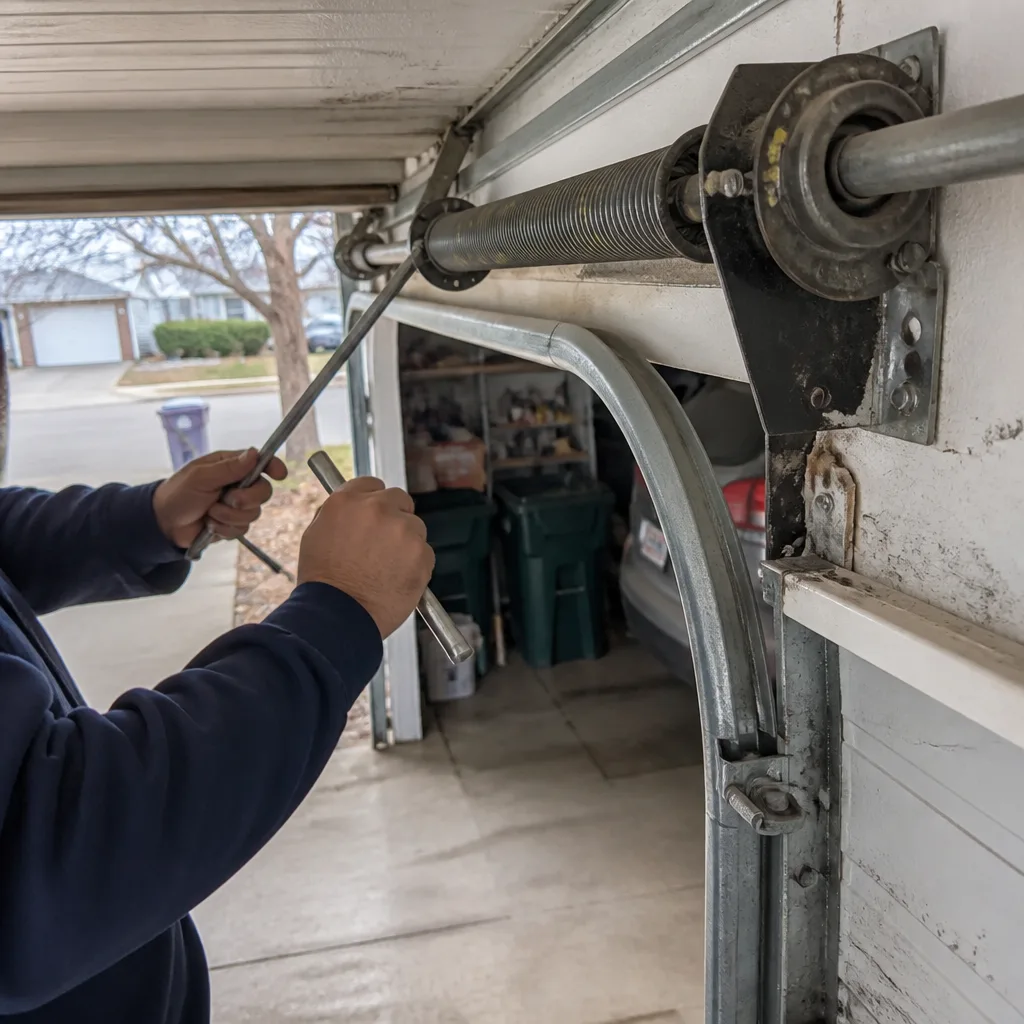 Before
 After
After Before
 After
AfterGarage Door Repair Maintenance Checklist for Longmont Homeowners
Torsion spring fatigue is measured in cycles, not years. A spring rated for 10,000 cycles on a door used four times daily lasts roughly seven years. But Longmont households that run errands, bike commutes, and contractor traffic through the garage can burn that same spring in under four. This guide names the exact components that fail in Longmont’s climate, the failure mode to watch for, and the measurement that tells you whether you’re still safe. For related reading, see our Garage Door Warning Signs: A Longmont Homeowner’s Reference Guide. By the end, you’ll have a diagnostic record, not just a to-do list.
Quick Answer
A garage door maintenance checklist for Longmont should cover five systems in this order: torsion spring cycle count, cable and drum condition, weatherseal integrity, roller and hinge lubrication, and opener force settings. Run this checklist twice a year, in April and October, and record each finding with a date and measurement. The goal is not to make the door quieter. The goal is to catch a failing component before it snaps at 7 a.m. on a workday.
Table of Contents
- Torsion Spring Cycle Count: The Math That Predicts Failure
- Cable and Drum Inspection: What Fraying Looks Like at Each Stage
- Weatherseal Degradation: Longmont’s UV and Freeze-Thaw Problem
- Lubrication Intervals by Component: Not One Can, Four Decisions
- Opener Force and Limit Settings: The Reverse Test You Should Run Monthly
- A Printable Inspection Log: Why Dated Records Matter When Quoting Repairs
- Common Mistakes to Avoid
- When to Call a Professional
BeforeAfterTorsion Spring Cycle Count: The Math That Predicts Failure
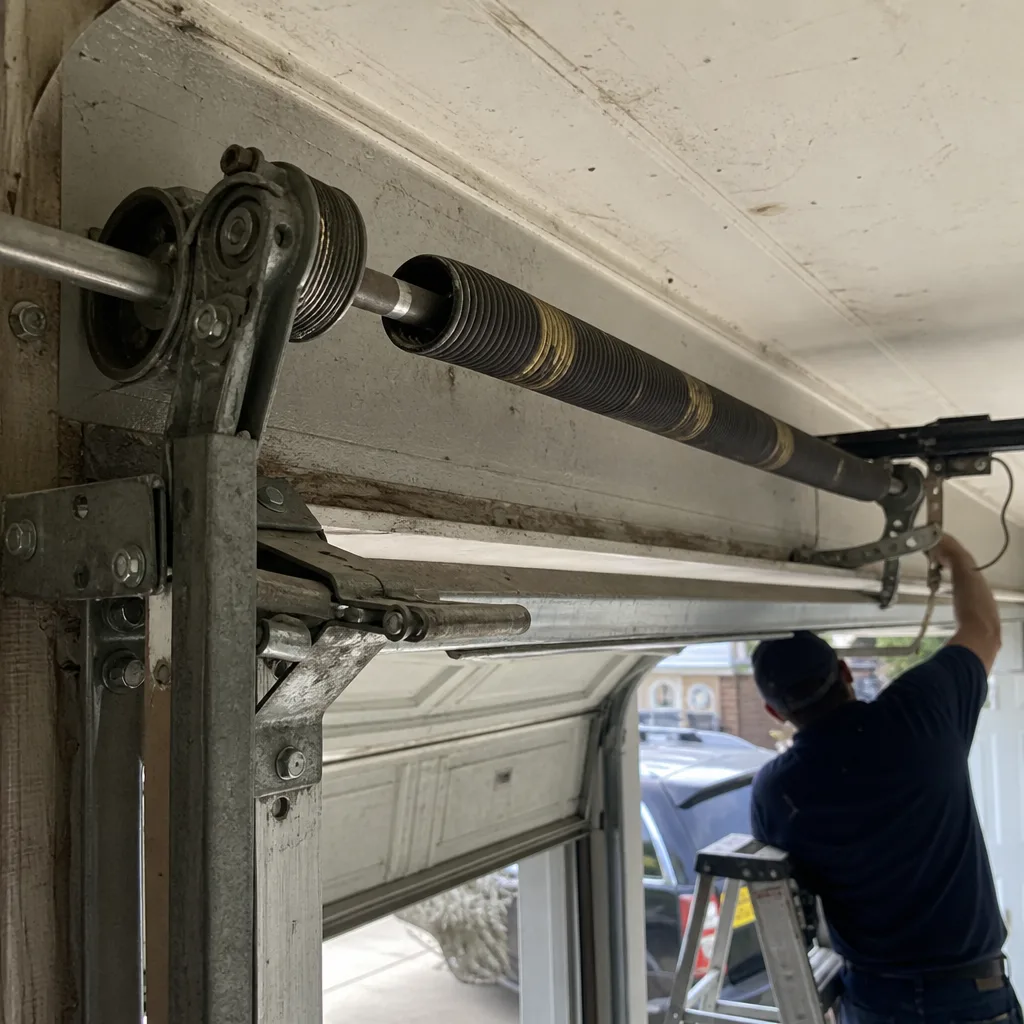
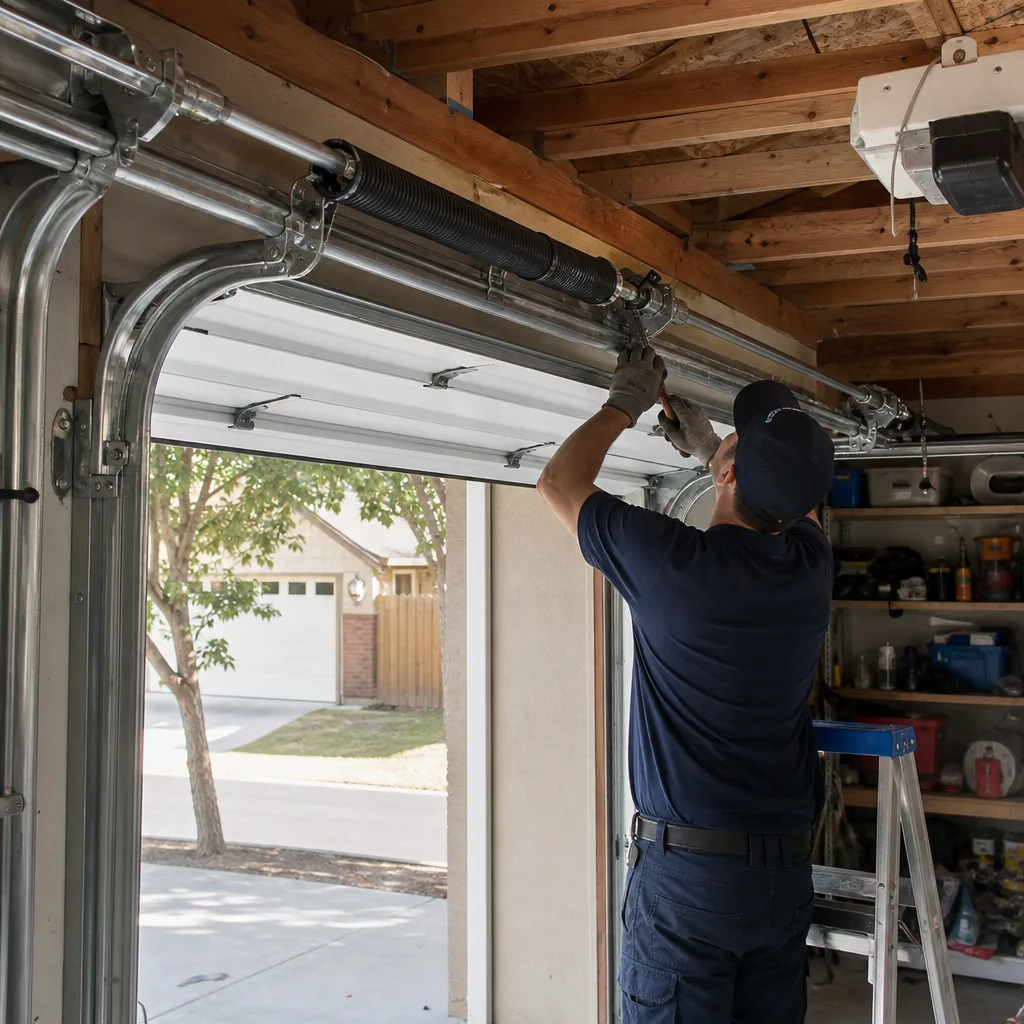
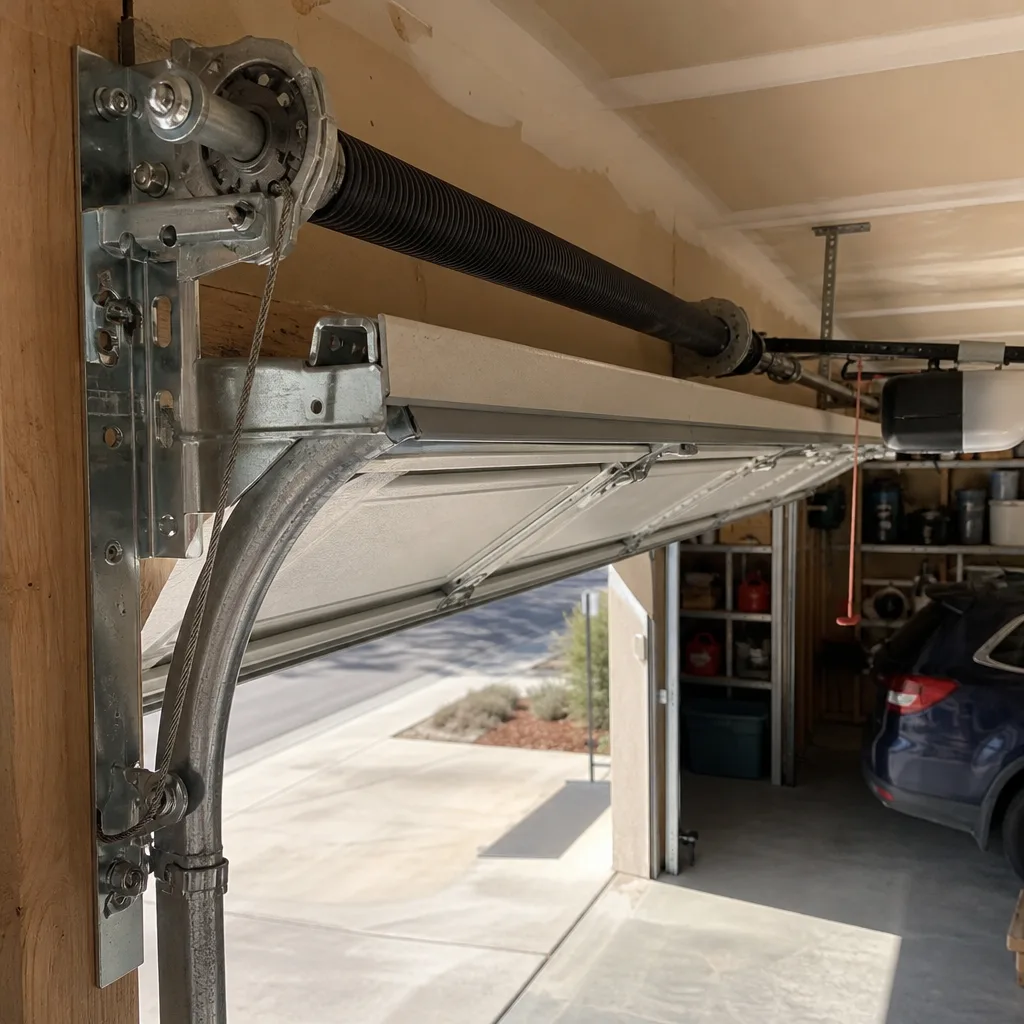
A torsion spring is a coiled steel bar mounted above the garage door opening. It stores the mechanical energy that lifts the door, then releases it when the door lowers. Every time the door opens and closes, that spring completes one cycle. The spring’s wire diameter, coil length, and inner diameter determine its cycle rating. A basic builder-grade spring is commonly rated for 10,000 cycles. A high-cycle spring can be rated for 25,000 or 50,000 cycles.
Here is the math that matters for Longmont. Count how many times your garage door opens and closes on a typical weekday. Include every trip: the morning commute, the afternoon school pickup, the bike ride, the contractor who parks in the driveway but walks through the garage. A door that opens four times a day logs about 1,460 cycles a year. A 10,000-cycle spring lasts just under seven years. But a Longmont household with two working adults, a teenager, and a home improvement project in progress can easily log eight to ten cycles a day. That same spring fails in under four years.
Most maintenance guides tell you to lubricate a spring annually and call it maintained. That misses the point. A spring near the end of its cycle rating does not need lubrication. It needs replacement before it snaps. The failure is not gradual. Torsion springs break suddenly, usually while the door is closed, and the sound is a sharp bang that homeowners often mistake for a gunshot or a car backfiring.
What to record:
- Count door cycles for one full week. Write down the number each day.
- Multiply the weekly total by 52. That is your annual cycle count.
- Check the spring for a painted stripe or a tag from the manufacturer. Many springs have a color code that identifies the wire size and cycle rating. If no code is visible, note that the spring’s age is unknown.
- If the spring is over five years old and the door sees heavy daily use, treat it as a candidate for replacement preemptively, not reactively.
We have seen torsion springs in Longmont fail after three years in high-cycle households. We have also seen original springs on garage doors in quiet cul-de-sac homes in southwest Longmont last twelve years. The variable is use, not calendar time. That is why this checklist starts with a count, not a date.
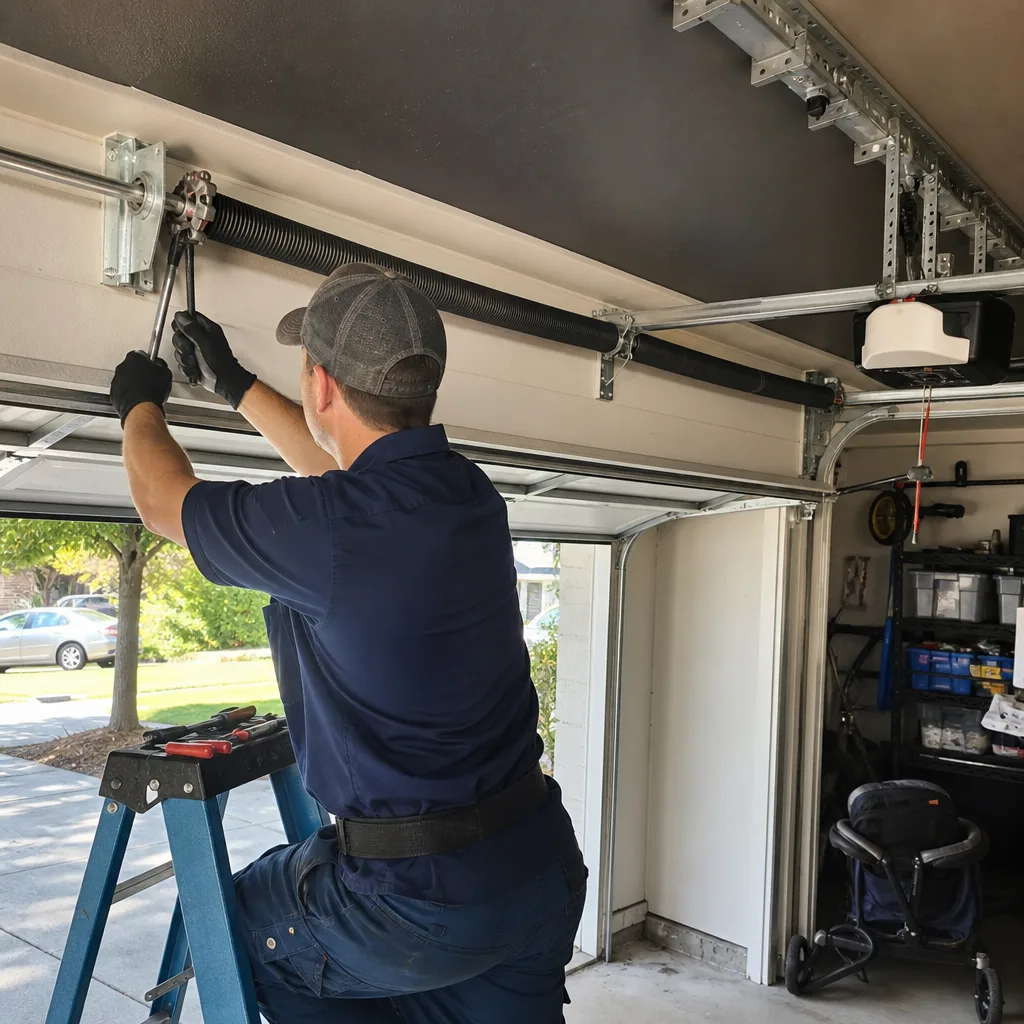
One caution about torsion springs: they are under constant tension. A spring manufacturer’s tag on the spring is not there for decoration. Do not attempt to adjust, replace, or remove a torsion spring yourself. The winding bars used to set spring tension can release violently if the technician’s footing slips or the cone casting is worn. This is the single component on a garage door system where we recommend our Garage Door Repair services every time, no exceptions. The rest of this guide covers checks you can perform safely. Spring replacement is not one of them.
Cable and Drum Inspection: What Fraying Looks Like at Each Stage
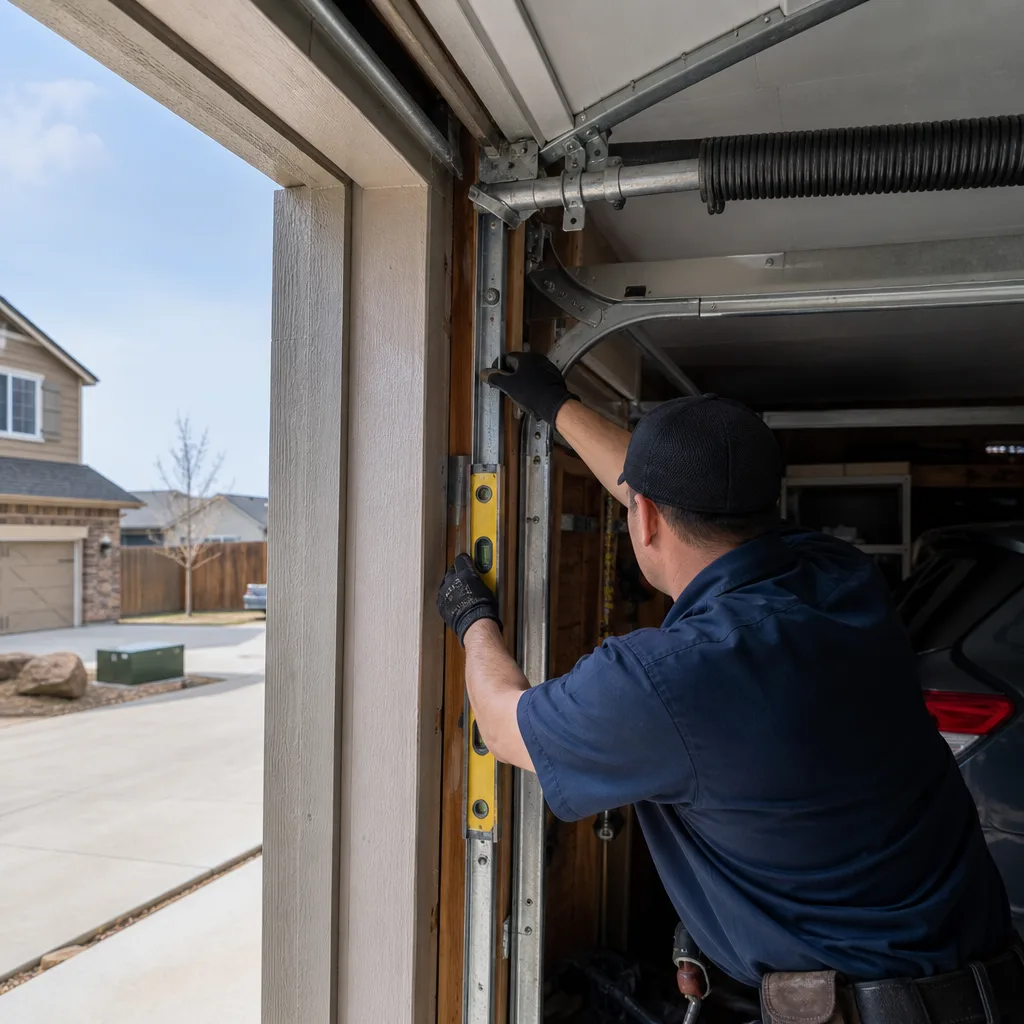
The cables on a standard sectional garage door are aircraft-grade steel strands that run from the bottom bracket on each side of the door up to a cable drum mounted on the torsion tube above. The drum winds and unwinds the cable as the door moves. When cables are healthy, the door rises evenly and both sides of the door stay level. When a cable frays, the failure is progressive and visible, if you know where to look.
Longmont’s low humidity spares garage door cables from the rust problems common in coastal climates. But freeze-thaw cycling in spring and fall introduces a different risk. Condensation forms on the steel when warm daytime air meets a cold garage slab. Repeated moisture cycles can accelerate corrosion at the cable’s contact points, particularly where the cable wraps around the drum and where it secures to the bottom bracket.
Here is what to look for at each stage of cable wear:
- Stage 1: Surface Corrosion. The cable looks dull or slightly brown instead of bright steel. No broken strands yet. This is common on Longmont doors older than eight years. It does not require immediate replacement, but it should be logged.
- Stage 2: Single Broken Strand. Like a rope, a garage door cable is made of many thin steel strands twisted together. When one strand breaks, it pokes out from the cable body. You can feel it by running a gloved finger along the cable with the door closed. A single broken strand is the signal to schedule replacement, not to wait.
- Stage 3: Multiple Broken Strands or Flattening. The cable looks fuzzy in one section or has lost its round cross-section where it passes over the drum. At this stage, the cable can snap without warning. The door may still operate, but the remaining strands are carrying load they were not designed to carry.
- Stage 4: Visible Unraveling or Birdcaging. The cable strands separate and splay open under tension. This is an immediate stop-use condition. Unplug the opener and leave the door closed until a technician arrives.
There is also a test you can perform without touching the cables. We call it the force-imbalance check.
- Close the garage door.
- Pull the red emergency release handle hanging from the opener rail. This disconnects the door from the opener carriage.
- Lift the door manually by the handle. A healthy door rises smoothly to about waist height and stays put, or drifts slowly.
- If one side of the door feels heavier than the other, or if the door cocks sideways as you lift, the tension imbalance is likely in the cable or drum system on the lighter side.
- Reconnect the opener by running it until the carriage re-engages. Do not force this step; the carriage hook will re-seat on its own.
Do not attempt to re-seat a cable that has slipped off its drum. The drum is under spring tension, and the process requires releasing that tension safely. A cable that has jumped the drum is a repair call, not a maintenance item.
Weatherseal Degradation: Longmont’s UV and Freeze-Thaw Problem
Weatherseal, also called astragal or bottom seal, is the flexible vinyl or rubber strip that runs along the bottom of the garage door and up the sides between the door and the jamb. Its job is to keep water, dust, insects, and cold air out of the garage. In Longmont, weatherseal fails primarily from two forces: ultraviolet light at altitude and freeze-thaw cycling in the shoulder seasons.
Longmont sits at roughly 5,000 feet above sea level. UV radiation at this altitude is measurably more intense than at sea level, and vinyl is particularly vulnerable. Bottom seals exposed to direct afternoon sun on west-facing garage doors can become brittle and crack within three to four years. The same seal on a shaded north-facing door in Old Town Longmont may last twice that long. Exposure, not age, drives seal life here.
There is a test for this. We call it the light-gap test, and it takes sixty seconds.
- Close the garage door fully.
- Turn off the garage lights and block any windows with cardboard or a blanket if needed.
- Walk the perimeter of the door and look for daylight coming through at the floor line and along the side jambs.
- Any gap wider than a pencil lead means the seal has compressed beyond function. Cold air, dust, and mice do not need much of an opening.
- On the bottom seal specifically, press down on the seal with the door closed. A healthy seal compresses and springs back. A flattened seal stays flat.
Side seals and top seals degrade differently than bottom seals. Side seals typically stiffen and crack at the nail fin where they attach to the jamb. Top seals take less abuse and usually only need replacement when a new door is installed. If you see cracked side seal in Longmont, the common culprit is UV exposure, not the door’s movement.
What gets into a Longmont garage through a failed seal is not just cold air. It is the fine clay dust that blows in from Boulder County open space, the leaf litter from mature cottonwoods, and the occasional miller moth in May. The seal is also the first line of defense against standing rain water following an afternoon thunderstorm over Longmont in July. A garage that has pooled water near the door after a storm likely has a bottom seal problem, not a drainage problem.
Weatherseal replacement is one of the few garage door maintenance tasks a homeowner can do without special tools or training. The bottom seal slides into a T-shaped retainer channel built into the bottom of the door. The side seals nail or screw into the jamb. If you replace a bottom seal yourself, lay it in the sun for thirty minutes before installing it. Warm vinyl flexes and seats into the channel much more easily than cold material.
Lubrication Intervals by Component: Not One Can, Four Decisions
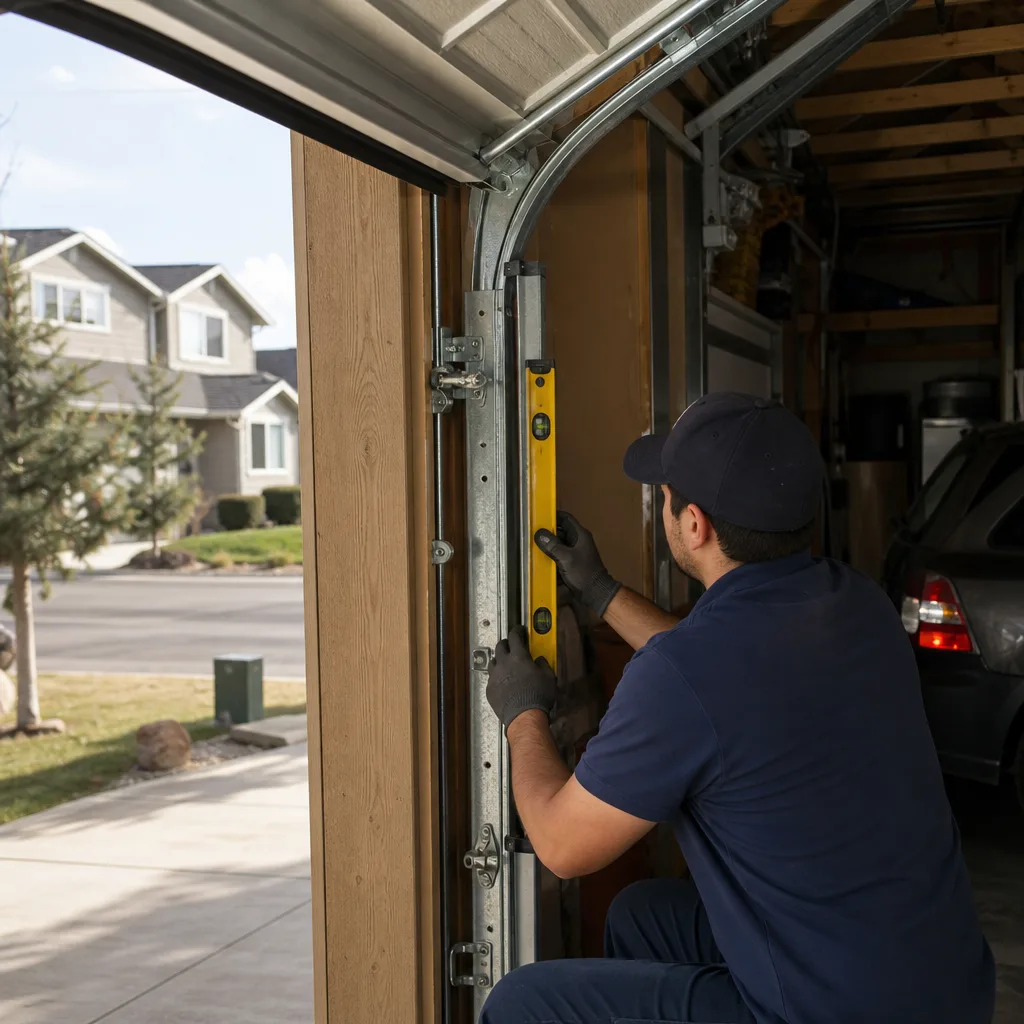
The single most common maintenance mistake we see in Longmont is treating all garage door lubrication the same. The hinges need one product and interval. The rollers may need a different one. The torsion spring seasonally and the opener rail rarely. A single can of general-purpose spray lubricant applied everywhere does more harm than good because it attracts dust and gums up the parts that need to move cleanly.
Here is the component-by-component breakdown.
- Hinges: Lubricate every six months with a light oil or a dedicated garage door hinge lubricant. Two drops on each pivot pin is plenty. Wipe away any excess.
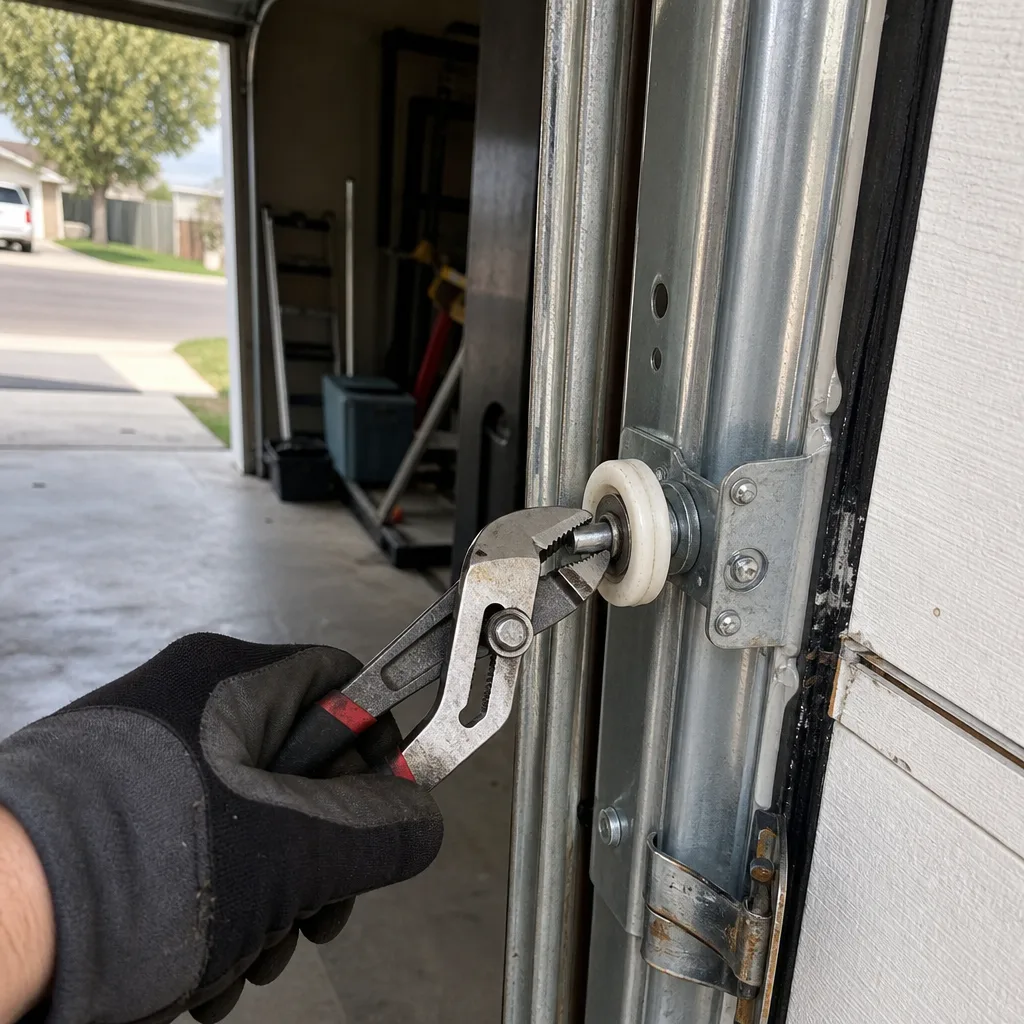
- Rollers: Nylon rollers with sealed bearings do not need lubrication on the wheel. If your door has steel rollers, use a few drops of light oil on the bearing area every six months. Do not lubricate the track. Lubricant on the track makes the rollers slip, which causes flat spots and noise.
- Torsion spring: The spring coils shift slightly with every cycle, and metal-on-metal coil friction accelerates fatigue at the contact points. A light coating of a spray garage door lubricant or silicone lubricant on the spring’s coils once a year, wiped gently with a rag, reduces that friction. Spring replacement is still a pro job despite any amount of lubrication. Lubrication does not extend the cycle rating; it prevents corrosion that pulls the cycles even lower.
- Opener rail: A screw-drive opener rail needs a thin film of grease once a year. A belt-drive rail needs nothing. A chain-drive rail needs light oil every six months. Check your opener’s manual for the specific recommendation.
If you are buying lubricant in Longmont, look for a product labeled specifically for garage doors. Blaster Garage Door Lubricant and 3-IN-ONE Garage Door Lube are two widely available options that hold up in low-humidity, high-UV conditions. WD-40, which many homeowners reach for, is not a lubricant in the sense a garage door needs. WD-40 displaces moisture and cleans, but it dries quickly and leaves no lasting film on the hinge pin or spring coil. The right product will mention that it is lithium-based or silicone-based and safe for garage door hardware.
One more Longmont-specific note. The Chinook winds that sweep down the Front Range in winter stir up fine grit that coats everything in a garage, including the door hardware. If your garage faces an alley or open space and gets regular wind exposure, cut your lubrication intervals to every four months instead of six and wipe the hinges before applying fresh lubricant. That grit embedded in old lubricant acts like sandpaper on pivot points.
Opener Force and Limit Settings: The Reverse Test You Should Run Monthly
The garage door opener is not just a motor. It is a system of travel limits and force settings that tell the motor when to stop and how hard to push. When these settings drift, the door reverses at the wrong point, stops short, or continues to push against an obstruction. That last failure mode is the dangerous one.
The door’s auto-reverse mechanism has been required on openers installed since 1993. It works by detecting resistance in the door’s travel and reversing direction if the resistance exceeds the set threshold. You can test this mechanism in under a minute with a roll of paper towels.
- Place a roll of paper towels flat under the center of the closed door.
- Use the wall button or remote to open the door.
- Run the door down onto the roll.
- Watch what happens when the door contacts the roll. The door should reverse and rise within one second of contact.
- If the door continues pushing down, or if the roll is crushed before the door reverses, the force setting is too high. This is the single highest-priority fix on the door’s safety system.
Repeat this test monthly. It takes less time than making a cup of coffee in the morning, and it confirms that your opener still reverses on obstruction. We recommend running it on the first weekend of every month as a habit, the same way you test smoke detector batteries.
The travel limits are the other setting that drifts in Longmont garages. Extreme temperature swings between summer afternoons and winter mornings cause the opener’s logic board to heat and cool. Electronics are surprisingly sensitive to this cycling. A limit that reads correctly on a cool April morning may under-run in the heat of July, which leaves a gap at the floor or over-travels and stresses the top bracket.
Adjusting force or limit settings is a task that takes a technician about ten minutes on most LiftMaster, Chamberlain, Genie, Craftsman, or Raynor openers. The adjustment procedure is not dangerous, but it is precise, and the difference between correct and incorrect is a door that reverses on a child’s bicycle and a door that does not. If your monthly reverse test fails, call a technician rather than experimenting with the screws on the opener.
A Printable Inspection Log: Why Dated Records Matter When Quoting Repairs
Here is the log format we recommend. Create a simple page with these fields and keep it in a plastic sleeve near the opener’s manual. Every inspection gets a dated entry. Every component gets a status. This is the difference between a checklist and a diagnostic record.
Servo’s Garage Door Inspection Log: Longmont
Date: ____ / ____ / ____
Door age (if known): ____ years
Daily door cycles (from the one-week count): ____ cycles/day
Estimated annual cycles: ____
Torsion spring: Clean break / Visible wear / Intact / Lubricated this date / Not lubricated this date
Cables: Fraying at drum / Single broken strand / Surface corrosion / Intact
Drum: Smooth wipe / Cable overlap / Slipped / Intact
Weatherseal bottom: Light gap / Brittle / Compressed but functional / Intact
Weatherseal sides: Light gap / Cracked at fin / Intact
Hinges: Lubricated this date / Dry / Worn pivot / Intact
Rollers: Seized / Flat spot / Lubricated this date / Intact
Opener reverse test: Passed / Failed / Not run
Notes:
____________________________________________________
The reason this log matters more than it looks: when a technician arrives to quote a repair, the conversation is shorter and the quote is faster if you can point to a date and say “The cables showed surface corrosion in October and now there’s a single broken strand.” You have evidence of when the part was last inspected, when it was lubricated, and when a test passed or failed. That record is the difference between an informed decision and a guess.
This is also why our own Garage Door Repair in Longmont service includes a documented photo record on every visit. The photo shows what the technician found and what was done. The written price is agreed before any work starts. You receive both regardless of whether you hire us again. The log you keep at home is the same principle applied to your own observations: documentation beats memory.
Common Mistakes to Avoid
- Using WD-40 on everything. WD-40 displaces moisture but does not provide lasting lubrication. Hinges and rollers need a lithium or silicone-based lubricant to hold a film. WD-40 leaves them dry within days.
- Lubricating the track. The track is a guide surface, not a friction surface. Spraying lubricant on the track makes the rollers slip, which causes uneven wear and a chattering noise during travel. The track should be wiped clean, not lubricated.
- Ignoring a single broken cable strand. One broken strand is the earliest visible warning before a full cable failure. Replace the cable at this stage, not after the door drops unevenly and damages the panel.
- Assuming you can install a new garage door opener without checking the door’s condition. An opener change is a good time to inspect the spring, cables, drums, and seals all at once. If the door itself is worn and unbalanced, the new opener inherits the problem and its force settings fight the door’s resistance.
- Running the door with a visibly frayed cable “just a few more times.” The remaining strands are carrying more than their rated load, and the failure mode is a dropped door panel, not a slow decline.
- Not knowing the spring’s age or cycle rating. When a spring fails, at least two questions follow: Was the spring within its expected cycle count, and was it lubricated and inspected? If you cannot answer, treat everything else on the door with suspicion.
- Expecting a maintenance checklist to prevent all failures, including spring fatigue. Maintenance reduces unnecessary failures. It does not stop a spring from reaching its cycle limit. When the cycles are spent, the spring fails. The maintenance task is to know when that day is coming.
When to Call a Professional
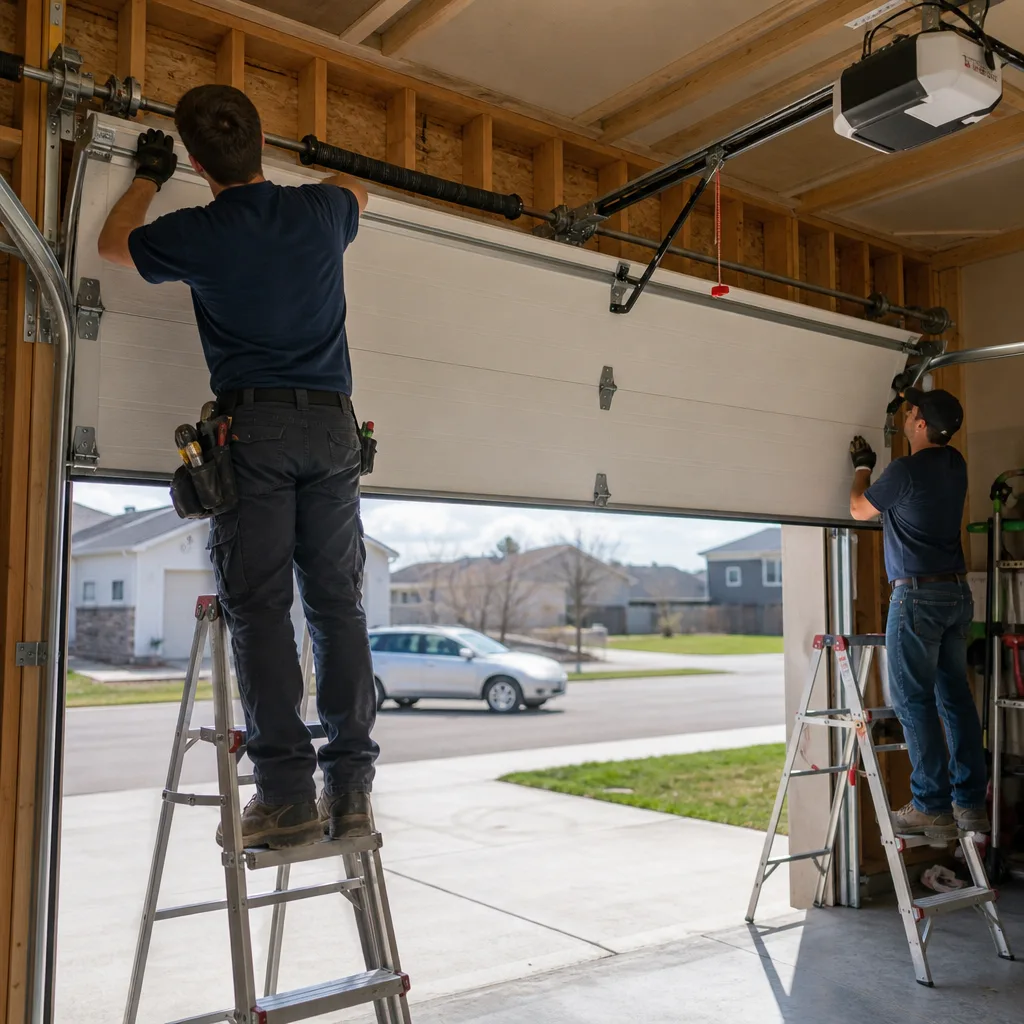
Call a professional when the door’s reverse test fails. Call when a cable shows a single broken strand or any visible unraveling. Call when the door cocks sideways during manual operation, when it shakes on the way up, or when you hear a sound like a rifle shot from the garage. Call when the spring has passed its likely cycle count and you would rather replace it on a Tuesday afternoon than on a holiday morning. These are not tasks that reward patience. Servo Garage Doors Longmont offers free estimates in Longmont, so you can call (970) 528-5851 and get a written price and scope without commitment. If you already have a written estimate from another company, Servo Garage Doors Longmont will provide a Free Second Opinion on that paperwork, no coupon required.
Frequently Asked Questions
Lubricate hinges and steel rollers every four to six months, and the torsion spring once a year. If your garage faces an alley or open space and gets regular Chinook wind exposure, cut the interval to every four months. Use a lithium-based or silicone-based garage door lubricant, not WD-40. For a full breakdown by component, see the lubrication section above.
You cannot know with certainty, but you can estimate. Count your daily door cycles, multiply by 365 to get an annual total, and compare that against the spring’s cycle rating. A basic spring rated for 10,000 cycles on a door opening ten times a day lasts under three years. Visual inspection of the spring’s coils can reveal surface rust, but the failure is sudden even on a clean spring. The best predictor is cycle count, not appearance.
At the earliest stage, a fraying cable looks like a single broken steel strand poking out from the cable body. Later, multiple strands break and the cable appears fuzzy or flattened. At the final stage, the strands separate and splay, a condition called birdcaging. With the door closed, run a gloved finger along the cable to feel for a poke-out strand. Any broken strand means replacement, not repair.
Yes. The bottom seal slides into a T-shaped channel on the bottom of the door. Lay the new seal in the sun for thirty minutes before installing so the vinyl flexes and seats cleanly. Side seals nail or screw into the jamb and are also homeowner-friendly. If the seal is brittle or cracking, it is due for replacement regardless of how it looks when the door is open.
The auto-reverse mechanism is detecting resistance and reversing direction. The most common causes are a mis-set close limit, a force setting that is too low, or a door that is out of balance from a worn spring or cable. Run the reverse test with a roll of paper towels. If the door crushes the roll, the force setting needs adjustment, not the limit.
Estimates are free. A technician will inspect the door, quote a flat written price with written scope before any work starts, and leave a documented photo record of what was found and what was done, per Garage Door Installation in Longmont standards. Call (970) 528-5851 for an exact quote. If your garage door opener needs attention rather than the door itself, see Garage Door Opener Repair & Installation in Longmont for the same written-price-first process.
The Bottom Line
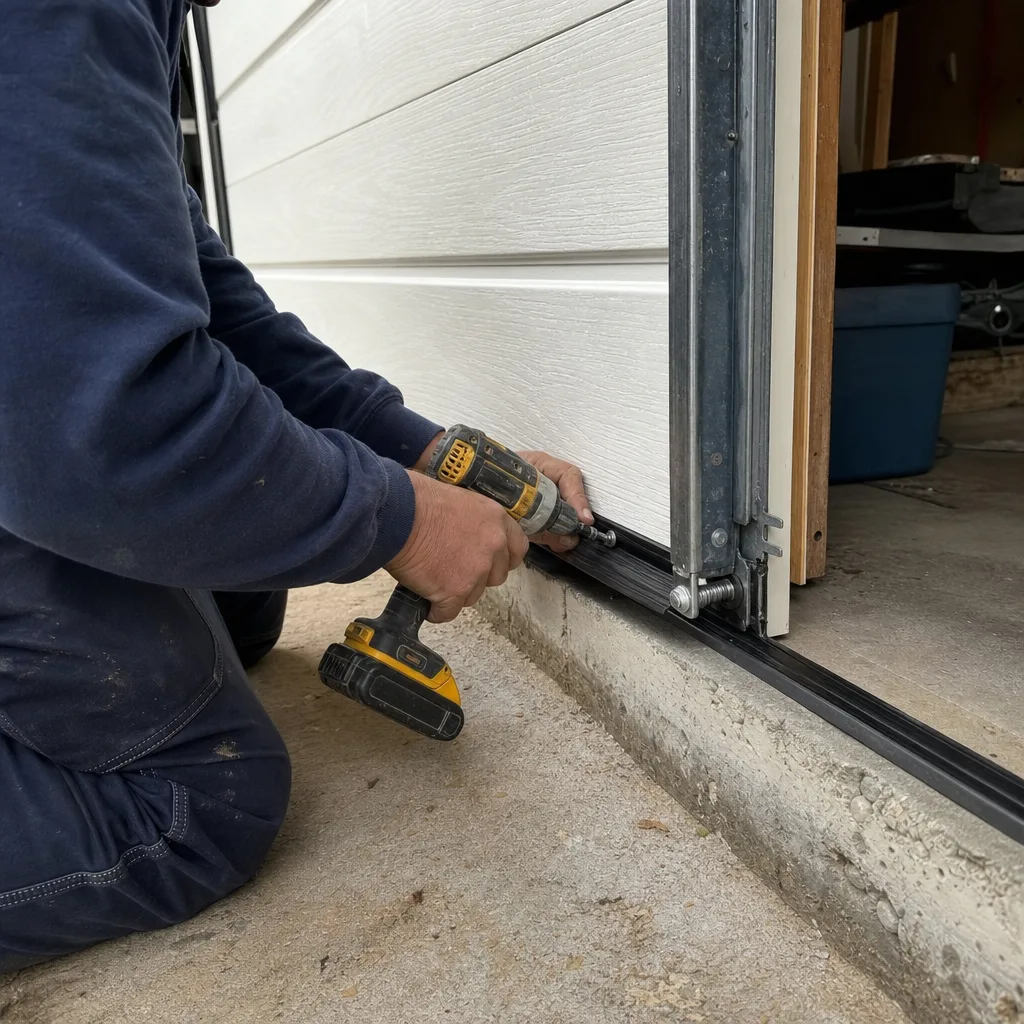
A maintenance checklist is not a subscription to a quieter garage door. It is a system for knowing which component fails next and when. In Longmont’s climate, that knowledge has a specific shape: cycle counts that tell you the spring is near its end, light-gap tests that show the weatherseal is shot, a force-imbalance check that reveals cable wear, and a monthly reverse test that proves the opener still protects what is under the door. Record each inspection. Then, when a spring snaps or a cable frays, you are not guessing what happened. You can find more guides & resources on our blog to keep your system running safely. You have the log that shows what was checked, when it was checked, and what it looked like before the failure.
Written by Marcus Deller, Owner at Servo Garage Doors Longmont, serving Longmont since 2015.