
Last updated September 20, 2026
Full 25-point door and opener safety check with every visit - springs, cables, rollers, tracks, and your LiftMaster or Chamberlain opener included
You get a price before we start. It does not change when the truck arrives.
 Before
 After
After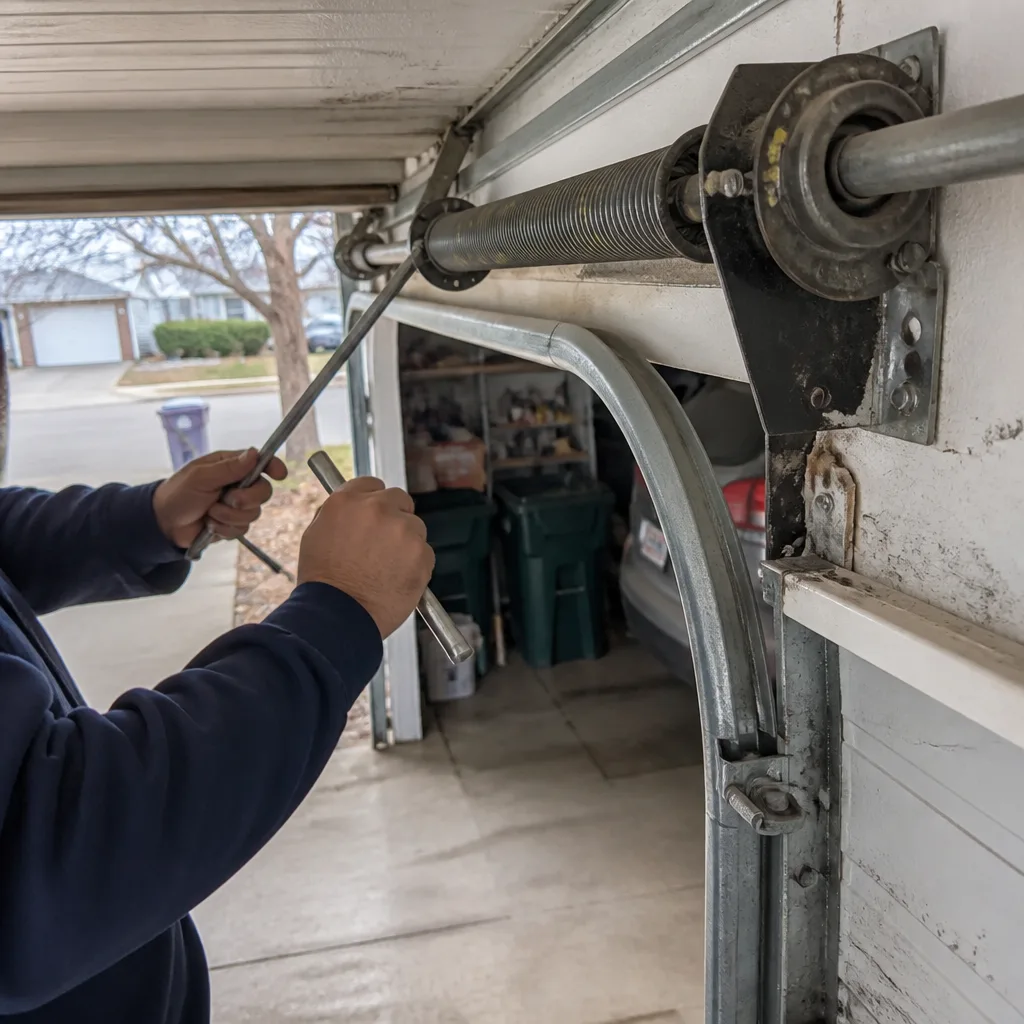 Before
 After
After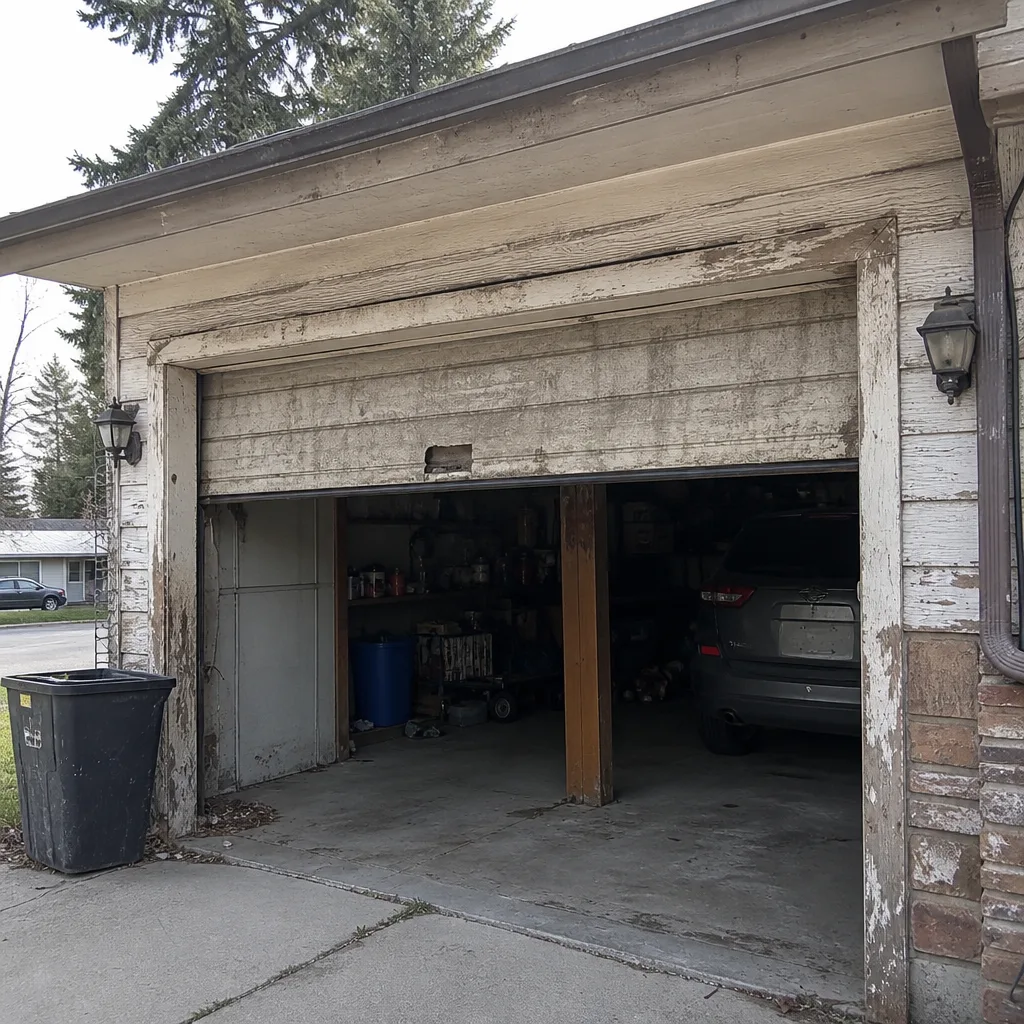 Before
 After
AfterHow to Hire a Garage Door Contractor in Longmont: A Step-by-Step Guide
Here’s what most Longmont homeowners don’t realize until it’s too late: Colorado has no statewide licensing requirement for garage door contractors, and Longmont defers to state-level rules rather than enforcing its own contractor ordinance for this trade. That means the barrier to hanging a shingle and calling yourself a garage door professional is lower than you’d assume. This guide walks through the exact framework for evaluating any contractor before they touch your door, from the documents that matter to the phone-quote phrases that should end the conversation. For more guides & resources on protecting your home, see our blog.
Quick Answer
To hire a garage door contractor in Longmont, verify their insurance and registration directly with the issuer, require a written scope and flat price before any work begins, demand a photo of the failed component before approving a replacement, and collect a documented record before the technician leaves. Skip any company that leads with urgency or won’t put the price on paper before starting.
Table of Contents
- What Colorado Law Actually Requires of Garage Door Contractors
- The Four-Document Test: What a Legitimate Contractor Produces Before Work Begins
- Red-Flag Language in Phone Quotes: What Bait-and-Switch Pricing Sounds Like
- How to Compare Quotes When Line Items Are Named Differently
- What to Look for When the Technician Arrives
- Post-Job Documentation: What to Request Before You Pay
- Longmont-Specific Considerations: Climate, Code, and Market
- Common Mistakes to Avoid
- When to Call a Professional
- Frequently Asked Questions
- The Bottom Line
BeforeAfterWhat Colorado Law Actually Requires of Garage Door Contractors
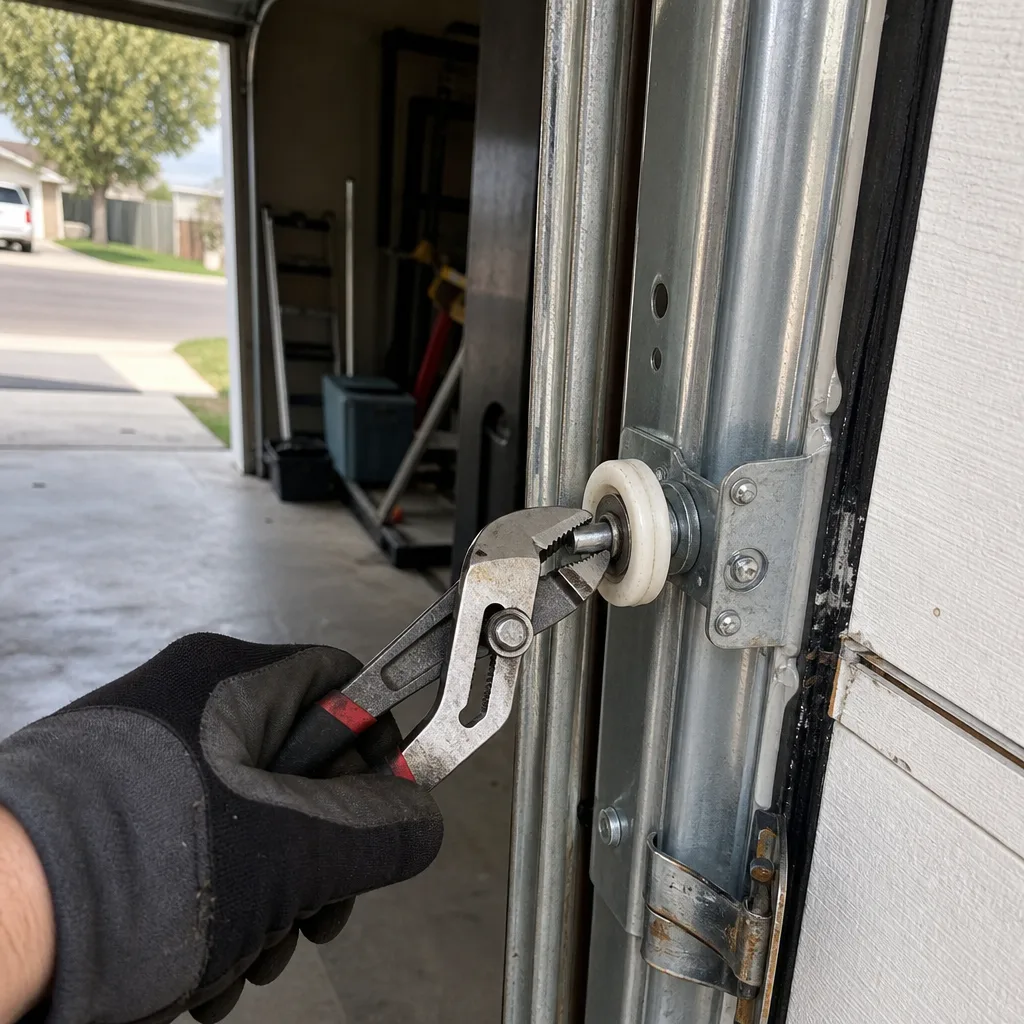
Colorado does not license garage door contractors at the state level. Unlike electricians and plumbers, who must hold a state license through the Department of Regulatory Agencies (DORA), garage door technicians face no equivalent requirement. Longmont’s building department does not issue a garage-door-specific contractor license either, and the city does not maintain a registry of approved garage door companies.
What Colorado does require is general business registration and insurance. Any contractor working on your home should carry:
- General liability insurance - this covers damage to your property if something goes wrong during the job. The standard minimum most companies carry is $1 million per occurrence, but the number matters less than the fact that you verified it directly.
- Workers’ compensation insurance - if a technician gets hurt on your property and the company doesn’t carry workers’ comp, you could be liable. Ask for the policy number and verify it with the insurer.
- A Colorado business registration - verify through the Colorado Secretary of State’s business database. This takes 60 seconds and confirms the company exists as a legal entity.
The key distinction: a certificate of insurance that the contractor shows you might be expired or altered. Call the insurance provider directly. If the company hesitates to give you the carrier name and policy number, that’s your answer. At Servo, our license and insurance information sits on the page itself, not buried in fine print, because Marcus Deller’s position is simple: if a company won’t produce verifiable documentation before the job, they won’t be easier to deal with after it.
The Four-Document Test: What a Legitimate Contractor Produces Before Work Begins
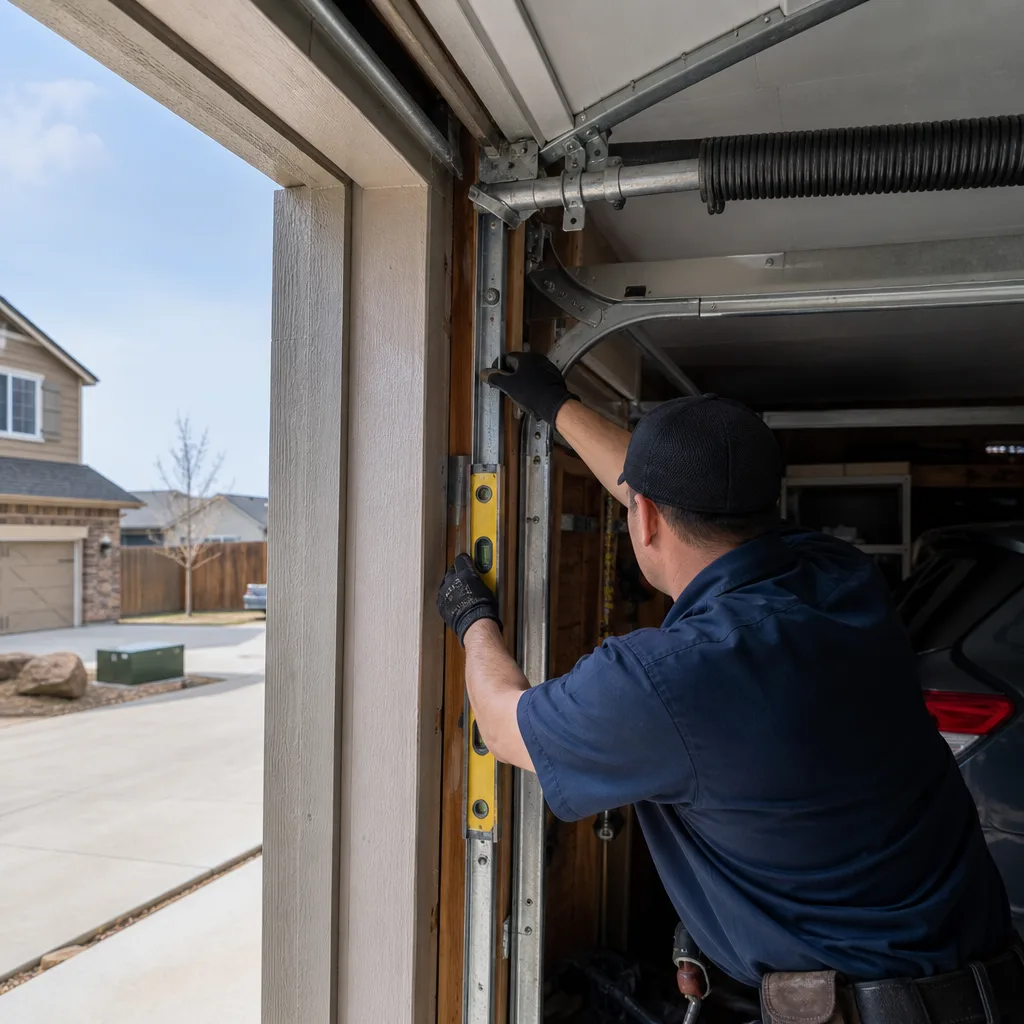
This is the framework that separates contractors who document from contractors who talk. Before any work starts, a legitimate garage door contractor in Longmont should hand you four things. If any one of them is missing, stop and ask why.
Document 1: The Written Scope
A written scope describes exactly what the technician will do, in plain language. It names the components being replaced or repaired, the specific actions being taken, and what “done” looks like. “Replace right-side torsion spring” is a scope. “Fix the door” is a conversation. The written scope is also what protects you when the technician says something was outside the original agreement - you can point to the scope and say, that’s not on here.
Document 2: The Itemized Parts List
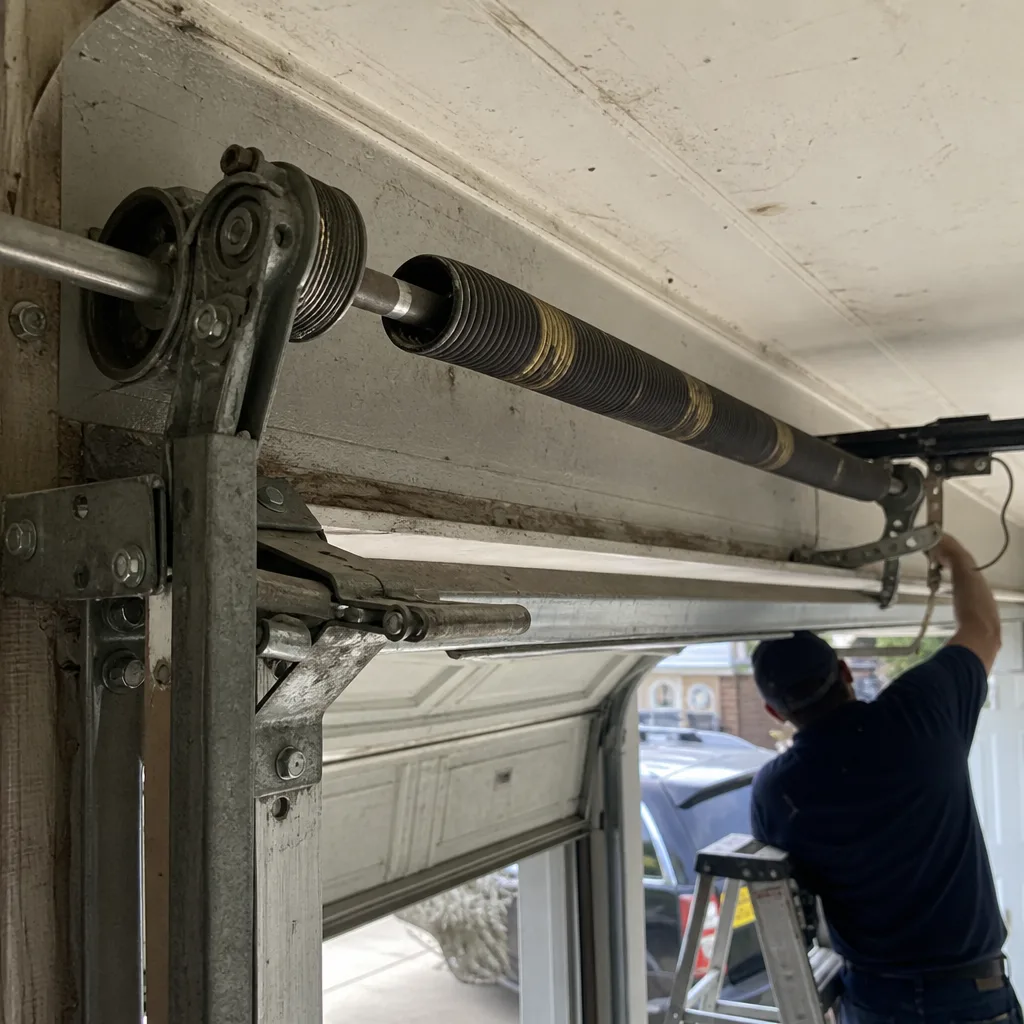
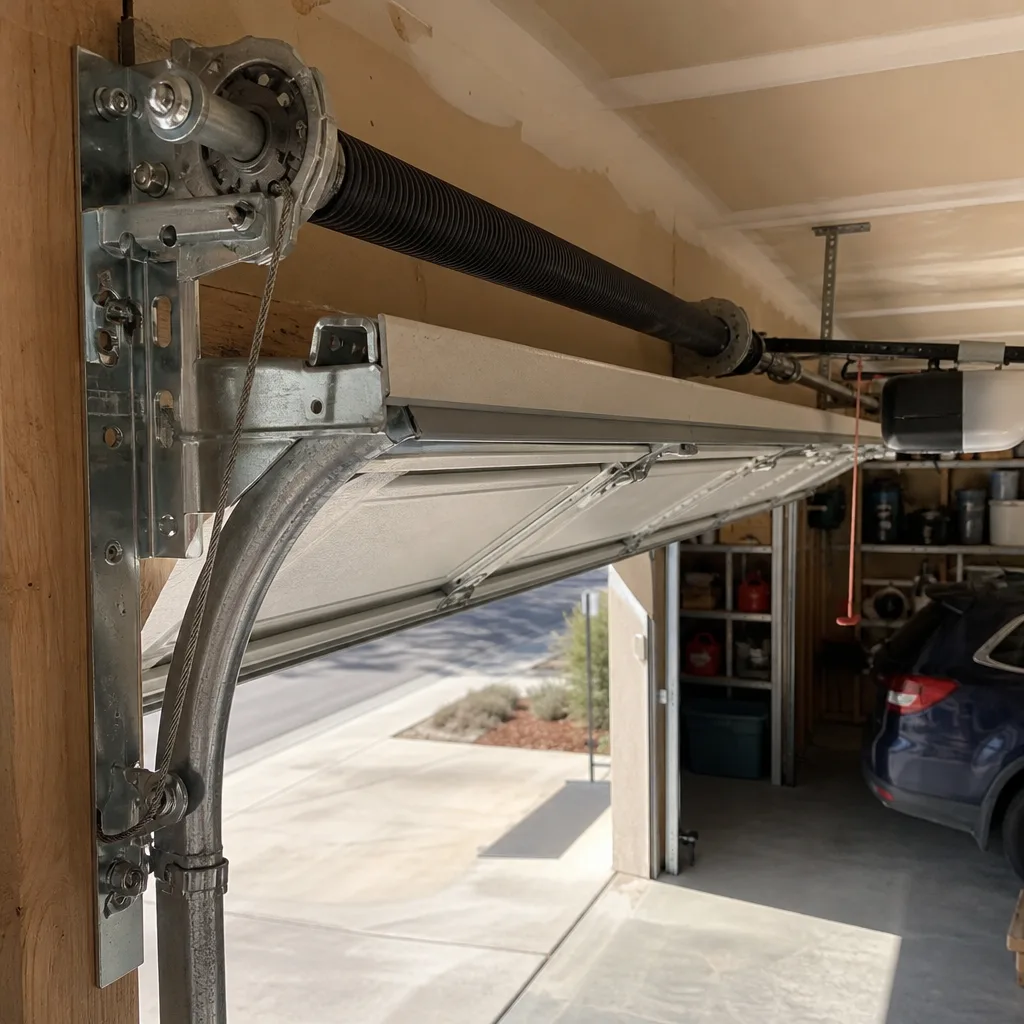
This is where the trade vocabulary matters. A torsion spring is the coiled metal component above the door that counterbalances its weight. A logic board is the circuit board inside the opener that interprets commands from your remote. A trolley carriage is the component that moves along the rail, pulling the door open and closed. If the parts list says “spring assembly” but doesn’t specify whether it’s a torsion spring or extension spring, ask. On a Clopay door, the spring system is factory-calibrated, and a reputable contractor will specify the replacement spring’s wire diameter and coil count on the parts list. That’s the level of specificity that tells you the quote is real.
Document 3: The Flat, Written Price
This is non-negotiable. The price on paper before work starts is the difference between a contractor who stands behind their work and one who plays the estimate game. Verbal estimates climb. Written prices don’t. And the price should be flat, meaning it does not change if the job takes 20 minutes longer than expected. If a contractor in Longmont tells you the price “depends” or “we’ll see once we open it up,” you’re not getting a quote, you’re getting an entry point for a negotiation you didn’t agree to.
Document 4: A Photo of the Failed Component
This is the one most Longmont homeowners never think to ask for, and it’s the one that would have saved a lot of them money. Ask the technician to photograph the broken spring, the stripped gear, the failed logic board before they replace it. A technician who refuses is either not actually looking at what they claim is broken, or they don’t want you to see that the part was fine. At Servo, this rule is Clause 4 of The Haven Standard: the customer sees the failed part before anyone quotes a replacement. It’s the rule the company was built on, and it has eliminated the “trust me, it’s shot” conversation entirely.
Red-Flag Language in Phone Quotes: What Bait-and-Switch Pricing Sounds Like
Most bait-and-switch pricing in the garage door industry happens on the phone, before a technician ever arrives. The structure works like this: a low verbal quote gets the company in the door, and then the price climbs once the technician “discovers” additional work. You can spot the pattern in the language, and it’s worth knowing the specific phrases.
“We’ll know more once we open it up.” This is the single most common red flag in the industry. A competent garage door technician can diagnose a torsion spring failure from the driveway. They can see the broken coil, hear the gear strip, watch the door bind on the track. “We’ll know more once we open it up” means the verbal quote was a placeholder, and the real price comes later.
“It’s going to depend on what we find.” Every job depends on what they find. The difference is whether the finding happens before or after the price is set. A legitimate contractor gives you a range before arriving, then pins the exact number in writing once they’ve seen the door, with the photo to back it up. “It depends on what we find” without a written scope attached is a blank check with extra steps.
“The part is more expensive than I thought it would be.” Parts prices are knowable before the job. A contractor who quotes a spring replacement at $180 on the phone and then tells you the spring is “special” and costs $260 has either never priced springs or assumes you haven’t. The solution: require the parts list with the written quote, showing the manufacturer, part number, and price. If the company stocks service parts for Amarr and Wayne Dalton doors, they know what those parts cost. There’s nothing to discover.
“I can do it today for [price], but if you want to think about it, the price changes.” Pressure is a pricing strategy, not a service feature. A respectable contractor’s price is the same whether you say yes today or next Tuesday. If the price has an expiration date measured in hours, you’re not buying a repair, you’re buying a sales tactic.
One more worth naming: “We’re the only ones in Longmont who stock this part.” Longmont is a 20-minute drive from Boulder and 30 from Denver. No one is the only source for a standard spring or opener component in this market.
How to Compare Quotes When Line Items Are Named Differently
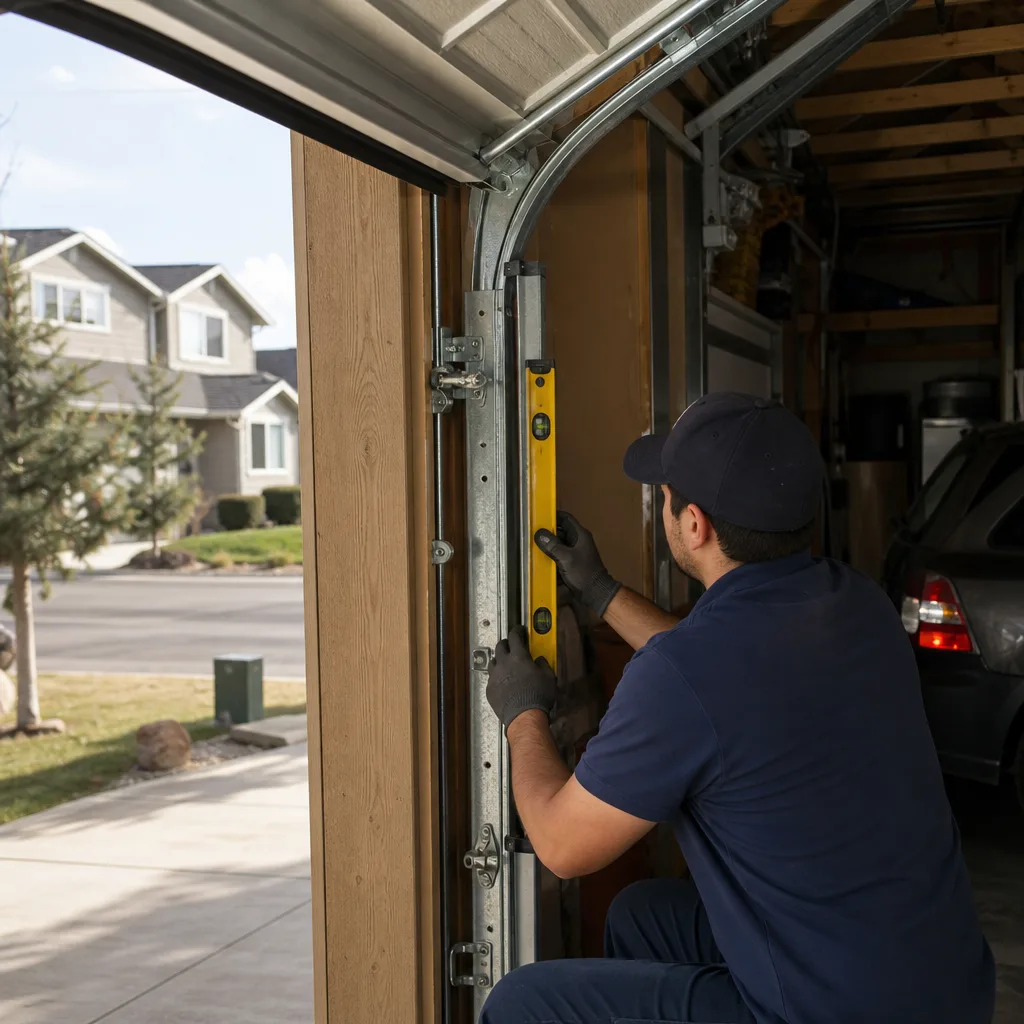
You’ve called three companies. None of them itemized the same way. One quoted “door balancing.” Another quoted “spring replacement (labor).” A third quoted “torsion system service.” How do you compare these? You translate everything into components and labor, and you ask what each line actually includes.
Here’s the translation table for the most common billing aliases in the garage door trade:
- “Door balancing” = spring tension adjustment, sometimes with cable adjustment. It should be a diagnostic and adjustment line, not a spring replacement. If the spring is broken, balancing is not the repair, and the quote should say spring replacement.
- “Spring system service” = typically spring replacement, but verify. “Service” can mean adjust, replace, or inspect. Ask specifically: “Does this line include a new spring with a listed part number?”
- “Opener tune-up” = varies wildly by company. Some mean force adjustment and lubrication. Others include replacing the gears or the limit switch. Get the itemized sub-list.
- “Roller replacement” = sometimes quoted per-roller, sometimes as a set. Check the count. If you have a standard two-car door, that’s 12 rollers. If the quote line says “roller replacement” without a count, ask.
- “Track adjustment” = realigning or tightening the vertical and horizontal tracks. This should be a labor line, not a parts line, unless the track is being replaced.
- “Labor” = should be broken out from parts, with an hourly or flat rate specified. Flat is better; hourly means you’re paying for the technician’s traffic delay.
The most useful question when comparing quotes: “Does this quote include the parts, the labor, the removal and disposal of the old components, and the full reassembly and testing?” A $320 quote that includes everything is cheaper than a $270 quote that gives you a door tested but not balanced. This is also where the Free Second Opinion offer matters. If you bring a written quote to Servo Garage Doors Longmont, we will review it against what we’d charge for the same scope, and you get the comparison on paper.
What to Look for When the Technician Arrives
The technician shows up. Before they touch the door, look for three things:
- Uniform and identification. A background-checked, uniformed technician wearing visible company identification is not a luxury, it’s a baseline. You’re letting a stranger into your garage and your home’s largest moving mechanical component. If the technician can’t produce identification, close the door and call the office.
- Diagnosis before action. The technician should inspect the door and explain what they’re seeing before they start any work. In our experience, the best technicians narrate the diagnosis: “The right torsion spring shows a clean break at the coil, and the cable on that side has slack.” Then they show you. If the technician starts unscrewing things before telling you what they found, interrupt and ask.
- Parts visible before installation. The new spring, gear, roller, or opener component should be visible, still in the packaging, with the part number readable. You’re paying for a specific component, and you have the right to see it before it goes on your door.
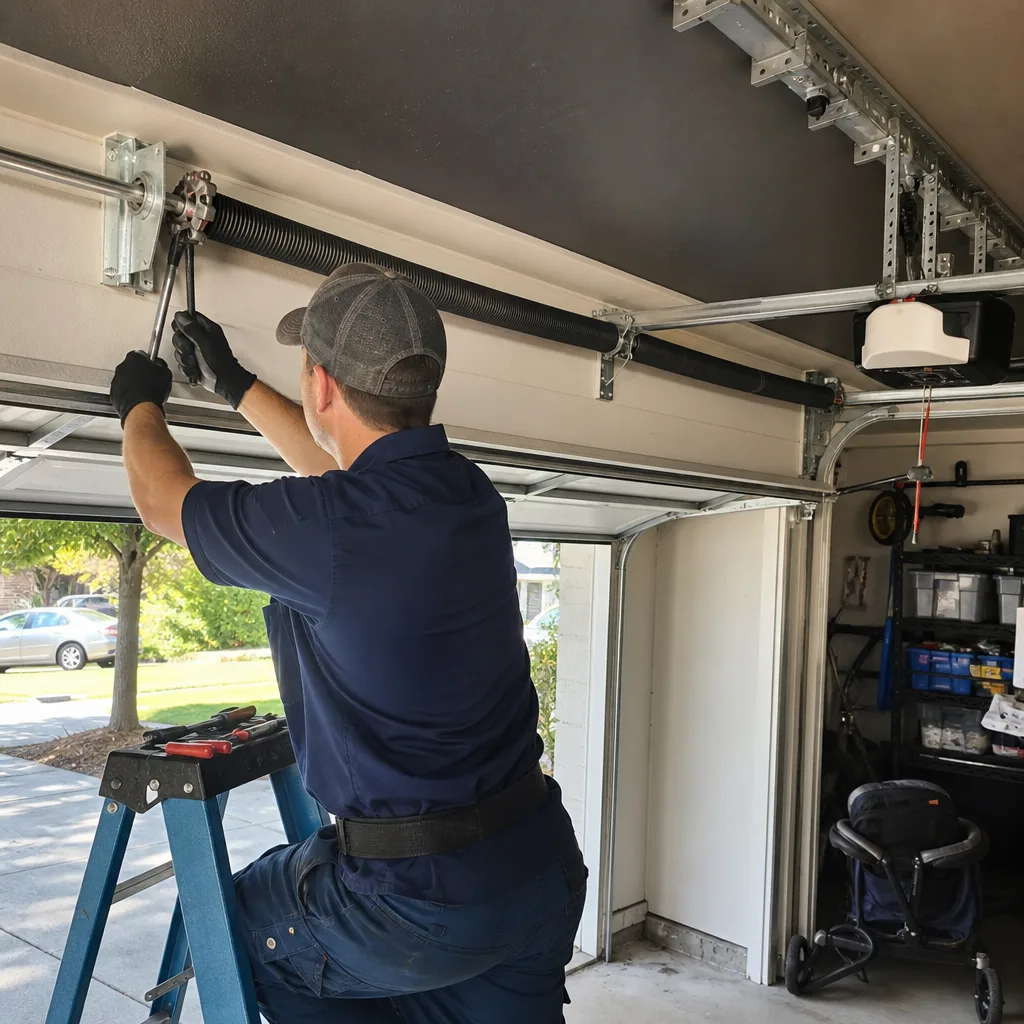
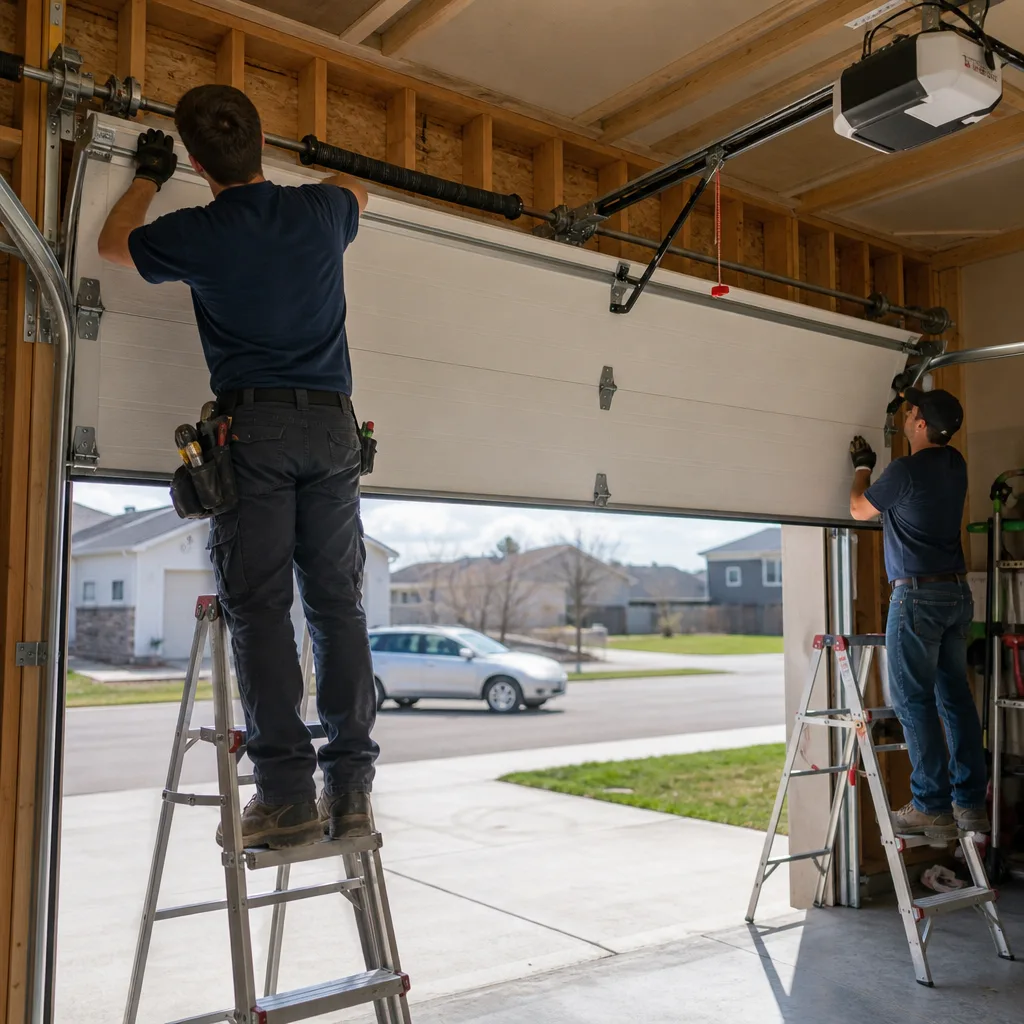
On any job involving torsion springs, understand that these components are under extreme tension. A torsion spring stores enough energy to lift a 150-pound door hundreds of times over its service life. When a technician is working on a spring, that’s not a moment to hover close or ask them to explain the spring physics. Give them room, let them work, and review the photo record afterward. A reasonable technician will document the work; no technician worth hiring will welcome a DIY assistant during the tensioned components.
Post-Job Documentation: What to Request Before You Pay
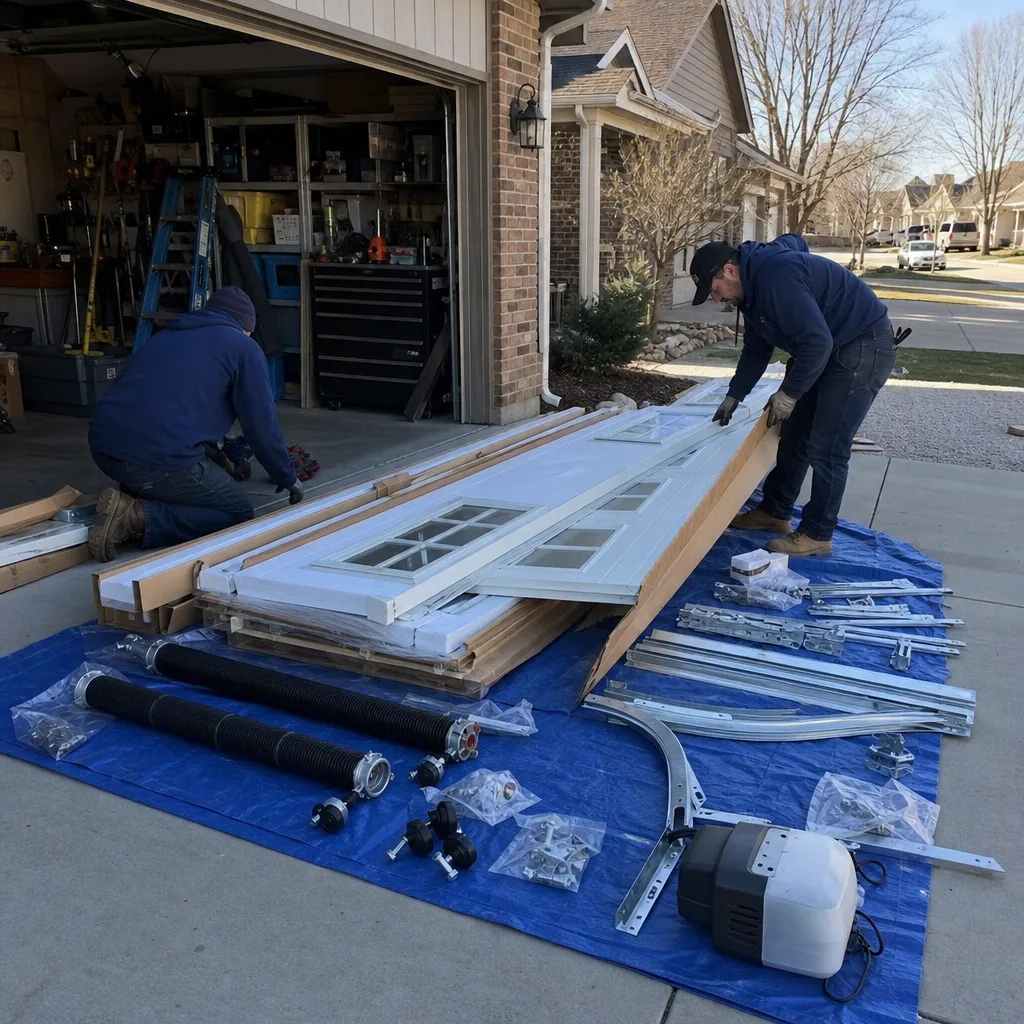
The job’s done. The door opens and closes. Before you sign anything or hand over a card, collect the paper trail. This is what protects your warranty claim six months from now:
- The final invoice with the exact scope, parts list, and price that matches the pre-work quote. If any number changed, there should be a written explanation and your approval. If the final price is higher than the quote and you never approved the overage in writing, you have a legitimate dispute.
- The warranty on the parts and the labor. Manufacturers like Genie and Clopay warranty their components for specific periods, and those warranties often require pro installation to remain valid. The contractor should give you the warranty terms in writing, including who to contact for a warranty claim: the manufacturer, the contractor, or both.
- A photo record of what was found and what was done. If the company took photos, get them. A documented photo record means you can show a future contractor exactly what was replaced, with the before and after. It’s evidence, not just a nice-to-have.
- Receipts for the parts, or at minimum the manufacturer and part numbers. If a spring fails six months after replacement and it’s under warranty, you’ll need proof of what was installed. “The spring from the service visit” won’t hold up. The part number will.
If the contractor looks confused when you ask for the photo record or the itemized invoice, that’s data. They’re not used to being asked, which means most of their customers never see what they actually paid for. That’s not how work should close.
Longmont-Specific Considerations: Climate, Code, and Market
Longmont’s front-range climate is a real factor in garage door wear. The combination of high summer heat, winter freezes, and spring wind shifts puts stress on metal components that expand and contract with temperature swings. Torsion springs in Longmont tend to fail more predictably in cold months, when the metal is more brittle, and opener logic boards see more failures during summer thunderstorm season, when power surges spike. None of this changes the hiring framework, but it explains why a spring rated for “average lifespan” might fail earlier on a west-facing door that bakes in afternoon sun.
On the code side, Longmont enforces the 2021 International Residential Code with local amendments through its Building Inspection division. For garage door work, permits are generally not required for spring replacement, roller replacement, or opener repair; these are service items. Full door replacement and structural track modification typically fall under the same permit category as general garage work, and your contractor should know whether your specific job requires a permit based on the scope. A contractor who tells you “permits are never needed for garage doors” is oversimplifying. A contractor who tells you “we’ll handle the permit” without knowing the scope first is guessing.
One more Longmont-specific note: door weight matters in this market because many Longmont homes were built in the 1970s and 1980s, when solid-wood garage doors were standard. A solid-wood door can weigh 200 pounds or more, which means the springs and opener are working harder than they would on a modern insulated steel door. If your home has an older wood door and the contractor quotes a standard spring without accounting for the extra weight, you’ll be replacing that spring again sooner than you’d like. The work order should note the door material and approximate weight, because the math matters.
Common Mistakes to Avoid
- Hiring without verifying insurance exists at all. Any contractor can say “insured and bonded.” Most Longmont homeowners never ask for the certificate, and fewer still call the insurer to confirm the policy is active. A $15,000 mistake is not the time to find out the policy lapsed.
- Accepting a verbal quote as a contract. A verbal quote is a conversation. Without a written scope and flat price, nothing was agreed to. If the job goes sideways, your recollection and theirs won’t line up.
- Being swayed by a lower hourly rate without comparing what’s included. An hourly rate without a cap is an open-ended cost. A flat price with a defined scope is a contract. Flat wins every time, even when the number looks slightly higher, because it doesn’t move.
- Ignoring the photo of the failed part. If you’ve never seen the broken spring or stripped gear with your own eyes in a photo, you’ve accepted the diagnosis on faith. The rule applies across the board: show me the part.
- Choosing the company that promises to arrive fastest. Speed is a dispatch promise, not a quality indicator. The fastest truck in Longmont might be fast because it has the fewest jobs. The company worth hiring gives you a real arrival window and a named technician, and you don’t have to chase them.
- Neglecting to get the warranty in writing. “It’s covered” without a documented warranty term and parts record is not a warranty. It’s a sentence. Paper or it didn’t happen.
- Failing to ask who’s actually doing the work. Subcontracting exists in the garage door trade. If the company you hired sends a subcontracted crew, your warranty and liability picture changes. Ask directly: “Are you W2 or subcontracted?” A legitimate company answers without pausing.
When to Call a Professional
Some garage door issues are obvious, and some are not. If you hear a loud bang from the garage followed by the door not lifting, that’s a broken torsion spring, and it’s not a handyman job. Torsion springs are tensioned to the exact weight of your door, and working on them requires training, calibrated tools, and a respect for stored energy. The same applies to any issue involving the door’s cables, which are under tension even when the spring has failed, and to opener electrical problems, where a miswired limit switch can create a cycle issue that’s hard to diagnose without a meter. If the door is off its track, don’t run the opener. If the door opens a foot and reverses, stop using it and call someone. Servo Garage Doors Longmont offers free estimates in Longmont. Call (970) 528-5851 and we’ll give you a written scope and a flat price before any work begins.
Frequently Asked Questions
Most garage door repairs in Longmont fall between $150 and $450, depending on the component. Roller replacement typically runs $120 to $220, spring replacement $180 to $380 including parts and labor, and opener logic board replacement $180 to $300. The exact number depends on the door weight, the specific part, and whether the job is a single spring or a pair, but you should get a flat, written price before any work starts. Call (970) 528-5851 for an exact quote, and remember that Servo Garage Doors Longmont’s price is written and flat before we start.
For most service work, including spring replacement, roller replacement, cable adjustment, and opener repair, no permit is required in Longmont. Full door replacement and structural track changes may require a permit depending on the scope, and your contractor should be able to tell you definitively before the job is quoted. If a contractor can’t answer the permit question for your specific job, that’s a signal they’re not familiar with Longmont’s building code.
Yes, and competent local companies typically offer same-day or next-day service for acute issues like a broken spring or a door that won’t open. Servo Garage Doors Longmont answers calls around the clock with a live person, and on emergency calls you get a named technician and an on-the-way text, not a callback window. The distinction matters: a real same-day visit means a specific time and a specific technician, not “sometime between noon and 5.”
Ask these five questions: Can you provide your insurance certificate with the carrier name and policy number so I can verify it? Will the price be flat and written before you start? Will I get a photo of any failed component before you quote a replacement? Will the parts list specify manufacturer and part number? And is the work warrantied in writing, and who stands behind it? If the answers aren’t documented and immediate, keep looking.
If you can lift the door manually to about waist height and it stays, the spring is providing balance and may only need adjustment. If the door won’t open, if one side sags, or if you see a visible gap in the spring coils, it’s broken. On a Wayne Dalton door with a TorqueMaster spring system, the spring is enclosed in a tube, so you won’t see the break; you’ll notice the door is suddenly heavier to lift. Either way, call a professional to inspect it rather than guessing.
Repair is usually the right call if the issue is isolated to one component: a spring, a roller set, an opener board, or a cable. Replacement makes sense when the door itself shows structural issues, like a rotted bottom section, bent track, or a door that’s been hit and no longer travels smoothly, or when the door is over 25 years old and you’re spending money on sequential repairs. A reputable contractor will quote both options when the math supports it, and you make the decision on paper, not on a sales call.
The Bottom Line
Hiring a garage door contractor in Longmont comes down to one principle: documentation or it didn’t happen. Verify the insurance. Get the written scope, the itemized parts, the flat price, and the photo of the failed component before work starts. Collect the warranty, the parts record, and the photo documentation before the technician leaves. The companies that welcome these requests are the ones worth hiring; the companies that resist them were never going to be easier to deal with after the invoice. At Servo Garage Doors Longmont, we’ve operated under The Haven Standard since 2015, with Clause 1 requiring a written price before any work begins and Clause 4 requiring the photo of the failed part before any replacement quote. That’s what leaving looks like before we arrive. Call (970) 528-5851 for a free estimate, and bring any written quote for a free second opinion.
Written by Marcus Deller, Owner at Servo Garage Doors Longmont, serving Longmont since 2015.