
Last updated September 20, 2026
Full 25-point door and opener safety check with every visit - springs, cables, rollers, tracks, and your LiftMaster or Chamberlain opener included
You get a price before we start. It does not change when the truck arrives.
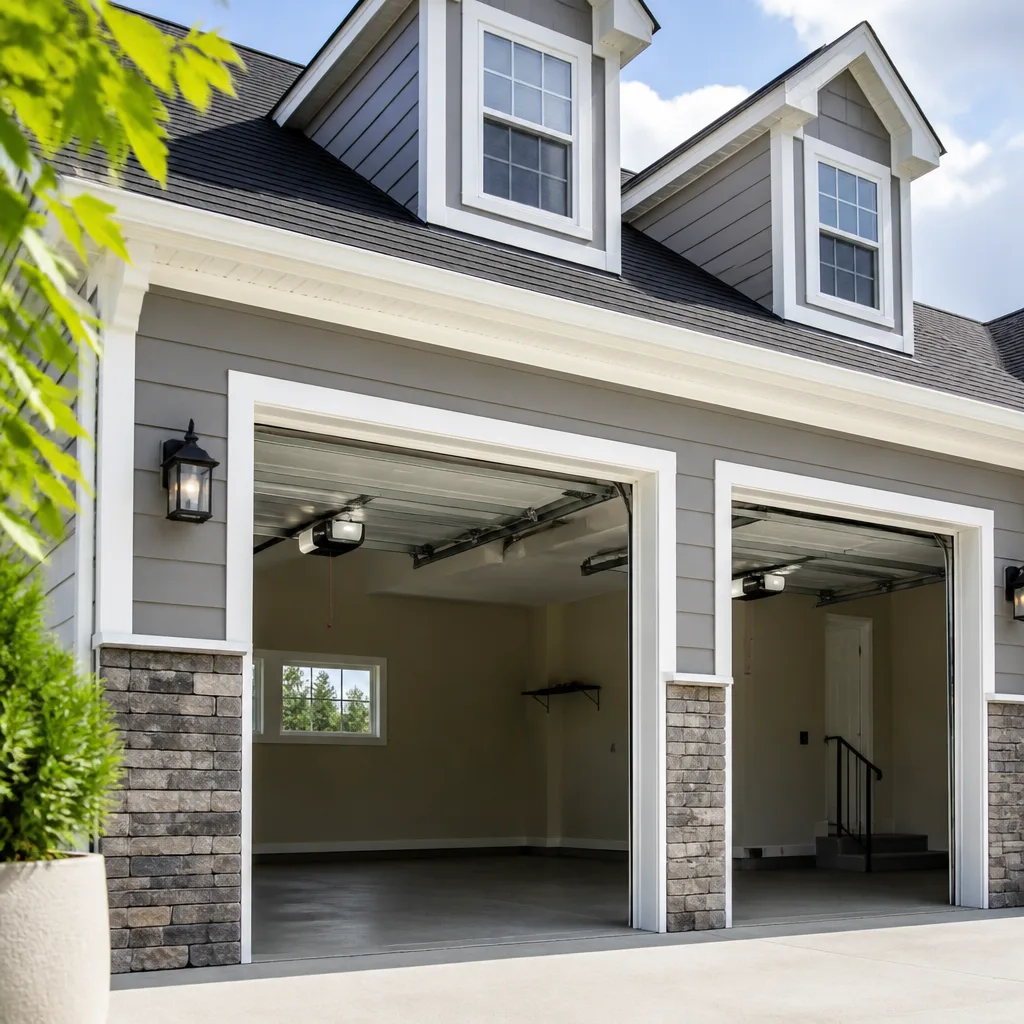
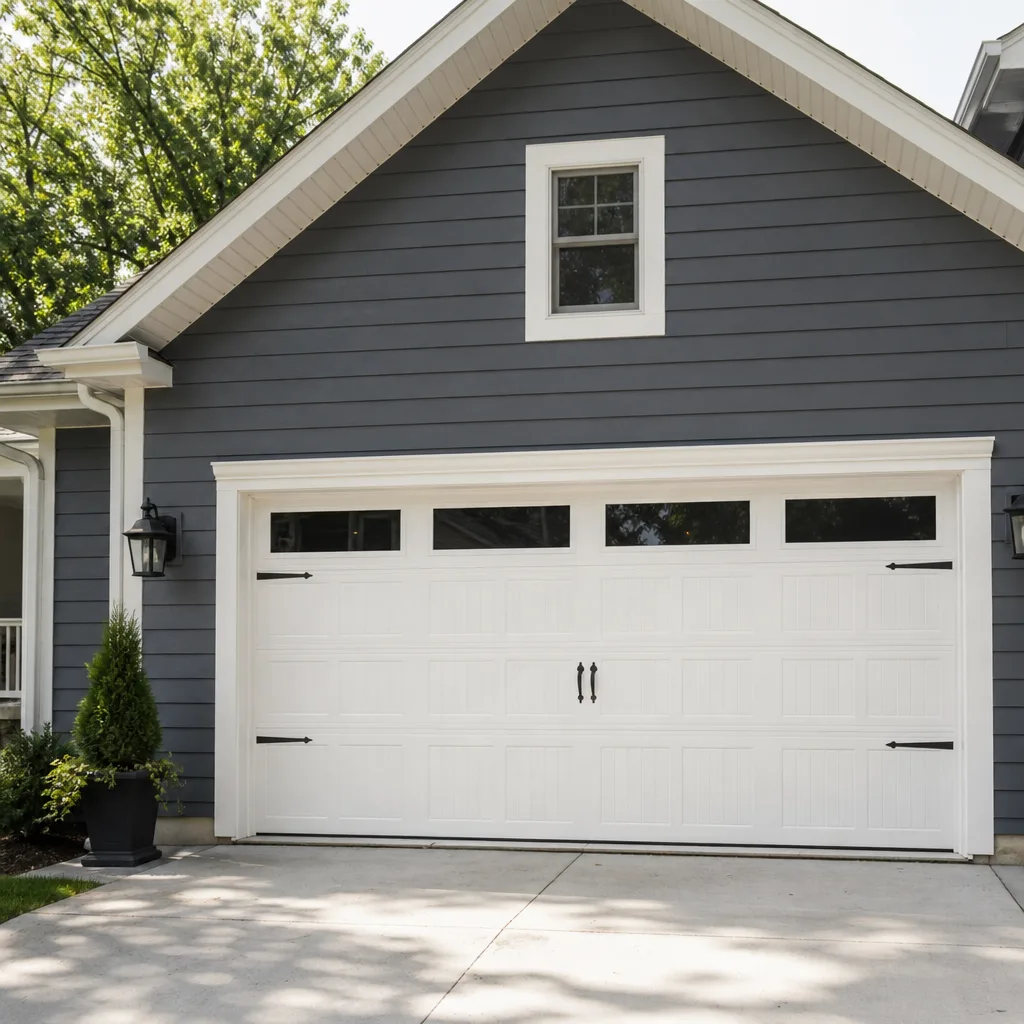
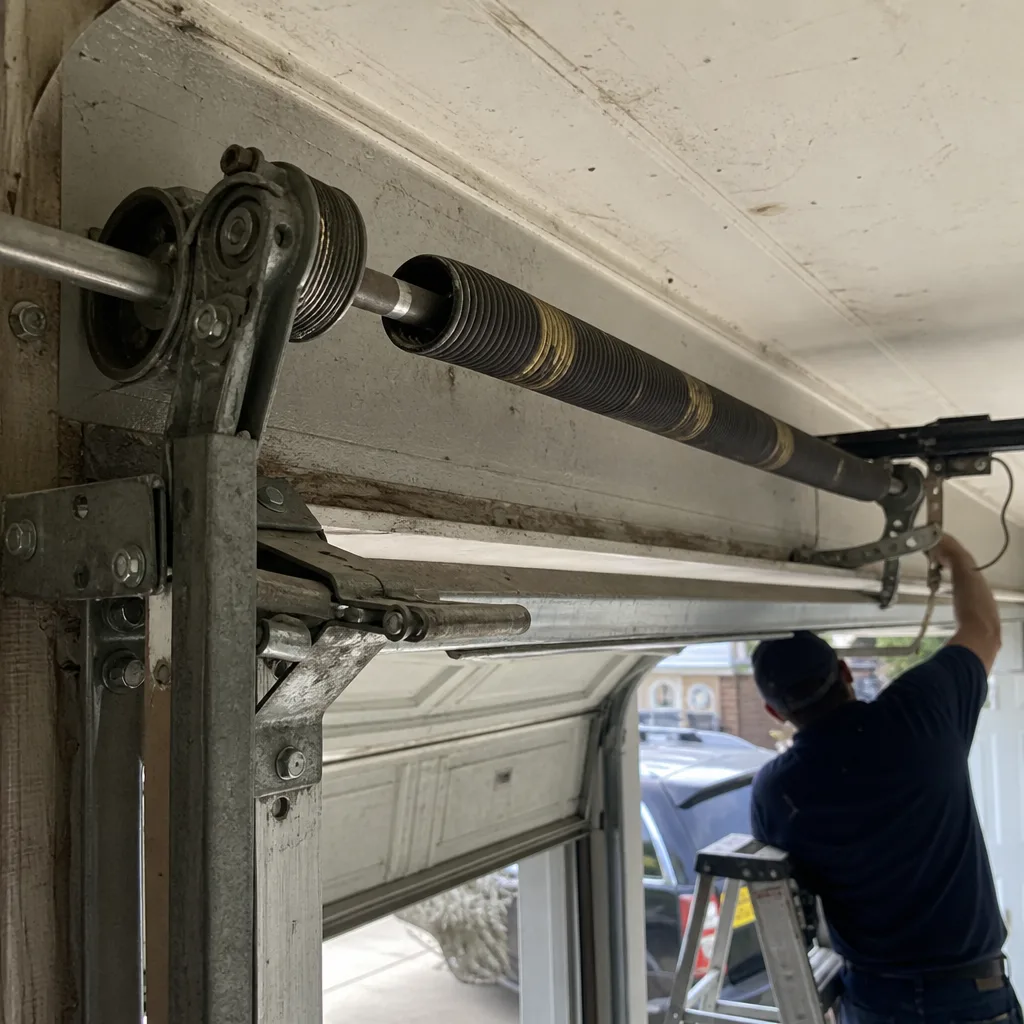 Before
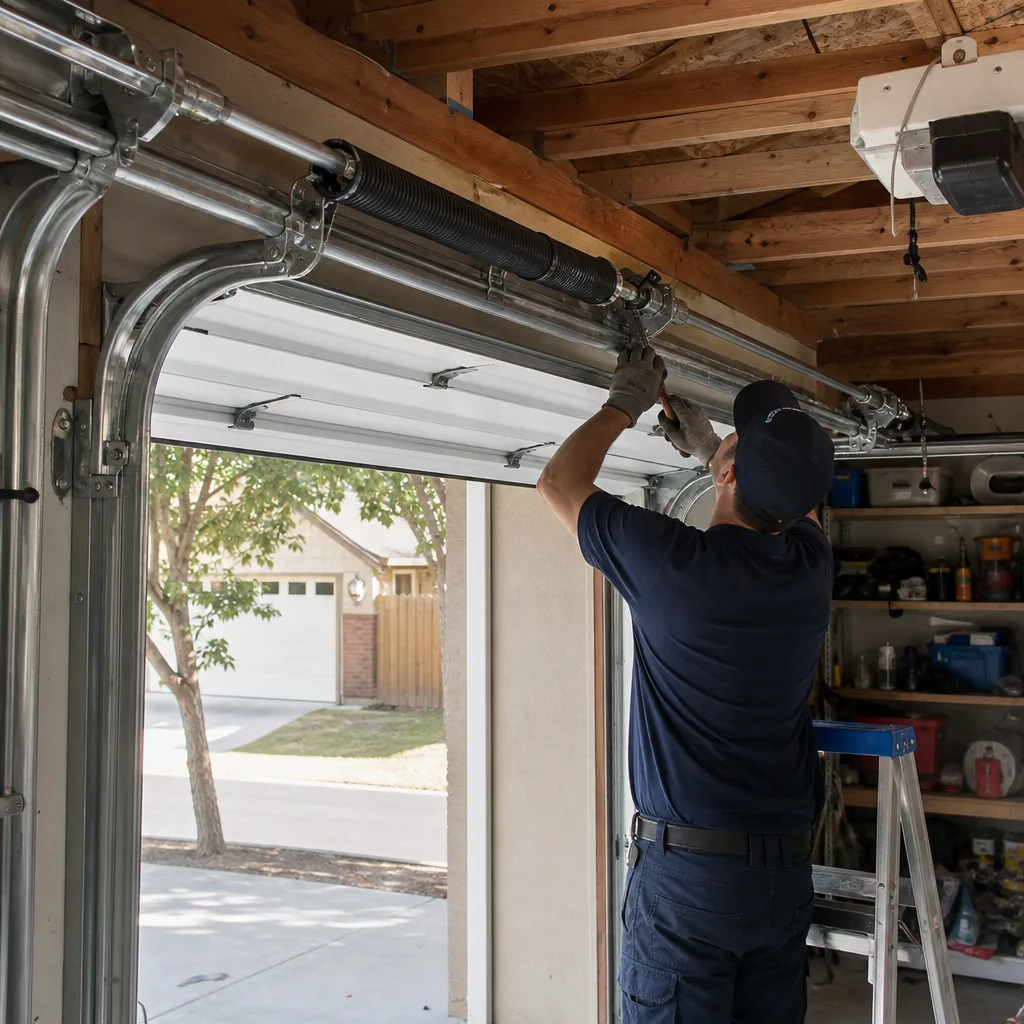 After
After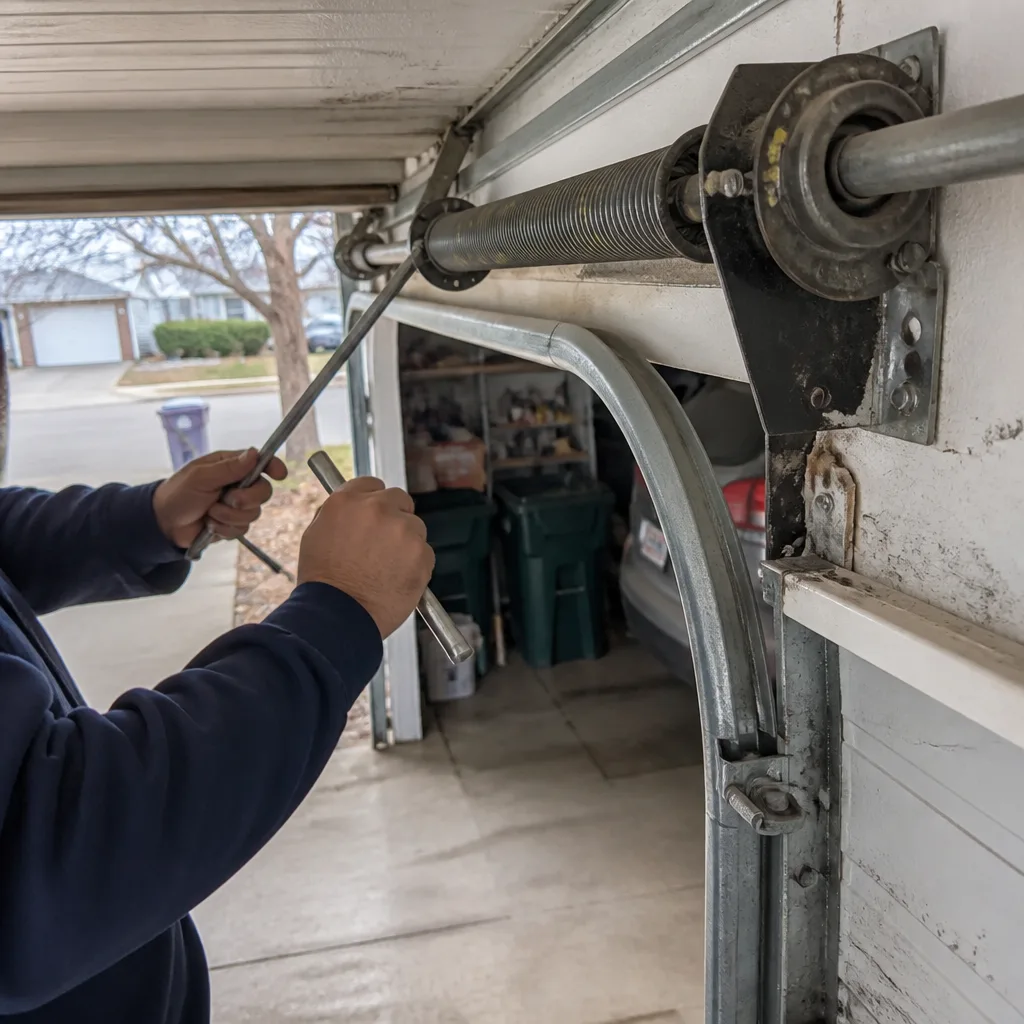 Before
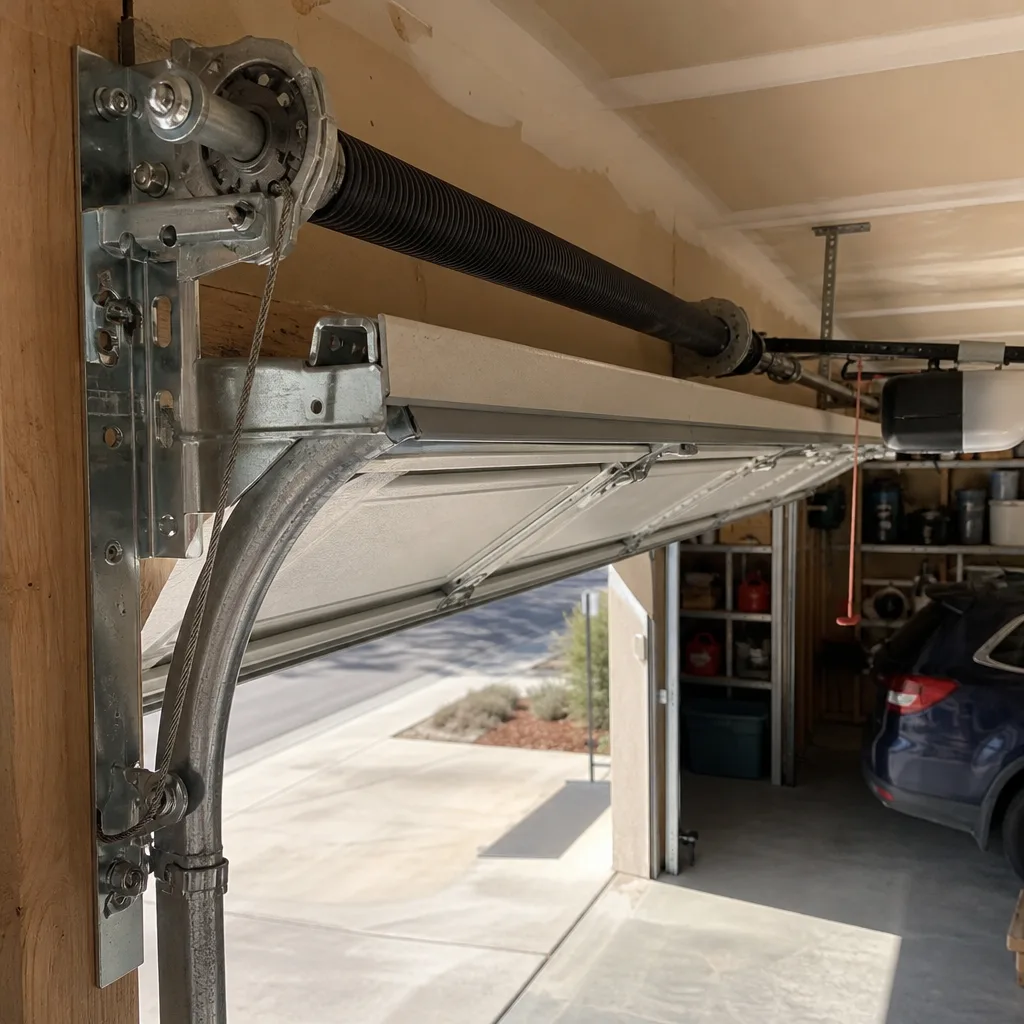 After
After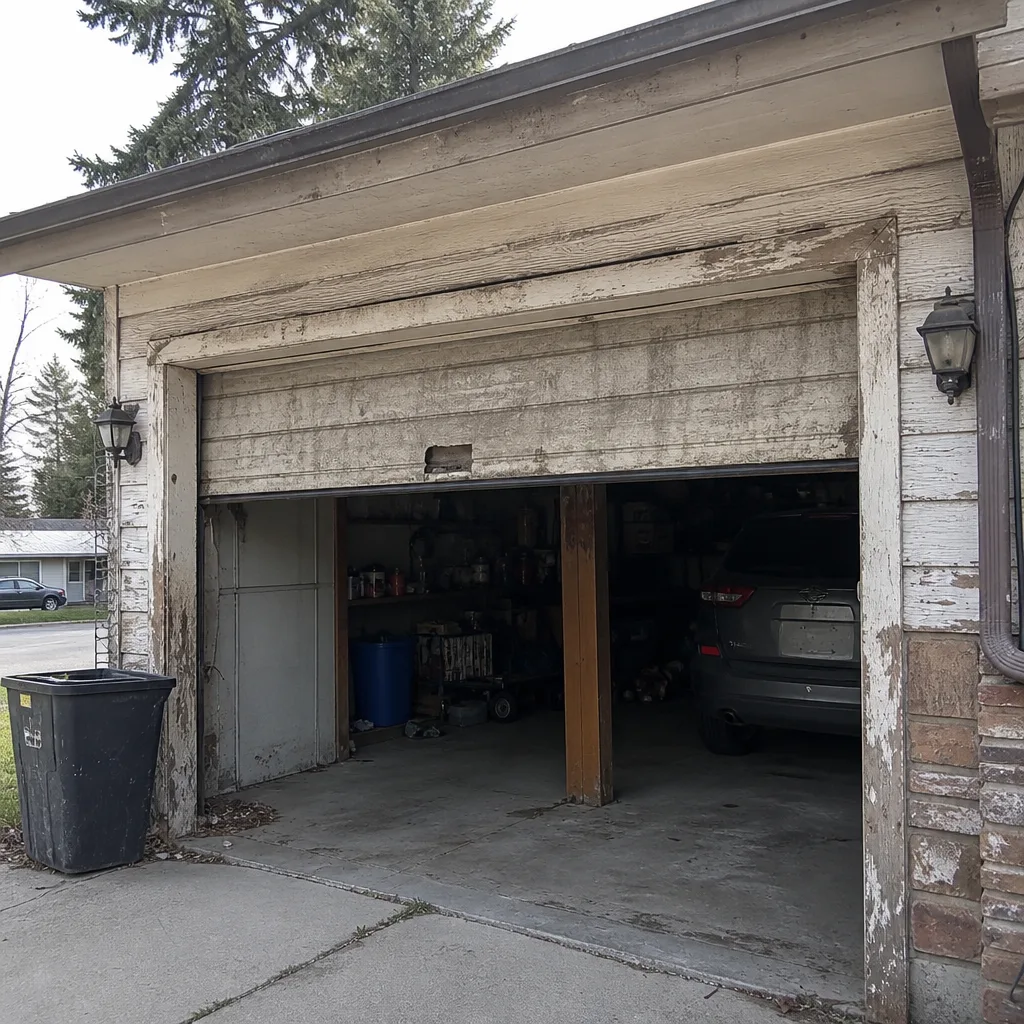 Before
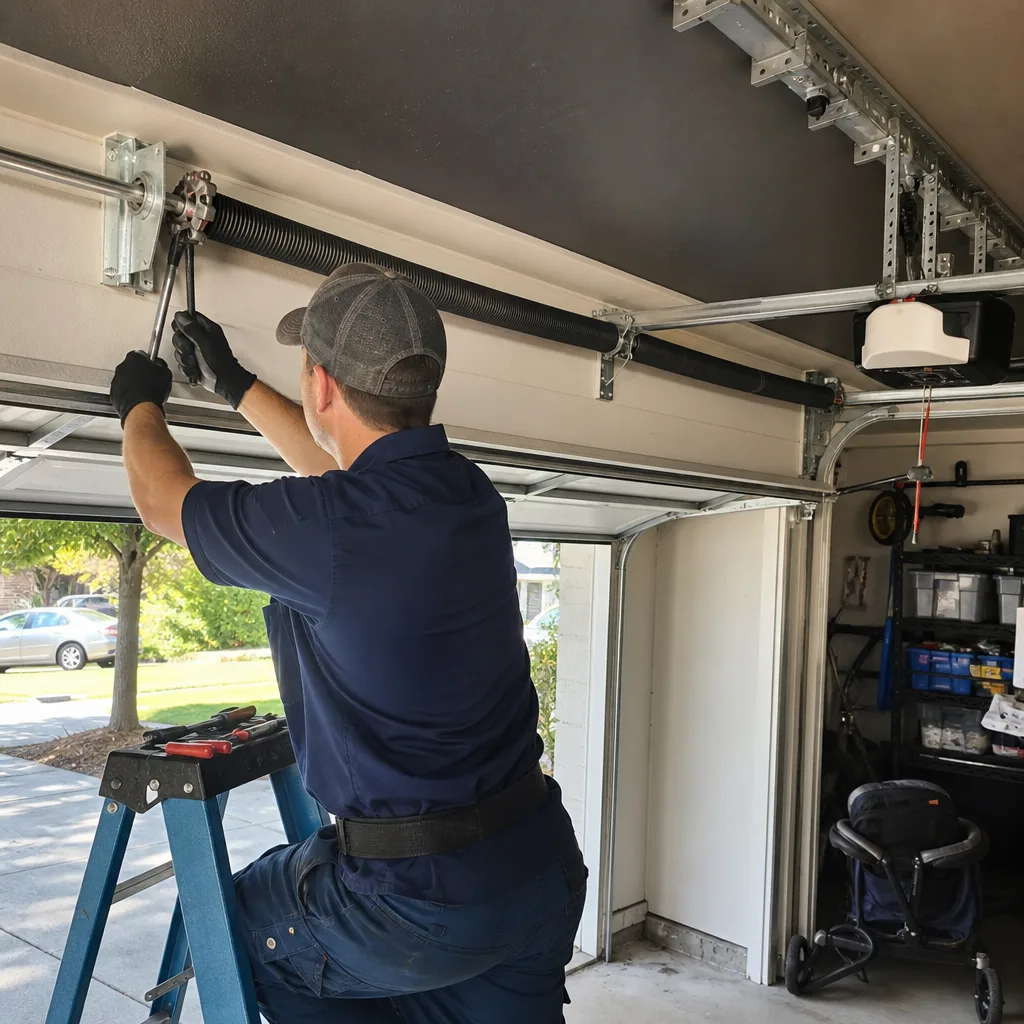 After
AfterDIY vs Professional Garage Door: The Longmont Homeowner’s Decision Guide
The garage door is the largest moving object in your home, and the spring that lifts it stores enough energy to lift a pickup truck. What surprises most Longmont homeowners is not that garage doors fail; it is that the line between a safe Saturday fix and a hospital visit runs straight through the spring assembly, not around it. This guide draws that line task by task, so you know exactly which repairs you can handle with a socket set and which ones justify a trained technician with a written price before the first bolt turns. For more guides & resources on garage door care, see our blog.
Quick Answer
Most garage door maintenance tasks in Longmont, including weatherseal replacement, roller lubrication, sensor alignment, and hinge tightening, are safe for a careful homeowner with basic tools. But torsion spring replacement, cable work under tension, and track realignment carry injury risk that skill does not eliminate, and those three jobs should go to a professional every time. The decision is not about your competence; it is about the physics stored in the part.
Table of Contents
- The Physics Problem: Why Springs Are Different
- Task Classification: What’s Actually Safe to DIY
- Tool Cost Reality Check: The Hidden Price of DIY
- Colorado Insurance and Liability: What Your Policy Actually Covers
- Torsion Spring Safety: The Numbers Behind the Danger
- Preparing for a Professional Visit Without Paying for the Prep
- The Middle Path: Diagnostic Steps That Save You Money
- Common Mistakes to Avoid
- When to Call a Professional
- Frequently Asked Questions
- The Bottom Line
BeforeAfterThe Physics Problem: Why Springs Are Different
A torsion spring on a standard 16-foot garage door in Longmont is typically wound to hold between 100 and 150 foot-pounds of stored torque, depending on door weight and spring wire diameter. When the spring breaks, or when a homeowner attempts to unwind it without the right tools, that energy releases in roughly one-tenth of a second. The steel winding bar becomes a projectile. The spring cone becomes shrapnel. The person holding the bar becomes a statistic.
This is the part that most DIY articles gloss over. Torsion spring replacement is not difficult because it requires rare expertise; a competent tradesperson can learn the procedure in an afternoon. It is dangerous because the danger does not care how carefully you’re working. A momentary lapse, a slightly undersized winding bar, a footing slip on a garage floor that’s still damp from a Colorado snowmelt, and the outcome is the same whether you’ve wound one spring or one thousand.
At Servo Garage Doors Longmont, we’ve replaced torsion springs across Longmont neighborhoods from Old Town to Prospect New Town to the newer subdivisions along the Diagonal, and the pattern is consistent: the failures we see from DIY attempts are never about intelligence or effort. They’re about energy. The homeowner understood the steps but not the stored force. Understanding the steps is knowing what to do. Understanding the stored force is knowing why the steps exist.
Garage door cables are a similar category. The cable that runs alongside the door carries the spring’s tension to the bottom bracket. When a cable snaps, the remaining cable on the other side is suddenly carrying the full load of a door that may weigh 150 to 250 pounds. Reattaching a cable without releasing that tension, the way a YouTube video suggests, puts you in the path of a loaded steel whip. We’ve seen the aftermath in garages across Longmont. It is avoidable.
The core distinction is simple. Some garage door parts are components. Others are energy storage devices. Components can be replaced. Energy storage devices need to be unwound, managed, or contained first. Mistaking one for the other is where the line between DIY and professional actually lives.
Task Classification: What’s Actually Safe to DIY
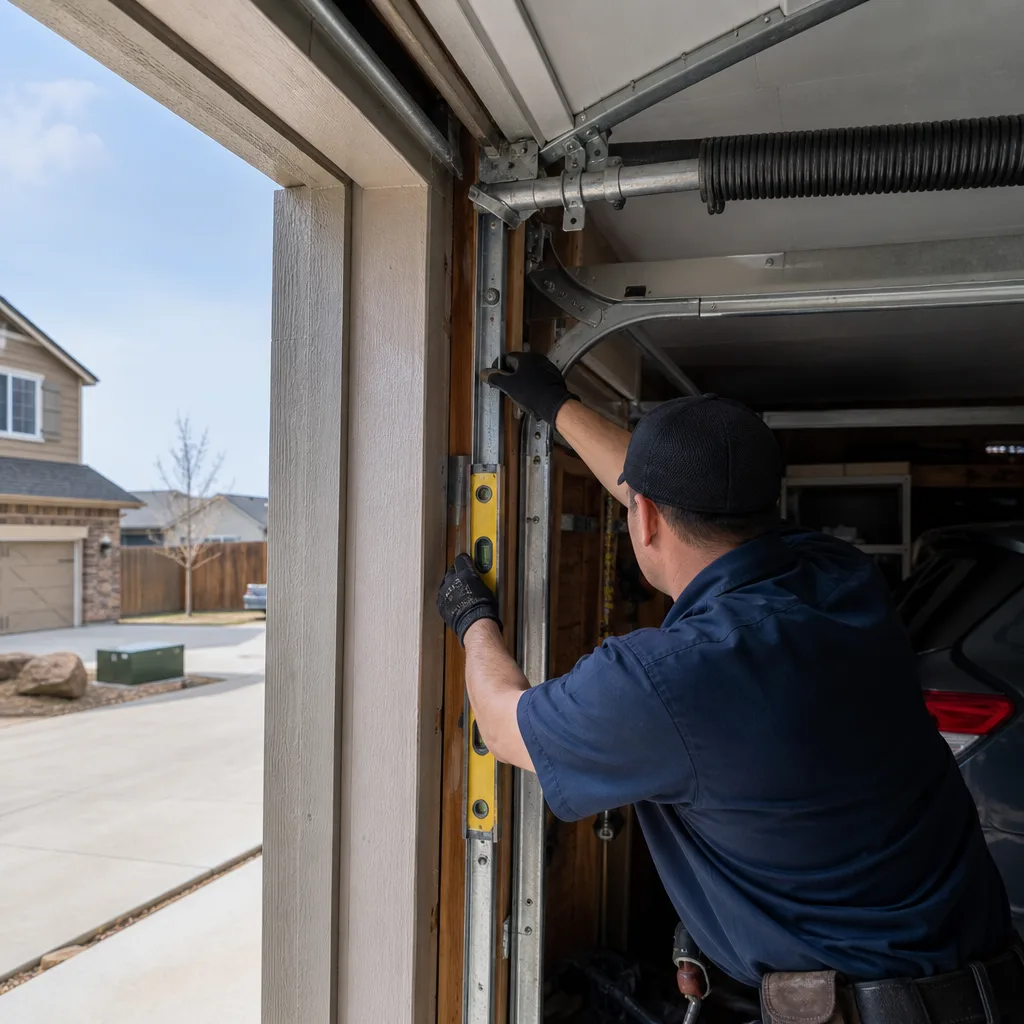
Here is the line drawn clearly. These are the tasks we tell Longmont homeowners they can absolutely handle, followed by the tasks where we recommend a professional, with the reasons stated plainly. For a printable version of this guidance, see our Garage Door Repair Maintenance Checklist for Longmont Homeowners.
Safe to DIY: No Stored Energy, Basic Tools, Reversible Mistakes
Weatherseal replacement. The rubber strip along the bottom of the door hardens and cracks in Colorado’s dry climate, especially after a few summers of intense Front Range sun. Replacing it requires pulling out the old seal, sliding a new one into the retainer channel, and trimming to length. No tension involved. Cost is $20 to $60 for the seal itself.
Roller lubrication. The rollers that guide the door up and down its tracks wear out faster when they run dry. A silicone spray or white lithium grease, applied to the roller bearings and hinge pivots once or twice a year, extends their life measurably. Do not use WD-40; it is a solvent, not a lubricant, and it will strip the bearing grease that keeps the rollers quiet.
Photo eye sensor alignment. When the safety sensors at the bottom of each track get bumped, the door thinks something is in its path and refuses to close. Realigning them involves loosening the mounting bracket, pointing the two sensors at each other until the indicator light turns solid, and retightening. This is a five-minute fix and a common call we field in Longmont.
Hinge tightening and replacement. The hinges that connect the door panels are bolted to the door with screws that can loosen over time. Tightening them is straightforward. Replacing a worn hinge is slightly more involved but still well within DIY range, as long as you replace one hinge at a time so the door remains supported.
Remote and keypad reprogramming. If your garage door opener remote or keypad stops pairing, the fix is usually a reset button and a fresh set of codes. LiftMaster, Chamberlain, and Genie units sold in the last decade all have straightforward reprogramming sequences in their manuals, and none of this work involves being near the door itself.
Not Safe to DIY: Stored Energy, Specialized Tools, or Structural Load
Torsion spring replacement. Covered above. This is the big one. Never touch it without professional equipment and experience.
Extension spring replacement. Older doors, especially in Longmont homes built in the 1970s and 1980s, may use extension springs along the horizontal tracks instead of a torsion spring above the door. These stretch under tension when the door is closed. If one breaks and the safety cable inside it has rusted through or is missing, the spring becomes a steel projectile. Replacing them correctly also requires balancing the door, which is a measurement process, not a guess.
Cable replacement or reattachment. As noted, cables carry the spring’s tension. Touching one without releasing that tension is how fingers get removed. This is not a figure of speech.
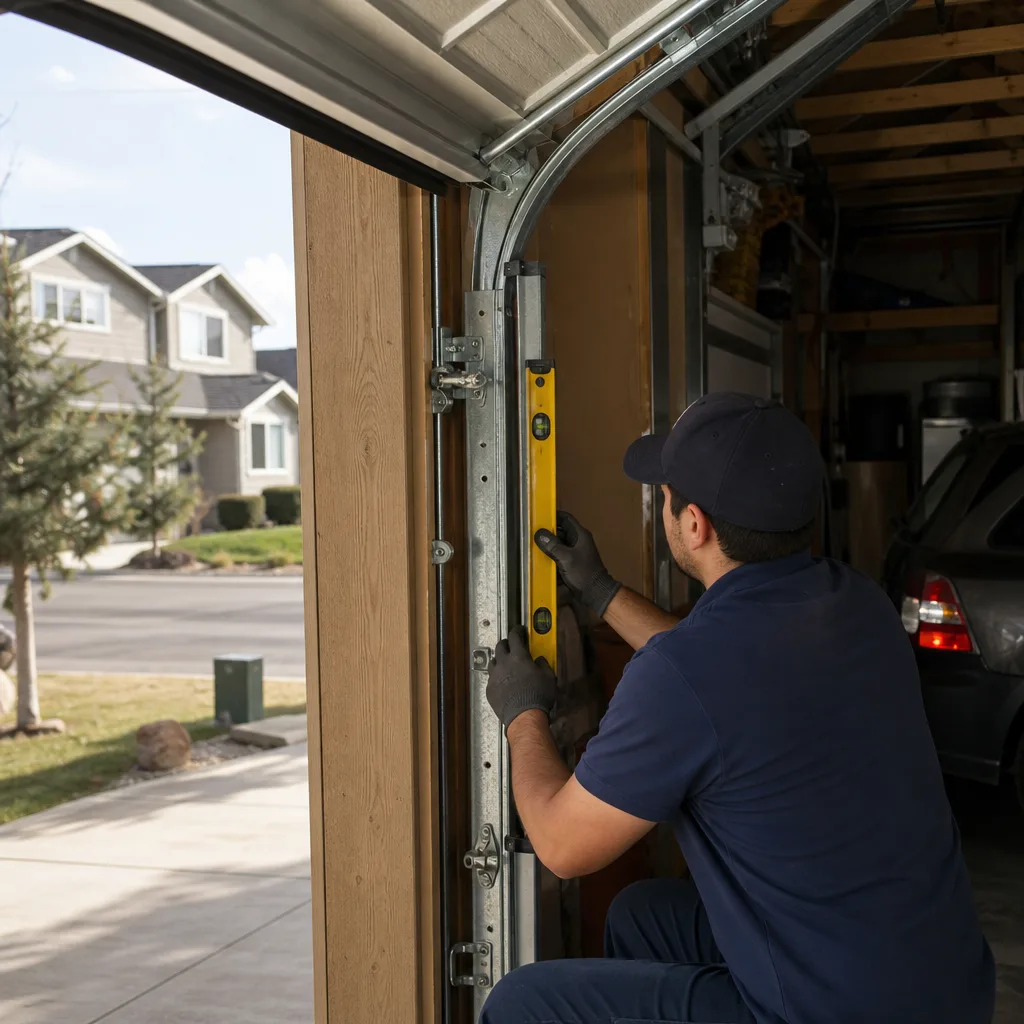
Track realignment. Track adjustments seem simple: loosen bolts, nudge track, retighten. But a door that is out of track has weight pressing unevenly against its rollers, and “nudging” the track while that weight is active can cause the door to jump out and fall. Any track work that goes beyond minor bracket tightening should involve a professional who can assess the door’s full travel path.
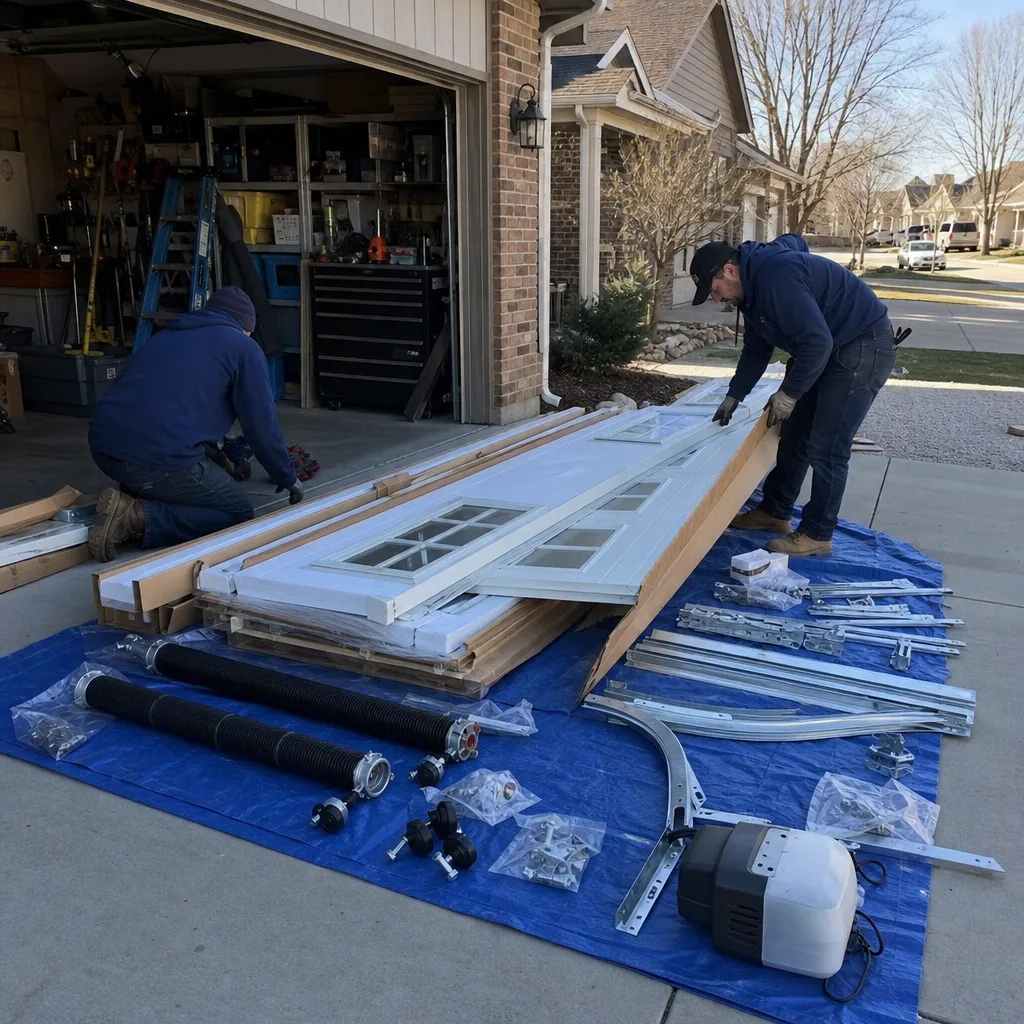
Full door replacement. A new garage door in Longmont weighs between 130 and 350 pounds depending on material, insulation, and size. Removing an old door involves releasing spring tension, disconnecting cables, and unbolting stacked panels. Installing a new one requires aligning panels, mounting tracks, winding springs, and balancing the final assembly. This is a measured, scheduled job, not a Saturday project. Garage door installation in Longmont is done best by someone who has installed hundreds.
Tool Cost Reality Check: The Hidden Price of DIY
Most DIY cost comparisons start with the part price and stop there. The part is the cheap part. For a deeper look at pricing, see our Garage Door Cost Breakdown: The Longmont Homeowner’s Reference for 2026. Here is what safe torsion spring work actually requires, priced at current retail:
- Winding bars: $25-$40 for a pair. These must be the correct diameter for the spring cone holes, typically half-inch cold-rolled steel. A screwdriver or a ratchet extension is not a substitute; it will bend under load and become a projectile.
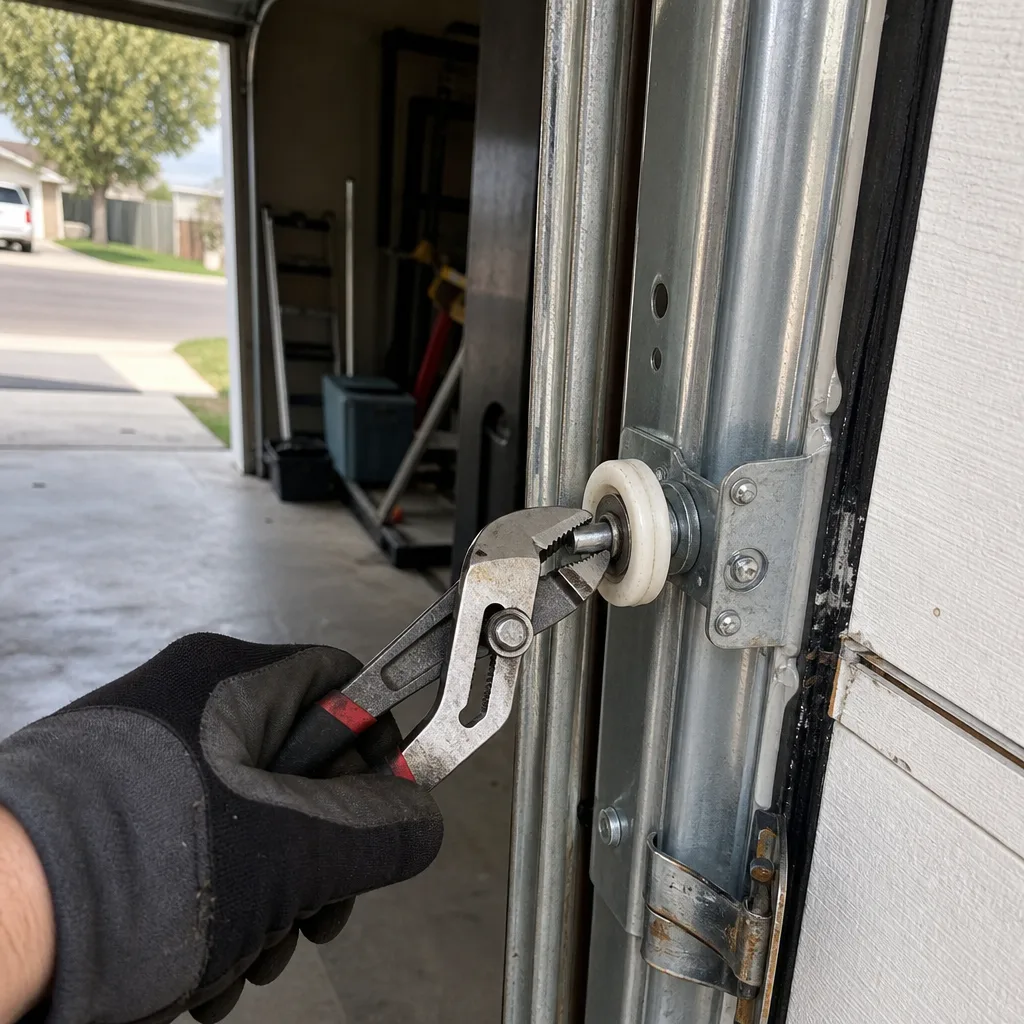
- Locking pliers (Vise-Grips): $15-$30. Used to secure the torsion tube before winding. Two pairs recommended.
- Torque measurement method: $0 if you count quarter-turns correctly; the failure point for most DIY spring work is losing count mid-wind, which means starting over from zero. There is no digital tool here, only discipline and a helper who can count aloud.
- Safety glasses and work gloves: $20-$40. Non-negotiable regardless of who does the work.
- Replacement spring pair: $80-$180 for a matched pair in the wire diameter and coil count your door requires. Springs are replaced in pairs; one new and one old spring causes the door to run unevenly.
The realistic DIY spring job in Longmont runs $140 to $290 in tools and parts, and that assumes accurate spring measurement and no second trip for a wrong-size component. We quote torsion spring replacement in Longmont at a flat written price that typically falls between $280 and $450, including the parts, the labor, the balancing, and an inspection of every other wear point on the door. The savings from DIY is not zero, but it is narrow, and it comes with a floor you can’t return if something goes sideways.
That tool math changes if you plan to replace springs twice, or if you maintain multiple doors. For the homeowner with one garage door who will replace one spring pair every seven to ten years, the specialized tools never pay for themselves. For the homeowner who wants to learn, the equation is different, and we respect that. But the math should be done before the first winding bar is purchased, not after the spring is already half-wound.
Colorado Insurance and Liability: What Your Policy Actually Covers
Here is a part of the DIY conversation that most guides skip entirely, and it matters in Longmont because Colorado’s homeowner’s insurance market has tightened in recent years following wildfire and hail losses across the Front Range.
If you attempt a torsion spring replacement yourself and the spring or a winding bar damages your car, your garage wall, or your drywall, your homeowner’s policy may cover the property damage under the accidental damage provisions. But it may also deny the claim if the insurer determines the work was performed by an unqualified person acting negligently. The standard Colorado ISO homeowner’s policy form excludes loss caused by “faulty, inadequate, or defective workmanship” performed by the insured. If the insurer can argue your winding technique was faulty, you are repairing that garage wall out of pocket.
If you injure yourself, your health insurance is your primary coverage. Your homeowner’s policy generally will not cover your own medical expenses for a DIY injury; that is what health insurance is for, which means deductibles, co-pays, and out-of-pocket maximums. If a friend or family member helps you and is injured by the spring, your homeowner’s liability coverage may respond, but a claim on your policy for a garage door spring injury is likely to raise your premiums for years and may trigger non-renewal in the current Colorado market.
The licensed professional path carries a different risk profile. A licensed and insured garage door company in Colorado carries workers’ compensation for its technicians and general liability for accidental property damage. For details on local requirements, read Garage Door Permits, Codes & Inspections in CO: What You Need to Know. If a technician makes a mistake, the company’s insurance is the first line, not yours. That is not a trick of the trade; it is the entire point of hiring licensed trade professionals.
This is not an argument that every DIY repair is an insurance catastrophe waiting to happen. Weatherseal replacement and sensor alignment carry roughly zero insurance risk. The point is that insurance risk tracks the danger scale exactly. The same jobs that can hurt you are the jobs that can hurt your policy.
Torsion Spring Safety: The Numbers Behind the Danger
Let’s put the stored energy in a torsion spring into terms that mean something in a Longmont garage.
A standard 16-by-7-foot residential garage door weighs roughly 150 to 200 pounds, depending on material and insulation. A two-car door may weigh more. The torsion spring’s job is to counterbalance that weight so the door can be lifted with one hand. To do that, the spring is wound to a tension that, if released suddenly, generates impact forces measured in the hundreds of pounds per square inch at the point of contact with whatever stops the moving part.
The industry’s standard safety guidance, from the Door and Access Systems Manufacturers Association (DASMA), is explicit: torsion spring replacement should be performed only by trained professionals using proper winding bars and following the spring manufacturer’s specifications. DASMA’s guidance is not cautious lawyer language; it is written by the manufacturers who build the springs and the doors they lift.
In our experience at Servo Garage Doors Longmont, we’ve responded to calls from homeowners who attempted a spring replacement and stopped partway through because the winding bar slipped even though they had done everything “right.” They were using the right bars, the right technique, and they still felt the bar load up in a way that told them the next half-turn was not worth the risk. There is a moment in every spring job where you realize the spring does not care about your weekend plans. The homeowners who recognize that moment early are the ones who call us with an unbroken garage and an unbroken hand.
The specific danger in a Longmont garage is not the cold, though cold does affect spring fatigue. It is the combination of an older home’s original door hardware and a newer homeowner’s understandable desire to fix things themselves. Homes in Longmont’s older neighborhoods, built when 8-by-7 doors were standard and the springs were sized accordingly, often have springs that have been through 20 or 30 Colorado winters. A fatigued spring under full wind is not the place to learn a new skill.
Preparing for a Professional Visit Without Paying for the Prep
Hiring a professional does not mean going in blind. In fact, the most efficient professional visit starts with the homeowner having already done the diagnostic legwork. Here is what to document and measure before you call, so the conversation starts with a parts quote rather than a discovery session.
- Photograph the spring assembly. Take a clear photo of the torsion spring (the one above the door) or the extension springs (the ones along the horizontal tracks). A photo lets the technician identify the spring type and likely replacement parts before arriving.
- Measure the door. Note the width and height of the door: 8 by 7 for single, 16 by 7 for double, or custom sizes for older Longmont homes. The spring must match the door size and weight.
- Note the door’s behavior. Does the door open and not close? Close and not open? Open halfway and stop? Grind when it moves? Each failure pattern points to a different component, and describing it accurately saves diagnostic time.
- Check the balance. Disconnect the opener (pull the red release handle), then lift the door manually. A balanced door stays put at half height. A door that drops or shoots up has a spring or cable problem. This test is safe to do at arm’s length.
- Check the opener lights and codes. If the opener is involved, note whether the motor runs, whether the lights flash a pattern, and any error codes on the unit. LiftMaster and Chamberlain openers flash their light in sequences that map to specific faults.
- Clear the area. Move vehicles, bikes, and storage out of the technician’s way before they arrive. It sounds obvious, but a clear garage floor reduces billable time in measurable ways.
When you call Servo Garage Doors Longmont with this information in hand, we can often give you a flat written price before the technician even pulls into your driveway, because we know the spring, the door, and the failure mode you’re describing. That is the whole point of Clause 1 of The Haven Standard: a written price and written scope before any work starts. The more you can tell us, the more precise that number is.
We also offer a Free Second Opinion on any written estimate from another company. Bring the paperwork. If the work is necessary, we’ll match or beat the diagnosis with better documentation. If it isn’t, you’ll know that too. That offer exists because the evidence is supposed to do the persuading in this trade, not the urgency of the sales pitch.
The Middle Path: Diagnostic Steps That Save You Money
Between full DIY and full professional lies the path most Longmont homeowners actually want: you handle the diagnosis, a professional handles the fix. Here is how to split the work so that a professional visit is short, focused, and priced before the technician arrives.
Step 1: Isolate the Problem
Disconnect the opener using the red release handle and operate the door manually. If the door opens smoothly by hand but not with the opener, the problem is the opener, not the door. If the door is heavy, uneven, or grinding when moved by hand, the problem is in the door itself: springs, rollers, hinges, or track. This single test splits garage door problems into two categories and tells you which technician to call.
Step 2: Inspect What You Can See Without Touching Tension Parts
Look at the rollers. Flat spots mean replacement. Look at the hinges. Cracks mean replacement. Look at the weatherseal. Gaps mean replacement. Look at the cables. If a cable is frayed, do not touch it; photograph it and call. The cable is under tension even when the door is open.
Step 3: Document Everything
Photograph the spring, the cables, the rollers, the hinges, and the track. Measure the door. Note the door’s behavior in plain language: “door opens two feet and stops” is more useful than “door is broken.” This documentation is what turns a diagnostic call into a parts quote.
Step 4: Decide What You’re Buying
You are not buying labor; you are buying the written price, the written scope, the licensed and insured technician, and the documented photo record of the work. That last piece is Clause 4 of The Haven Standard, and it exists because the customer should see the failed part before anyone quotes a replacement. If a company will not show you the failed component before quoting, you are not getting a repair; you are getting a sales pitch.
This middle path applies to garage door repair in Longmont across the board. You do the walking, the photographing, and the measuring. The technician does the tension work, the replacement, and the documentation. Both sides save time, and you keep the evidence of what was found and what was done.
Common Mistakes to Avoid
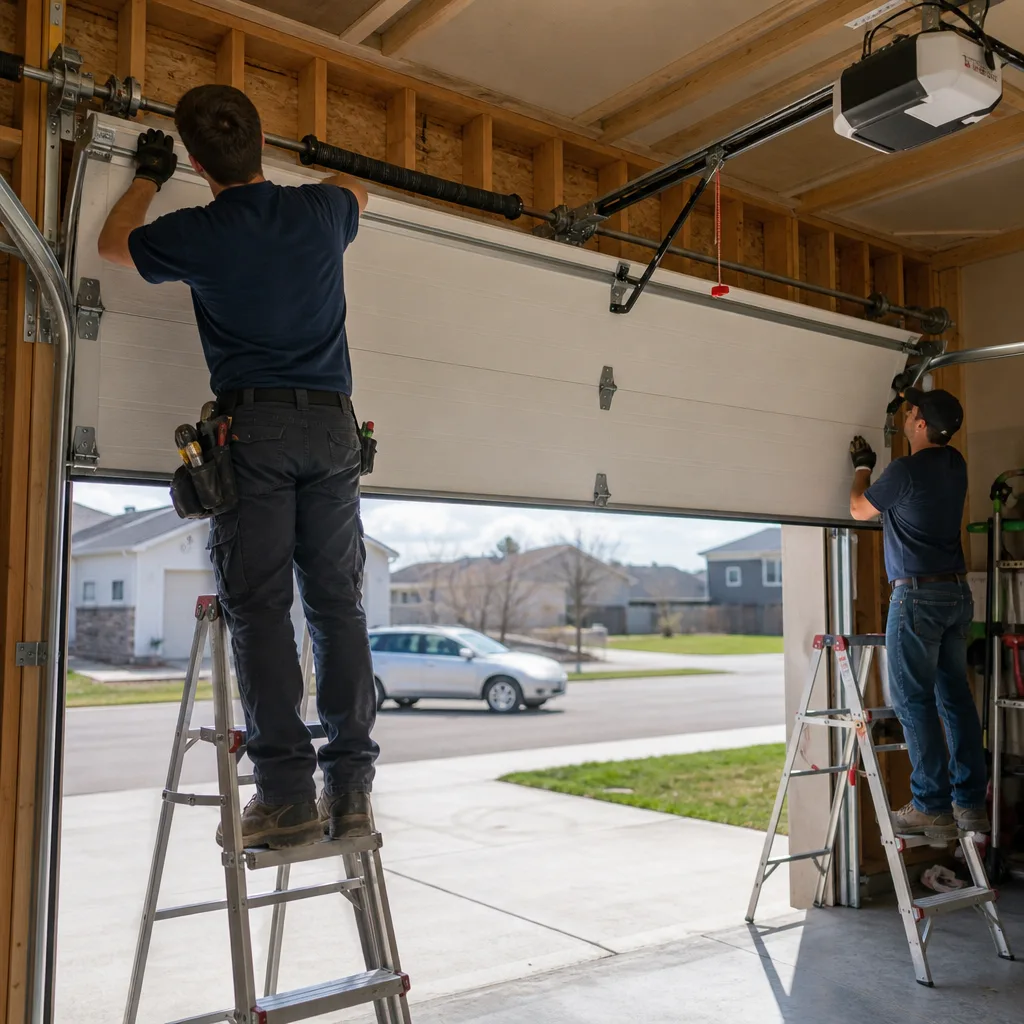
- Using the wrong tool as a winding bar. A screwdriver, a ratchet extension, or a piece of rebar is not a winding bar. The correct tool is a half-inch cold-rolled steel bar sized to the spring cone’s holes. The wrong tool bends under load and becomes a projectile.
- Replacing only one spring. Torsion springs wear as a pair. If one has broken, the other is statistically close behind. Replacing only one creates an unbalanced door that will wear the new spring prematurely and may bind in the track.
- Lubricating the track. The track does not need lubrication. The rollers and hinges do. Greasing the track attracts Colorado dust and grime, which accelerates roller wear. Use silicone spray on the rollers, nothing on the track.
- Forgetting the photo eye sensors during cleaning. A surprising number of “broken” openers in Longmont are just dirty or misaligned sensors. Before you call anyone, wipe the sensor lenses and check that both indicator lights are on.
- Attempting spring work without releasing opener tension first. Even with the opener disconnected, a door that is still under spring tension can move unpredictably. The release handle disconnects the opener; it does not release the spring.
- Assuming all garage door companies quote the same way. Most companies in Longmont will give you a verbal estimate over the phone and then adjust it after they arrive. That is how the trade has always worked, but it is not how it has to work. A written price before work starts is a specific thing. If the company will not put it in writing before touching your door, that is a signal about how the rest of the job will go.
- Waiting for the door to fail completely before investigating a grinding noise. Grinding, squealing, or shuddering on the way up is the door telling you a roller or hinge is failing. Ignoring it for months turns a $40 hinge replacement into a $400 panel realignment.
When to Call a Professional
Call a professional when the job involves stored energy, including torsion springs, extension springs, and cables under tension. Call a professional when the door is off its track, when a panel is cracked badly enough to compromise the door’s structural integrity, or when the door refuses to respond to the opener and the manual disconnection test points to the springs rather than the opener. Call a professional when you have already tried the safe fixes and the problem persists, because repeated attempts at a misdiagnosis cost more than a single correct service call. Servo Garage Doors Longmont offers free estimates in Longmont, and we answer the phone with a real person around the clock. Call (970) 528-5851.
Frequently Asked Questions
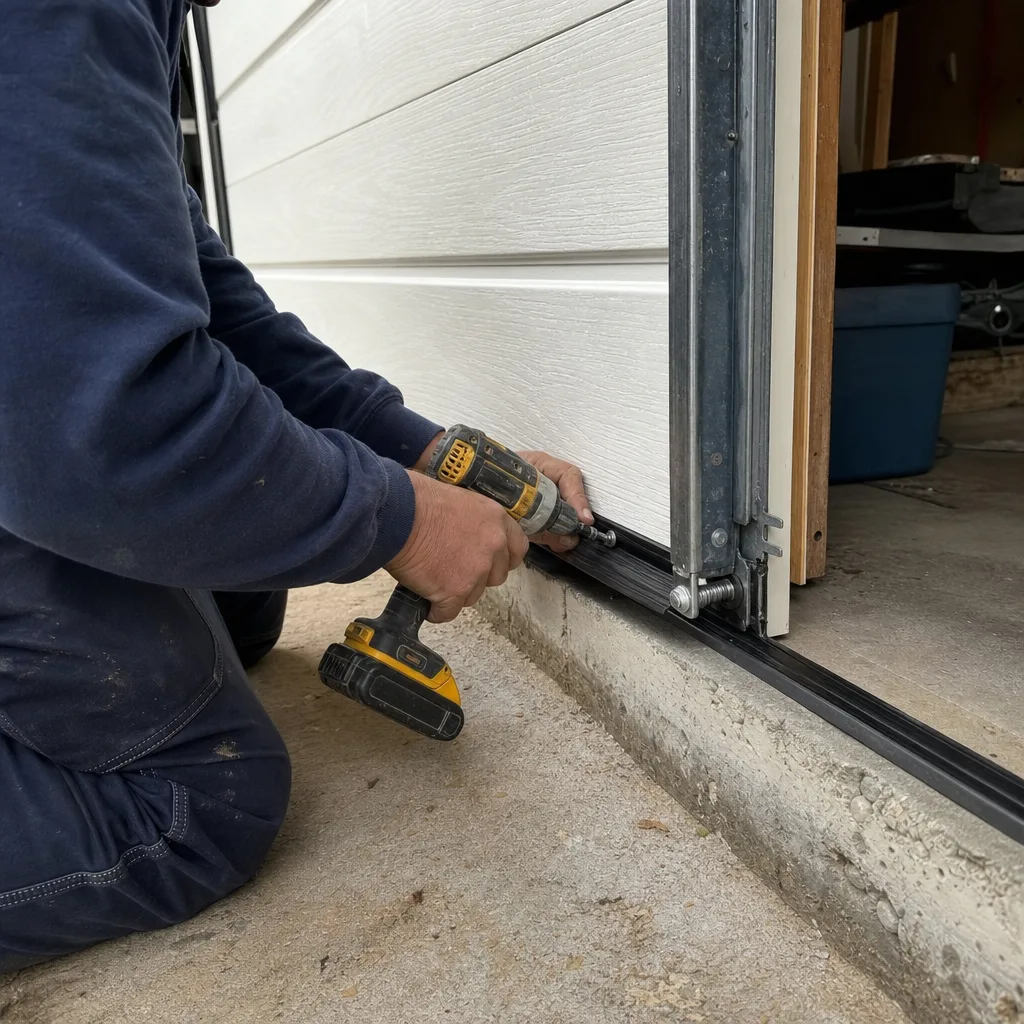
Torsion spring replacement in Longmont typically runs between $280 and $450 for a matched pair, installed and balanced, with the final price stated in writing before work begins. Extension spring replacement runs slightly lower, typically $200 to $350 for a pair. The door’s size, spring wire diameter, and whether the spring is standard or high-cycle all affect the final quoted price. Call (970) 528-5851 for an exact written quote; estimates are free.
You can, but you should not, because a torsion spring under full wind stores enough torque to break bones or worse if the winding bar slips. The danger does not correlate with your skill level; it correlates with the fact that the spring is under hundreds of foot-pounds of tension. Installing the spring correctly also requires balancing the door after winding, which is a measurement process most homeowners have no reason to know. We recommend a professional every time for this specific part.
Weatherseal replacement, roller lubrication, photo eye sensor realignment, hinge tightening, and opener remote reprogramming are all safe for a careful homeowner with basic tools. None of these involve stored energy or structural load. If the repair requires touching the spring, the cables, or the track, leave it to a professional.
Disconnect the opener by pulling the red release handle, then lift the door manually. If the door opens smoothly by hand, the problem is in the opener or its programming. If the door is heavy, jerky, or uneven, the problem is in the door: the springs, rollers, hinges, or track. This single test takes thirty seconds and is safe to perform.
Fatigue, mostly. Springs are rated for a set number of cycles, usually 10,000 for standard springs, and every open-and-close is one cycle. A door used four times a day reaches 10,000 cycles in about seven years. Colorado’s temperature swings add stress to the spring steel, and a door that was never balanced properly will wear its springs faster. When one spring breaks, the other is usually close behind, which is why they are replaced as a matched pair.
Not with us. We provide a flat, written price and written scope before any work starts, and that number does not change unless the scope changes and you approve it in writing first. That is Clause 1 of The Haven Standard, and it applies to every job we do in Longmont. The photograph of the failed component is part of the documentation you receive, not a tool we use to raise the price.
The Bottom Line
The DIY-versus-professional decision for a garage door in Longmont is not a test of your handiness. It is a question of whether the part you are about to touch stores energy. Weatherseal, rollers, sensors, and hinges are components: replace them confidently. Springs and cables are energy storage devices: leave them to someone who manages that energy professionally and documents the work. The middle path is where most homeowners should live: you diagnose, photograph, and measure; a professional replaces, balances, and documents. Servo Garage Doors Longmont has done this work across Longmont since 2015, always with a written price before work starts and a photo record when it is done. Call (970) 528-5851 for a free estimate.
Written by Marcus Deller, Owner at Servo Garage Doors Longmont, serving Longmont since 2015.