
Last updated September 20, 2026
Full 25-point door and opener safety check with every visit - springs, cables, rollers, tracks, and your LiftMaster or Chamberlain opener included
You get a price before we start. It does not change when the truck arrives.
 Before
 After
After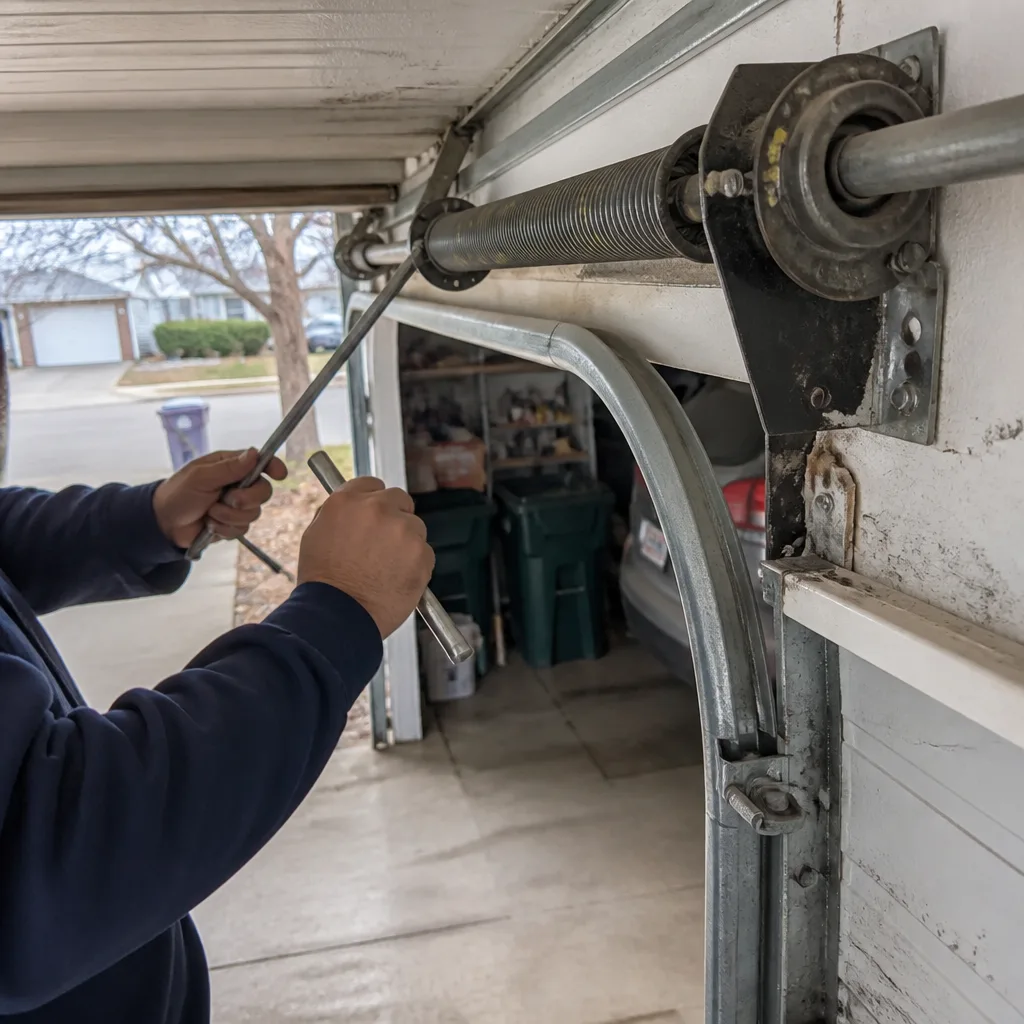 Before
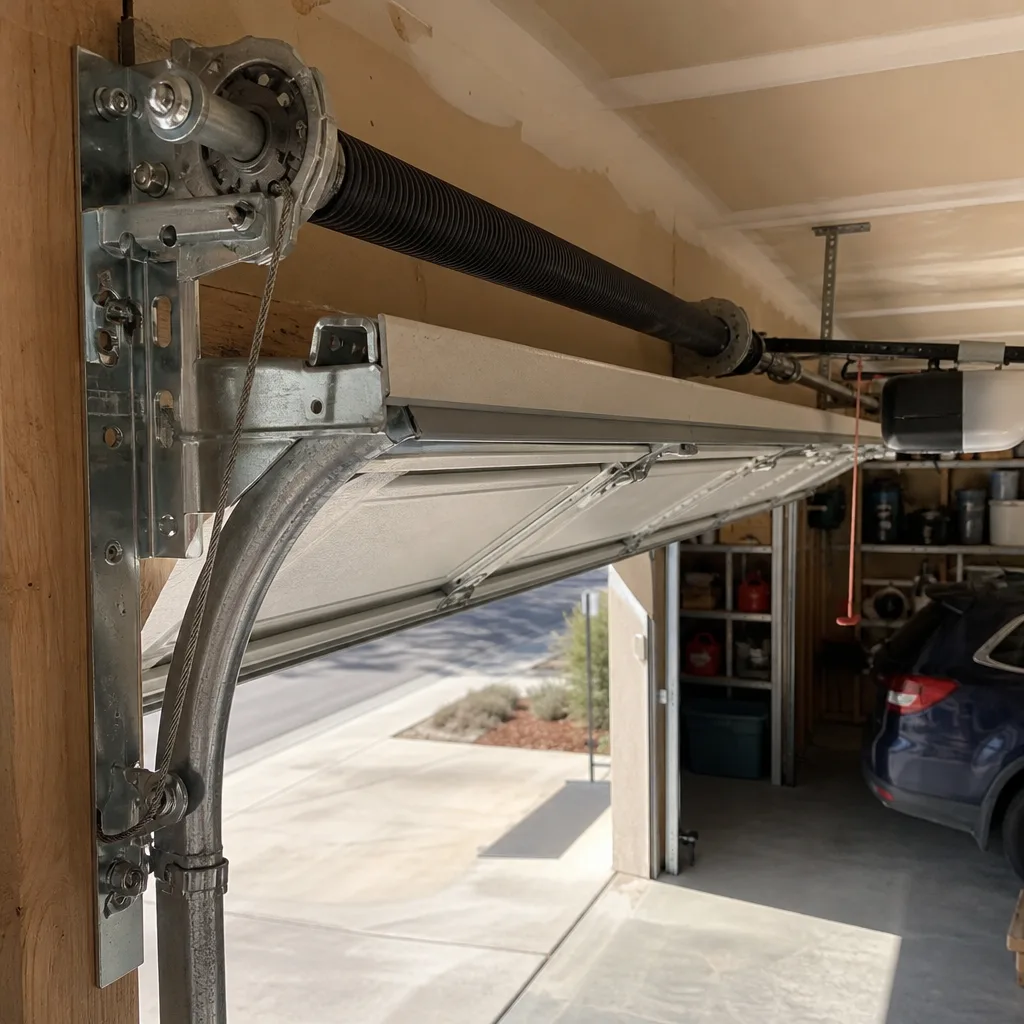 After
After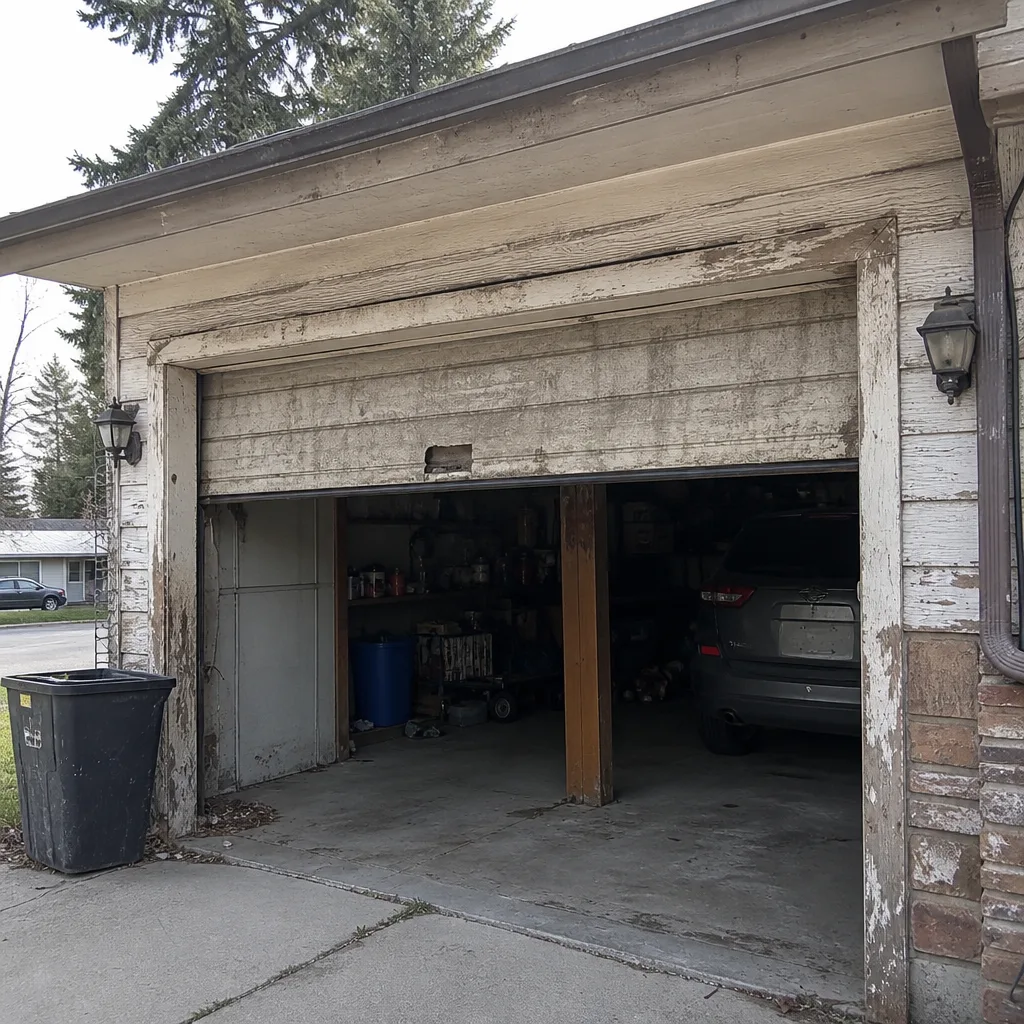 Before
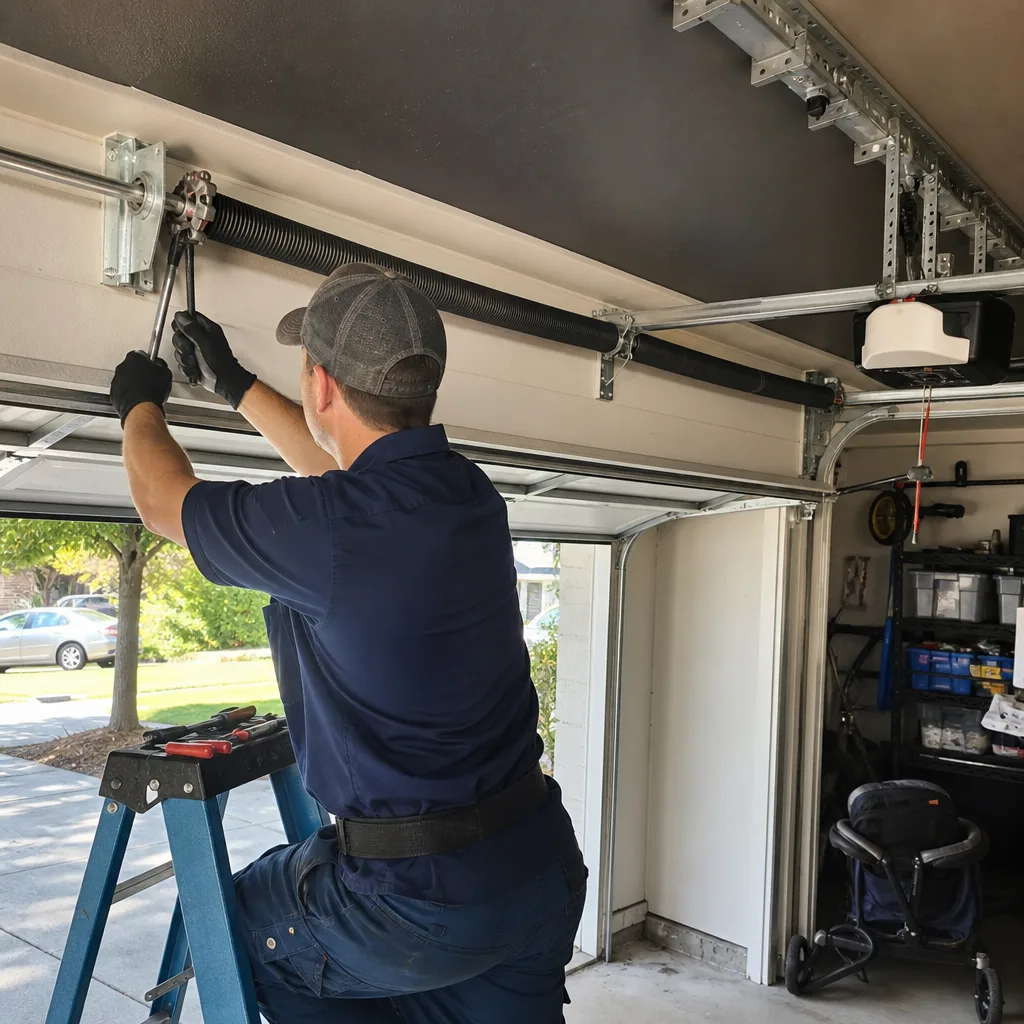 After
AfterSeasonal Garage Door Care for Longmont: Year-Round Homeowner’s Guide
March is the month we replace the most garage door springs in Longmont. Not January, not February. March. The reason comes down to thermal cycling: nighttime lows still dip near 20°F while afternoon highs climb past 50°F, sometimes in the same 24-hour window. That 30-degree swing, repeated day after day across a month, fatigues spring steel faster than a sustained deep freeze ever will. This guide is built around that reality and several others specific to Longmont’s elevation, wind patterns, and UV exposure. You’ll learn what to check each month, what actually fails at 5,000 feet, and when a problem is worth a professional set of eyes.
Quick Answer
Seasonal garage door care in Longmont means inspecting and lubricating moving parts four times a year, adjusting your routine around three local weather realities: March thermal cycling that breaks springs, summer UV that degrades weatherseal and paint within three to five seasons, and Front Range wind gusts that test door bracing and balance every spring. A well-maintained door should cycle quietly, reverse properly on obstruction, and seal evenly against the floor. Most homeowners can handle lubrication and visual inspection in 20 minutes per season; spring replacement, cable work, and track realignment are professional jobs.
Table of Contents
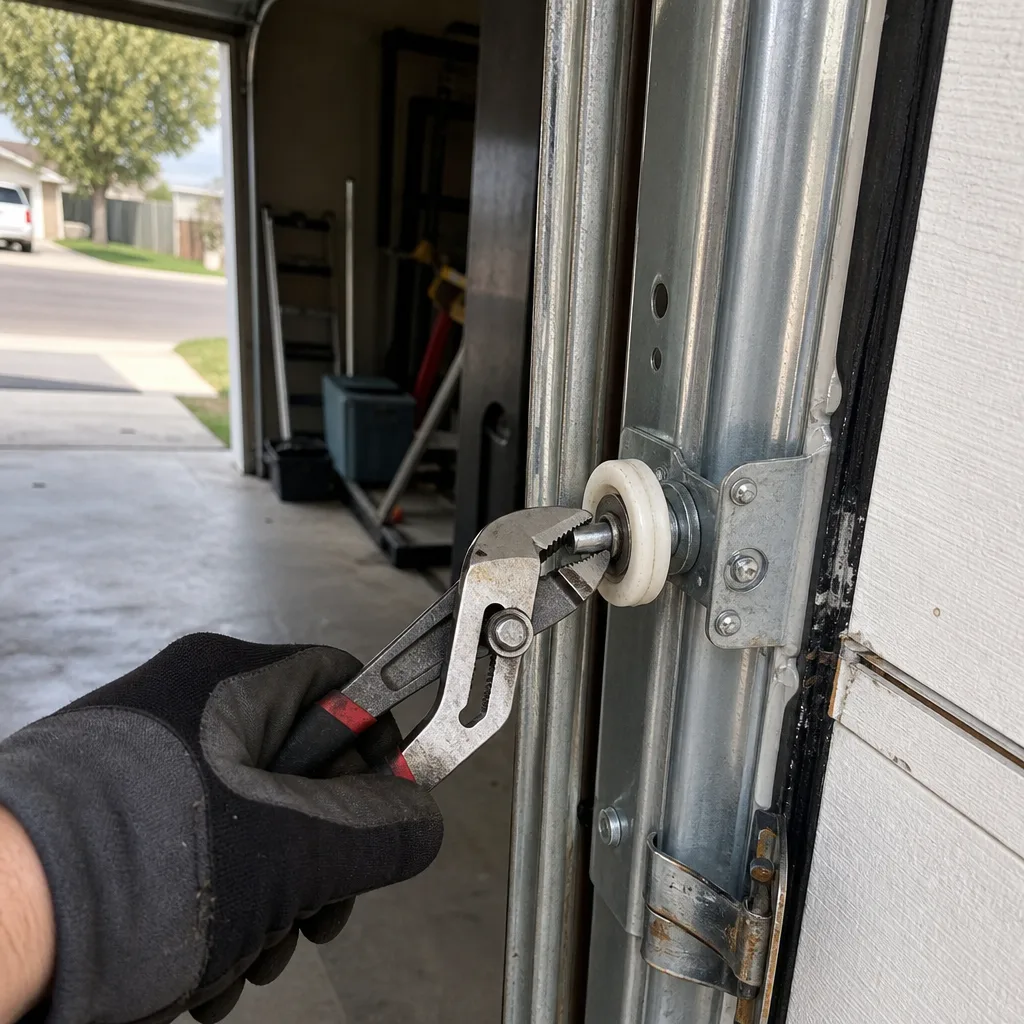
- Month-by-Month Care Table for Longmont
- Spring Thaw: Frost Heave and Floor Movement
- Summer UV Protocol: Seal, Paint, and Sensor Care
- Fall Preparation: Timing Longmont’s First Freeze
- Winter: Cold-Weather Lubrication and Spring Stress
- Wind-Event Preparedness for Front Range Gusts
- The Four-Item Maintenance Routine Every Homeowner Should Know
- Common Mistakes to Avoid
- When to Call a Professional
- Frequently Asked Questions
BeforeAfterMonth-by-Month Care Table for Longmont
Longmont’s climate does not map cleanly onto a four-season calendar. NOAA data for Boulder County shows the first freeze probability crossing 50 percent around October 5, while the last spring freeze probability drops below 50 percent around May 4. Between those dates, temperatures swing. The table below is anchored to historical averages for Longmont, not generic seasonal advice.
| Month | Primary Task | Why It Matters Here |
|---|---|---|
| January | Listen for grinding or popping during operation; check opener force settings | Sustained cold stiffens lubricant; a door that strains now may already have a weakening spring |
| February | Lubricate rollers, hinges, and torsion spring with lithium-based grease | Cold-weather noise often signals dry metal-on-metal contact that accelerates wear |
| March | Full spring inspection: look for gaps in torsion spring coils, rust, or deformities | Thermal cycling peaks this month; most spring failures in Longmont happen now |
| April | Check bottom seal contact along the full width of the floor | Frost heave over winter has shifted concrete; gaps let in dust, water, and rodents |
| May | Test auto-reverse on both sensors and force settings | Floor movement from freeze-thaw cycles can alter where the door meets the ground, changing reversal calibration |
| June | Inspect weatherseal for cracking or brittleness; check paint on steel doors | UV index at Longmont’s elevation regularly reaches 8-10; rubber degrades faster than coastal climates |
| July | Clean sensors and check alignment; inspect cables for fraying | Summer heat expands metal tracks; misaligned sensors cause intermittent reversal issues |
| August | Apply UV-protectant to weatherseal; inspect door panels for warping | Sustained UV exposure warps lower-grade steel and breaks down vinyl seal within 3-5 years |
| September | Check track brackets and mounting hardware torque | Pre-wind-season inspection; loose brackets become projectiles in Front Range gusts |
| October | Complete pre-winter lubrication with cold-rated grease; replace cracked weatherseal | First freeze probability passes 50 percent by October 5 |
| November | Verify opener force settings and reversal; clean and align sensors | Cold air contracts metal; a door that reverses now will only get worse in January |
| December | Inspect cables and springs for wear; schedule professional tune-up if needed | Catching a failing spring now avoids a mid-winter emergency call at night |
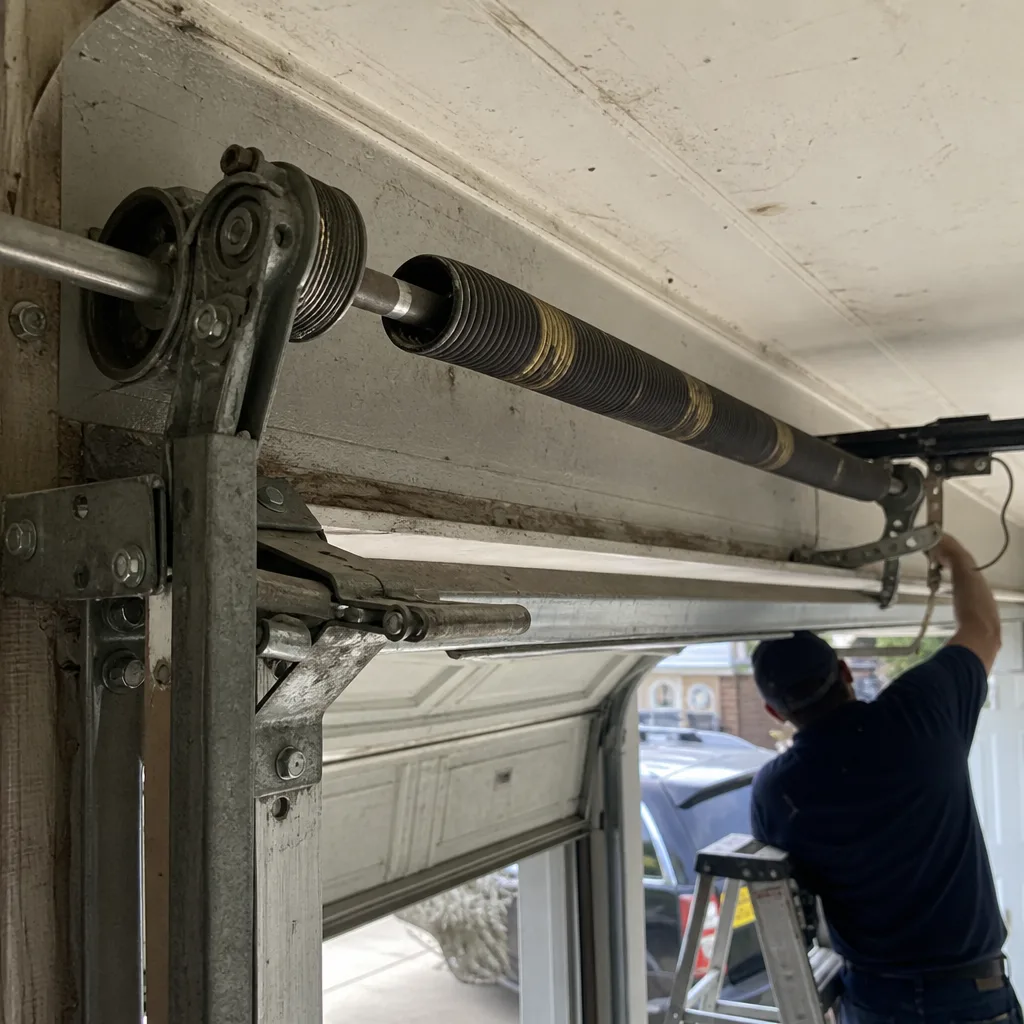
We’ve seen March spring failures in nearly every Longmont neighborhood, from Old Town to Prospect New Town. The pattern is consistent: a spring installed 7-10 years ago, subjected to thousands of thermal cycles, finally gives way on a warm afternoon after a cold night. A torsion spring measures about 0.250-inch wire diameter when new; when that spring fails, it typically breaks cleanly at a single coil, not gradually.
Spring Thaw: Frost Heave and Floor Movement
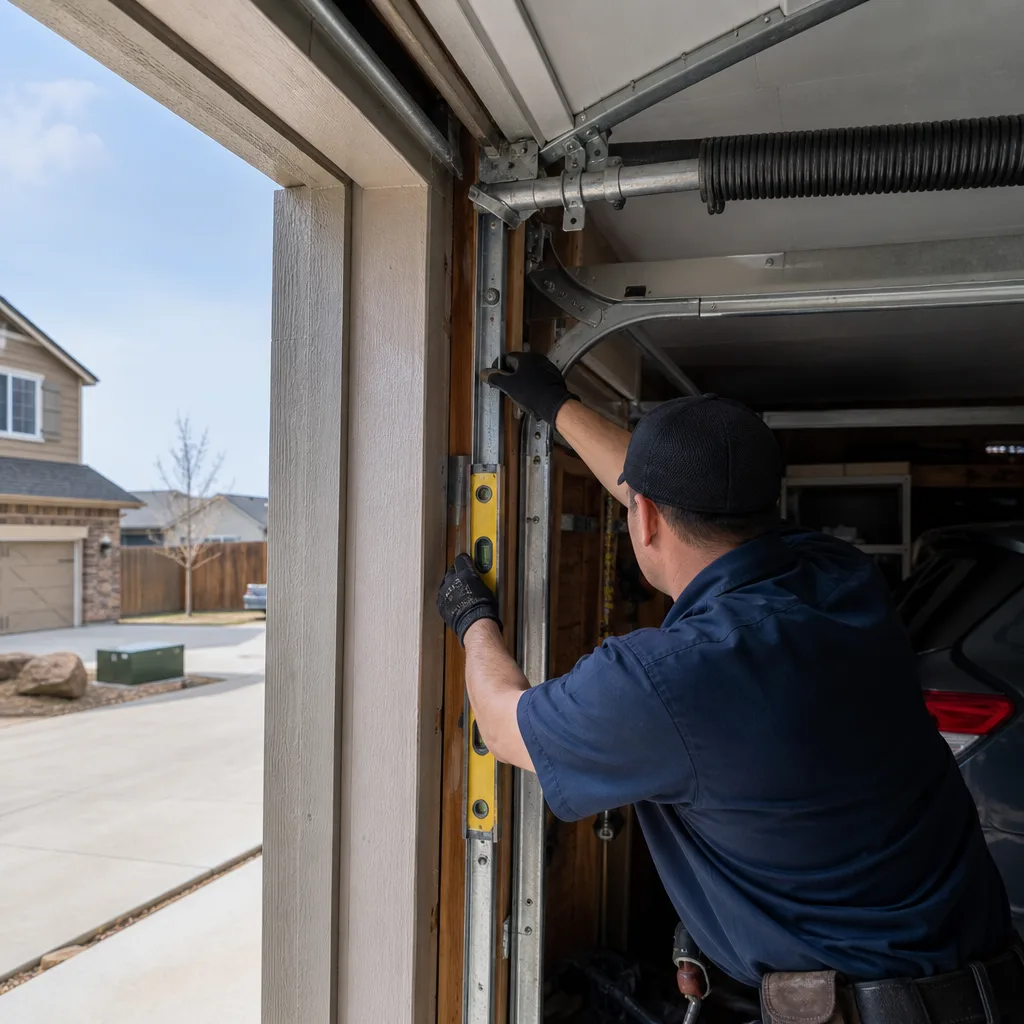
Longmont sits on expansive soils. When saturated clay freezes, it expands upward; when it thaws, it settles unevenly. This affects more than your driveway. Frost heave can move a garage floor by a quarter inch or more in a single winter, especially in older neighborhoods where slabs were poured without modern subgrade preparation. That quarter inch matters because your garage door’s bottom seal is designed to compress against a flat surface. If the floor has shifted, gaps appear at the corners.
Here’s what to check in April and May:
- Inspect the bottom seal in daylight. Close the door and look along the floor line from inside the garage. Light visible under the corners means the floor has moved or the seal has compressed unevenly.
- Run your hand along the seal. The rubber or vinyl should feel pliable, not cracked or rigid. Longmont’s dry air hardens seal material faster than humid climates.
- Check the gap width at multiple points. If the gap exceeds a quarter inch at any point, the seal is no longer doing its job. Water, dust, and rodents all use the same entry point.
- Test auto-reverse at floor level. Place a 2×4 flat under the door and close it. The door should reverse within 2 seconds of contact. If it does not, the force setting needs adjustment, and the floor movement may have altered the travel limits.
- Inspect the concrete for new cracks. Hairline cracks under the door path are normal; cracks wider than a quarter inch that have appeared since last fall suggest active soil movement.
Floor movement also affects the door’s balance. When a door is properly balanced, it stays in place at mid-height when released manually. If the floor has shifted, the door may settle at an angle, which puts uneven load on the springs and cables. A door that appears crooked when partially open is telling you something changed underneath it.
This is also the season when we recommend a full garage door repair in Longmont inspection, especially for homes built before 2000. Older slabs, minimal subgrade preparation, and decades of freeze-thaw cycles compound the movement problem.
Summer UV Protocol: Seal, Paint, and Sensor Care
Longmont averages over 300 days of sunshine per year. At 5,000 feet elevation, that sunshine carries a UV index that regularly hits 8-10 from June through August. Manufacturers design garage door components for average national climates, not high-altitude sun exposure. The result: weatherseal that should last 10 years often fails in 5, and steel door paint that should last 15 years starts fading and chalking in 7.
Here’s what actually holds up at this elevation:
- Weatherseal material: EPDM rubber outperforms standard vinyl at altitude. Vinyl gets brittle under sustained UV and cracks at the fold points within 3-4 Longmont summers. EPDM retains flexibility longer and costs roughly $2-4 per linear foot. Most door brands, including Clopay and Amarr, offer EPDM seals as an upgrade.
- Paint: For steel doors, use a 100 percent acrylic latex exterior paint with UV inhibitors. Avoid oil-based alkyd paints on south-facing doors; they chalk and fade within two seasons at this elevation. Doors facing west get the harshest afternoon sun and may need repainting every 5-6 years.
- Sensor protection: Direct sunlight can blind photo-eye sensors, causing the door to reverse randomly or refuse to close. If your sensors face the afternoon sun, install simple sun shields. The fix is a $15 piece of bent aluminum or plastic tubing that shades the sensor without blocking the beam.
- Panel warping: Low-grade steel panels with minimal insulation can warp under sustained heat. Dark-colored doors on south-facing garages are the worst case. If you’re installing a new door, lighter colors and higher insulation R-values reduce thermal warping over time.
We also recommend checking the door’s balance in June. Heat expands metal tracks and can alter the door’s travel path slightly. A door that scrapes or sticks at the top of its travel in summer is often a track alignment issue, not a spring problem.
For homeowners considering a new door, garage door installation in Longmont with UV-resistant materials matters more here than it does in Denver or Boulder. The elevation difference of 200-400 feet changes afternoon sun intensity noticeably.
Fall Preparation: Timing Longmont’s First Freeze
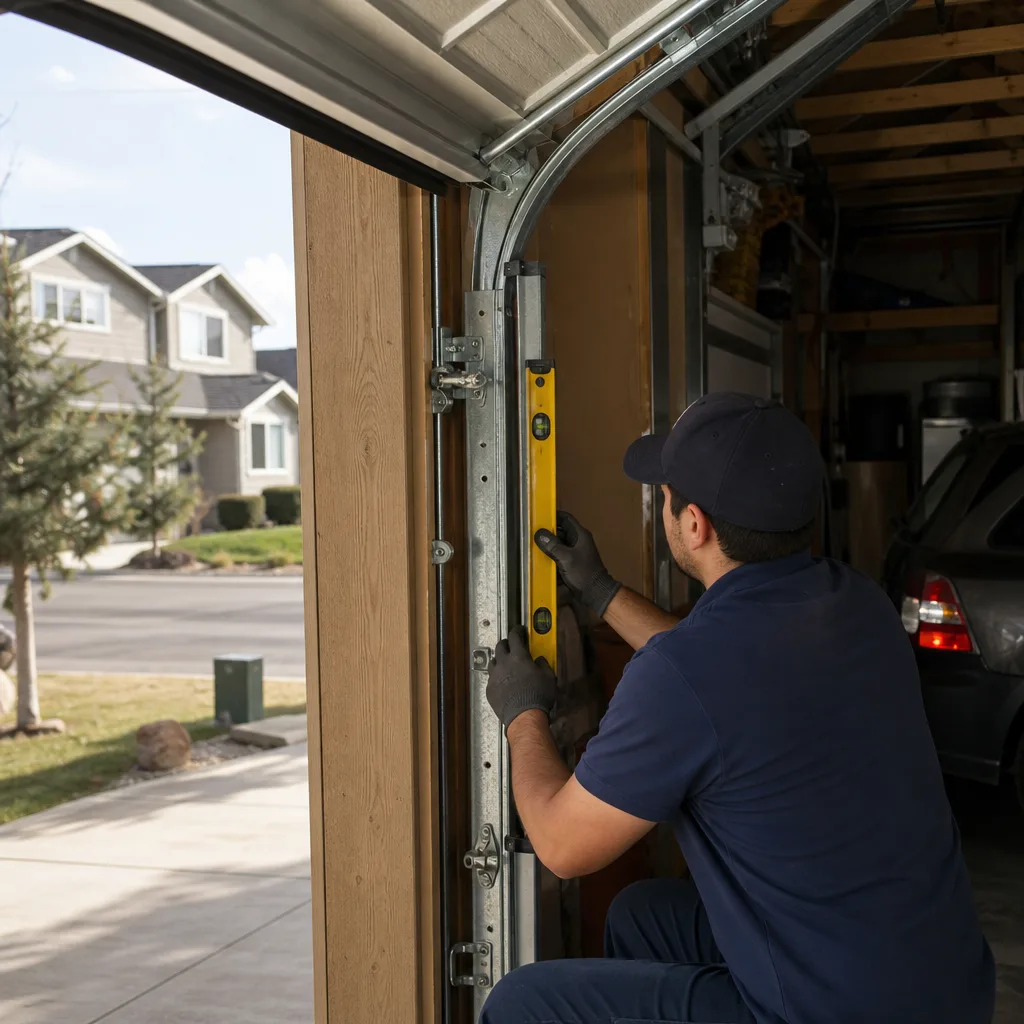
NOAA’s frost probability data for Boulder County shows that Longmont’s first 32°F reading has a 50 percent probability by October 5 and a 90 percent probability by October 20. That’s the window. You want every fall maintenance task finished by the end of September, not mid-November when the first hard freeze has already arrived.
Fall lubricant selection matters more than most homeowners realize. Standard garage door lubricants thicken at low temperatures. If you apply a warm-weather lithium spray in September, it may be viscous sludge by December. For cold-weather use, choose a lithium-based grease specifically rated for temperatures down to -20°F. Apply to:
- Hinges at each panel joint
- Rollers at the bearing point (avoid nylon roller surfaces themselves)
- The torsion spring, along the full coil length
- The lock assembly, if your door has one
This is also the time to replace weatherseal that has hardened from summer UV exposure. A cracked seal in October becomes a frozen-to-the-floor door in January. When the seal freezes to the concrete, the opener strains against the bond, which shortens opener life and can pull the seal loose from its retainer.
Winter: Cold-Weather Lubrication and Spring Stress
Longmont’s winter lows routinely reach the single digits, and stretches of sub-zero nights happen most years. Cold affects a garage door in three specific ways: metal contracts, lubricant thickens, and materials become brittle. The combination increases the work required of the springs, which is why a spring that survived all summer can fail on a January morning.
The torsion spring is the heart of your door’s lifting system. It stores mechanical energy when the door closes and releases it when the door opens. A spring is rated for a specific number of cycles, typically 10,000 for standard springs and 20,000-30,000 for high-cycle springs. Cold doesn’t reduce the cycle count directly, but it does increase the force required to open the door, which accelerates wear at the coil ends where stress concentrates.
Winter maintenance priorities:
- Lubricate monthly during cold stretches. Dry metal-on-metal contact in cold weather is the single fastest way to wear out rollers and hinge pins.
- Listen for popping or creaking. A torsion spring that makes noise during operation is often one with internal coil friction, a precursor to failure.
- Watch for slow or uneven opening. If one side of the door lags noticeably, a cable may be slipping or a spring may be losing tension.
- Keep the door closed when not in use. Every open-close cycle in cold weather wears components faster than the same cycle in moderate temperatures.
If your door fails to open on a cold morning, do not force it. A door frozen to the floor needs gentle release, not opener force. Disconnect the opener and lift manually. If the door won’t lift, the seal is likely frozen to the concrete. Warm the seal with a hairdryer or heat gun on low, working along the full width. Once free, apply silicone spray to the seal’s contact edge, which prevents re-freezing.
Wind-Event Preparedness for Front Range Gusts
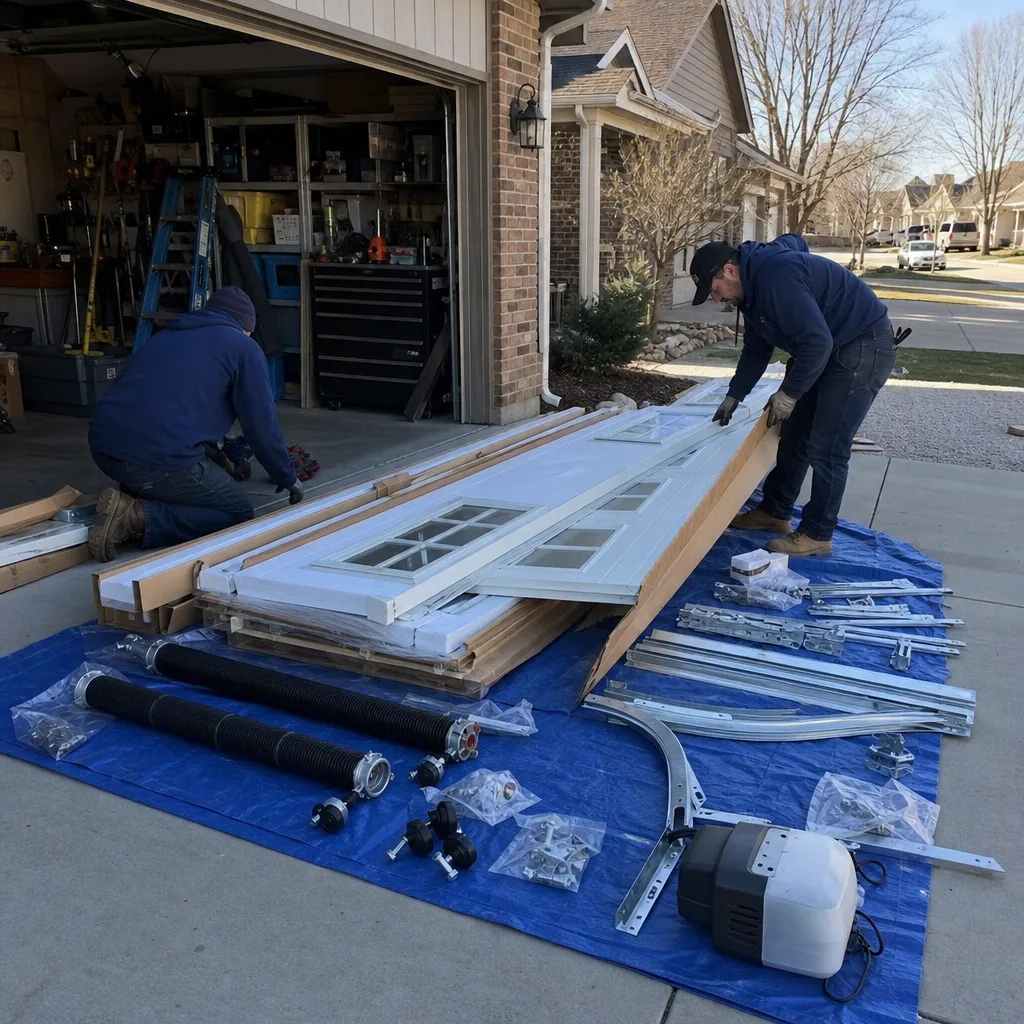
Longmont sits in the path of downslope winds that funnel off the Front Range. Gusts over 60 mph are common in spring and fall, and the October 2013 windstorm produced gusts over 90 mph in Boulder County. A garage door is the largest moving surface on your home, and wind load against a closed door is measured in thousands of pounds during high-wind events.
Horizontal wind load on a standard 16×7 door at 70 mph is approximately 1,900 pounds. That force pushes the door inward, and the door’s only resistance is the track system, the hinges, and the panels themselves. Older wood doors and lightweight aluminum doors are most vulnerable.
Here’s what to check before wind season:
- Track brackets. Every bracket that anchors the vertical tracks to the wall should be tight. A loose bracket allows the track to flex, which can cause the rollers to jump the track entirely during a gust.
- Center hinges. The hinges at the panel joints carry the wind load laterally. Loose or corroded hinges allow panels to bow inward.
- Strut installation. Many Longmont doors lack horizontal reinforcement struts, especially older installations. A strut is a U-shaped metal bar that bolts across the inside of each panel, adding rigidity. If your door flexes inward visibly during moderate wind, it needs struts.
- Door balance. A wind-loaded door puts all its force on the springs and cables. A door that is already slightly unbalanced will fail faster under wind load.
Wayne Dalton and Clopay both offer wind-load-rated door models for high-wind regions. If you’re replacing a door, ask about wind-load ratings for the specific exposure. Doors on the west and north sides of Longmont homes face the prevailing wind patterns directly.
If your door is damaged by wind, a garage door repair in Longmont should include a bracing assessment, not just a panel replacement. Replacing a wind-damaged panel without adding struts means the same failure will happen again.
The Four-Item Maintenance Routine Every Homeowner Should Know
This is the foundational routine that prevents most emergency calls we see in Longmont. Each item takes minutes. Combined across a year, they prevent thousands of dollars in avoidable repairs.
- Lubricate every moving part seasonally. Use lithium-based grease or spray rated for cold temperatures. Apply to hinges, rollers, springs, and locks. Do not use WD-40: it displaces moisture but provides no lasting lubrication and can actually wash existing grease out of rollers.
- Test auto-reverse monthly. Place a roll of paper towels or a 2×4 under the door and close it. The door must reverse within 2 seconds of contact. Every opener sold since 1993 has this feature; testing it should be a household habit.
- Inspect cables and springs visually every quarter. Look for frayed cable strands, gaps in spring coils, rust, or deformation. Cables under tension can cause serious injury if they fail; never touch or attempt to adjust them without proper training and tools.
- Check balance semi-annually. Disconnect the opener and manually lift the door to waist height. Release it. A balanced door stays in place. If it drops or rises, the springs need professional adjustment.
These four tasks apply to every brand we service, from Amarr to Craftsman. The door doesn’t care what name is on the panel; physics works the same way.
Common Mistakes to Avoid
- Using WD-40 as a garage door lubricant. It’s a solvent, not a lubricant. It strips existing grease and leaves metal parts drier than before. Use white lithium grease or a silicone-based spray made specifically for garage doors.
- Ignoring a noisy door until it fails. A door that squeals or grinds is sending an early warning. The sound usually means metal-on-metal contact somewhere, often a failing roller bearing or a spring losing its coating.
- Painting over weatherseal. Paint hardens rubber and vinyl seal, eliminating its flexibility. If paint got on your seal during a door painting project, replace the seal.
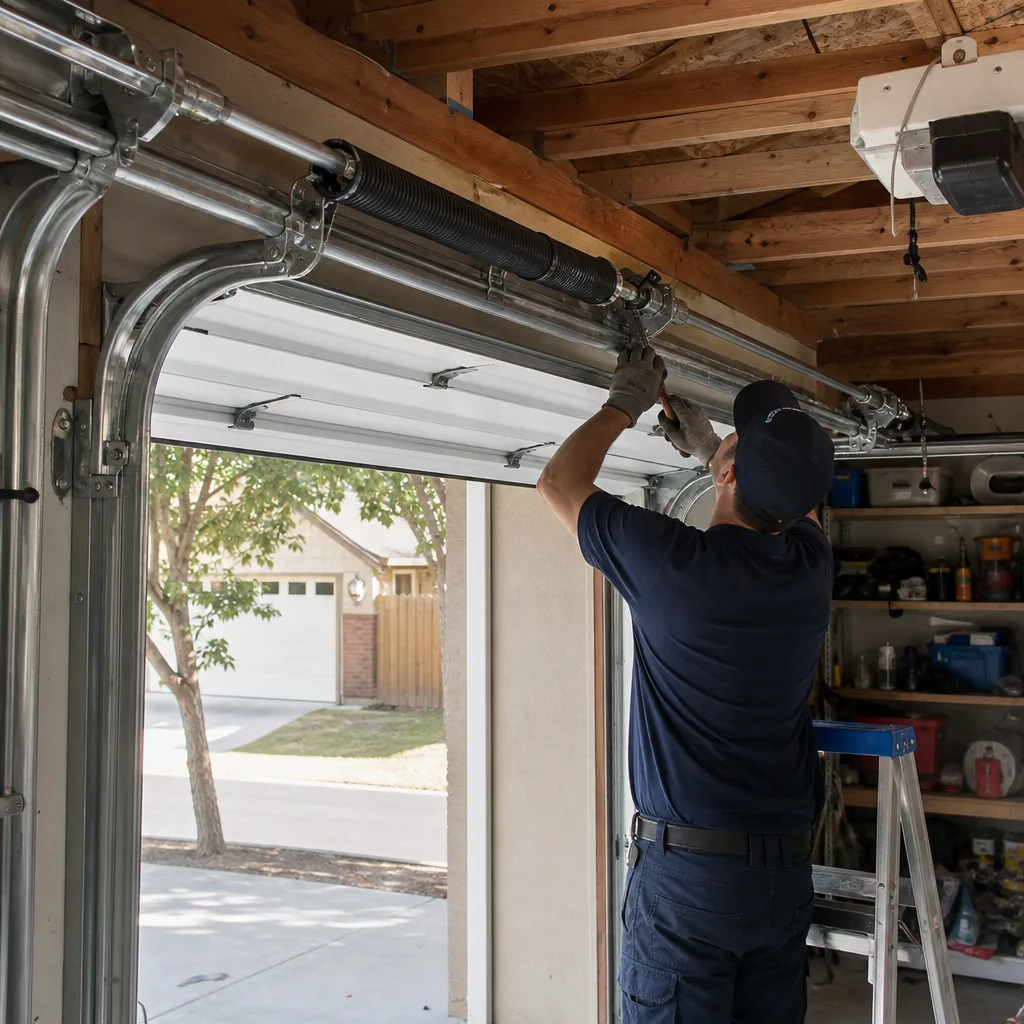
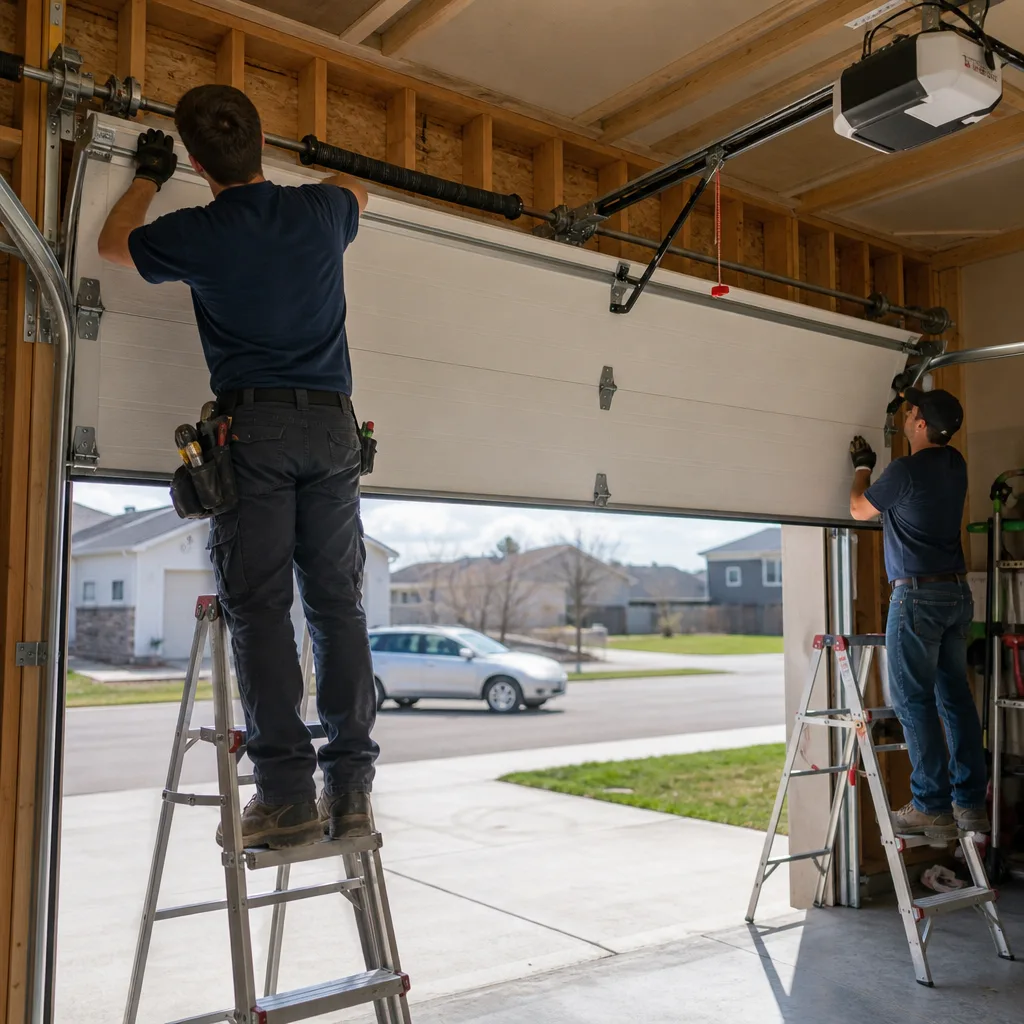
- Adjusting spring tension without proper tools. Torsion springs store enough energy to cause serious injury or death. The winding bars required are specific to the spring’s end cone, and the process requires experience. This is not a YouTube tutorial task.
- Waiting until winter to replace a failing seal. By October, suppliers run low and temperatures make installation harder. Replace seal in September when the material is still pliable.
- Forcing a frozen door with the opener. An opener will keep pulling until it strips the gear or burns out the motor. Release the door and free the seal manually.
- Treating all garage door openers as interchangeable. A newer Chamberlain or LiftMaster opener has different force settings and travel limits than a 15-year-old Genie. If your opener is over 10 years old, its reversal sensitivity may no longer meet current safety standards. Garage door opener repair and installation in Longmont is the fix.
When to Call a Professional
Call a professional for any spring replacement or cable repair. These components are under hundreds of pounds of tension, and the failure mode for a spring or cable under load is unpredictable. A torsion spring that snaps while being adjusted can cause severe injury or death. We also recommend professional attention if the door is visibly unbalanced, if the opener needs replacement, or if the track has been damaged by wind or impact. Servo Garage Doors Longmont offers free estimates in Longmont. Call (970) 528-5851, and we’ll show you the failed component and give you a written price before any work starts.
Frequently Asked Questions
Lubricate every three months at minimum, and monthly during winter cold stretches. Longmont’s dry air and winter temperature swings cause lubricant to evaporate or thicken faster than in more humid climates. Use lithium-based grease rated for cold temperatures.
Cold air causes metal to contract, which tightens the clearances in hinges, rollers, and tracks. Combined with thickened lubricant, this produces squeaks and grinding that disappear in warmer weather. It’s usually not a mechanical problem, but it signals that re-lubrication is overdue.
A typical torsion spring replacement in Longmont runs $180-$340 for a standard single door, including parts and labor. High-cycle springs cost more but last 2-3 times longer. We quote a flat, written price before any work begins, per Clause 1 of The Haven Standard. Call (970) 528-5851 for an exact number.
The Haven Standard is our operating agreement with measurable clauses. Clause 1 requires a written price and scope before work starts. Clause 4 requires photographing the failed component before quoting a replacement. The result is a paper trail for every job, which means you see exactly what was found and what was done. Learn more on our Servo Garage Doors Longmont home page.
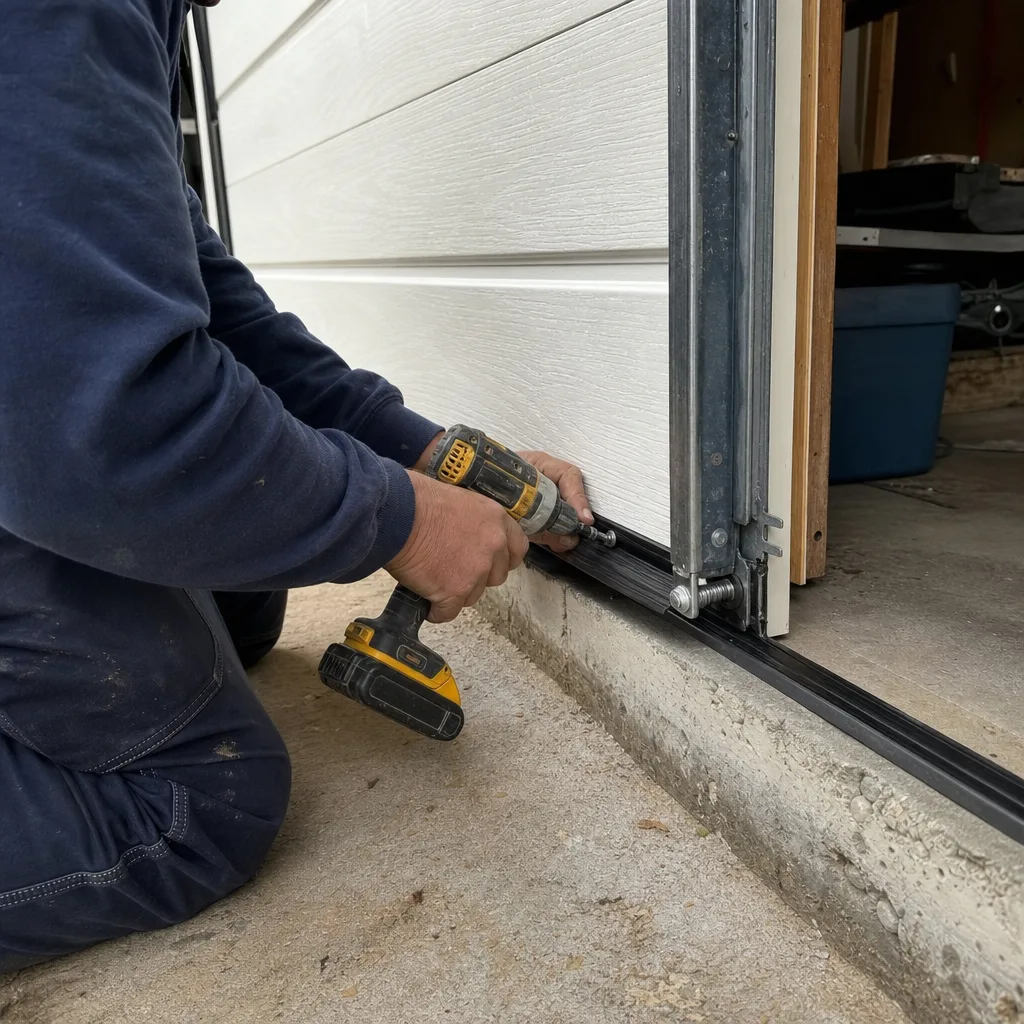
Yes, in most cases. The seal slides out of a retainer channel at the bottom of the door, and a replacement costs $20-60 depending on the material and length. EPDM rubber costs more than vinyl but lasts significantly longer at Longmont’s elevation. If the door must be raised and supported during replacement, have a second person help.
Ten to fifteen years is typical. Longmont’s temperature swings and summer heat accelerate wear on the plastic gears inside the opener’s drive mechanism. If your opener is over 10 years old and noisy, slow, or inconsistent in its reversal, replacement is likely cheaper than repeated repairs. See our garage door opener repair and installation page for details.
The Bottom Line
Longmont’s garage doors fail predictably: springs break in March from thermal cycling, weatherseal degrades in summer from UV at altitude, and wind finds every loose bracket in spring and fall. The homeowner who lubricates quarterly, tests auto-reverse monthly, checks balance twice a year, and replaces seal before October will avoid most emergency calls entirely. For everything else, a written price before work starts and a photo record of what was found and fixed is the standard we’ve operated under since 2015. If your door needs professional attention, call (970) 528-5851 for a free estimate.
Written by Marcus Deller, Owner at Servo Garage Doors Longmont, serving Longmont since 2015.